200 Years
Explore selected highlights in Princeton and Alumni Association history, curated by the Princetoniana Committee of the Alumni Council. Check back often — new highlights will be added weekly.
1830s & Earlier

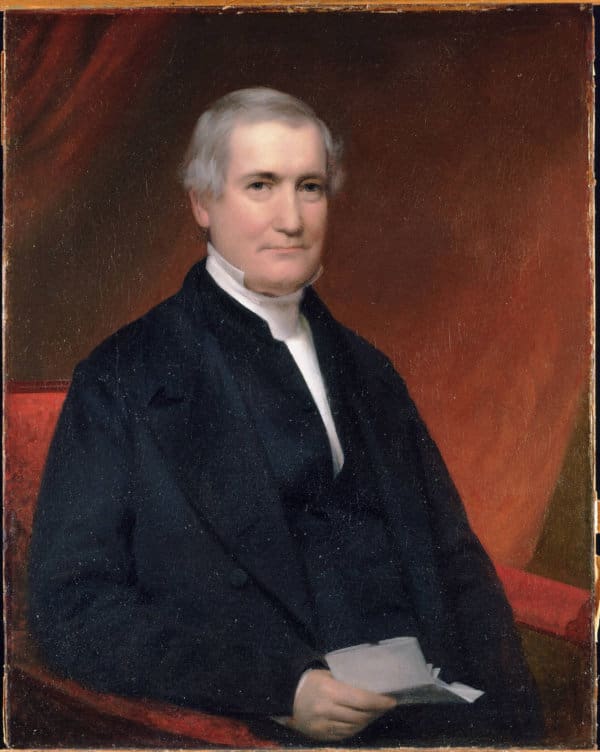
James Carnahan ’1800 had the longest tenure of any Princeton president: 31 years (1823-1854).
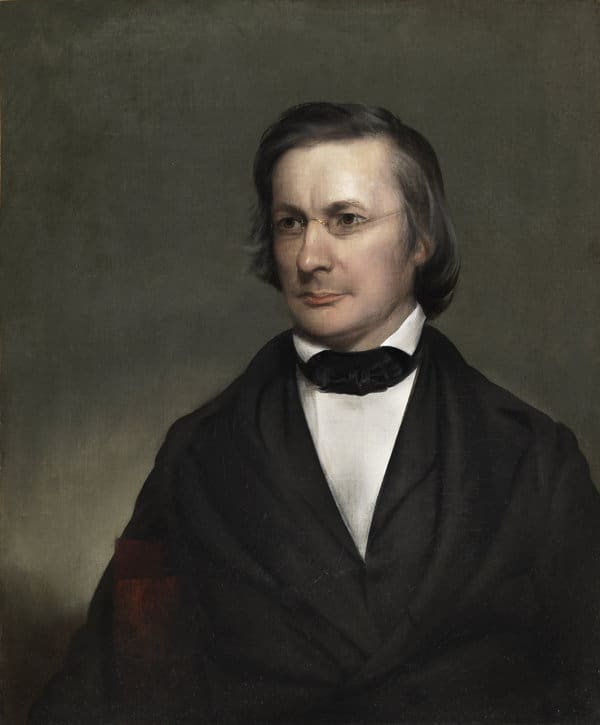
1816: John Maclean Jr. ’1816 is the only Princeton president to go on to serve as president of the Princeton Alumni Association.
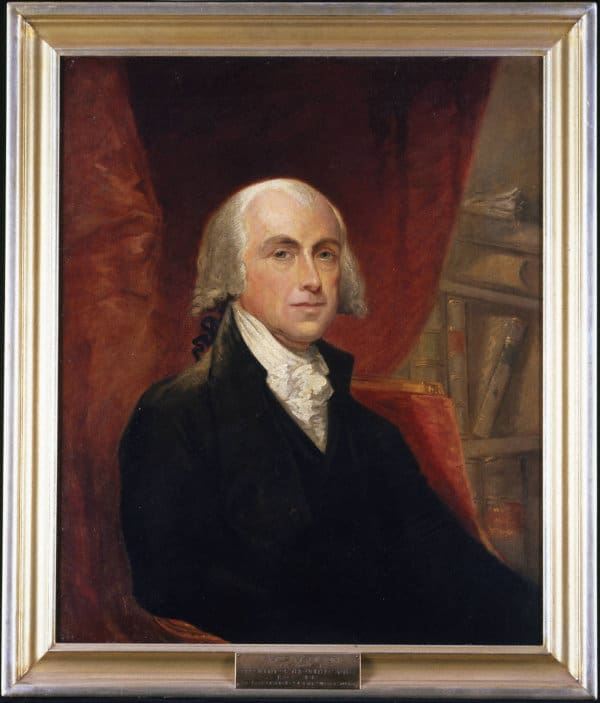
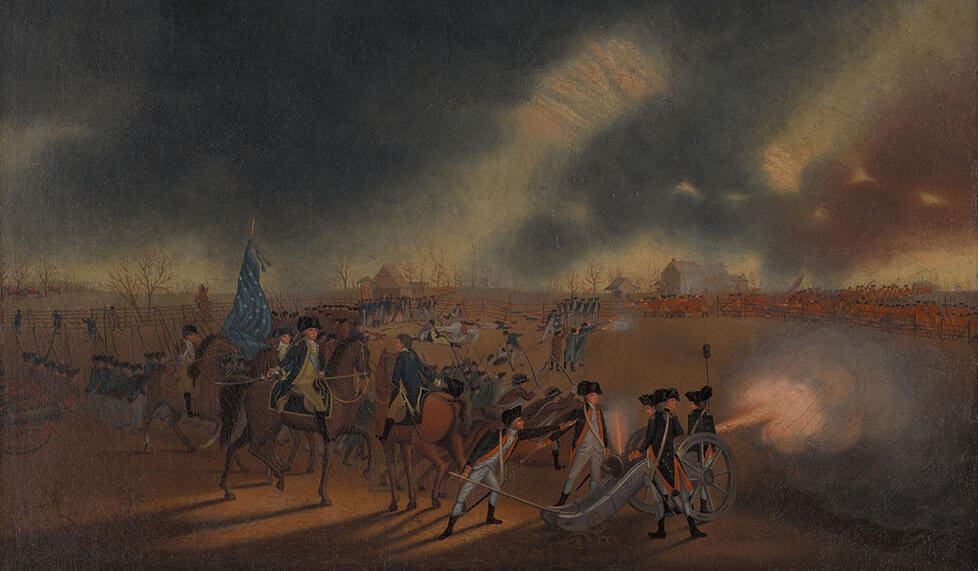
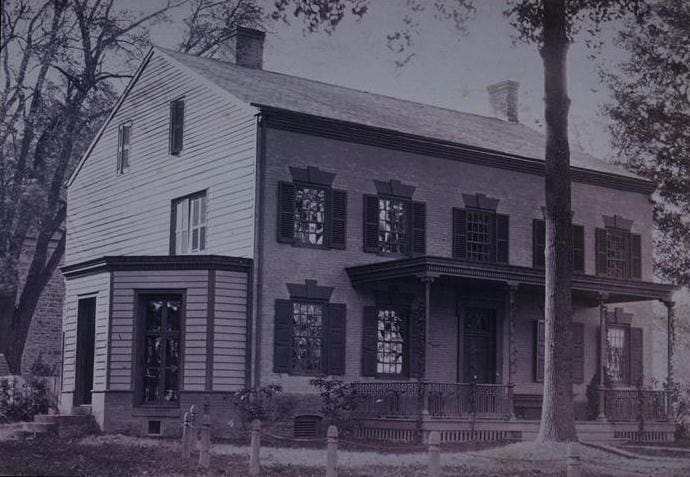
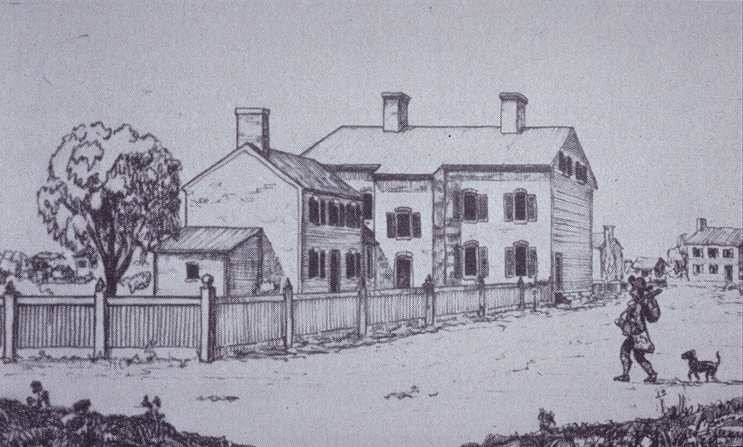
1776: Maclean House is occupied by the British when Gen. Alexander Leslie makes it his military headquarters during the American Revolution. The British were evicted by American forces under the direction of Gen. George Washington in the Battle of Princeton on Jan. 3, 1777.
1840s
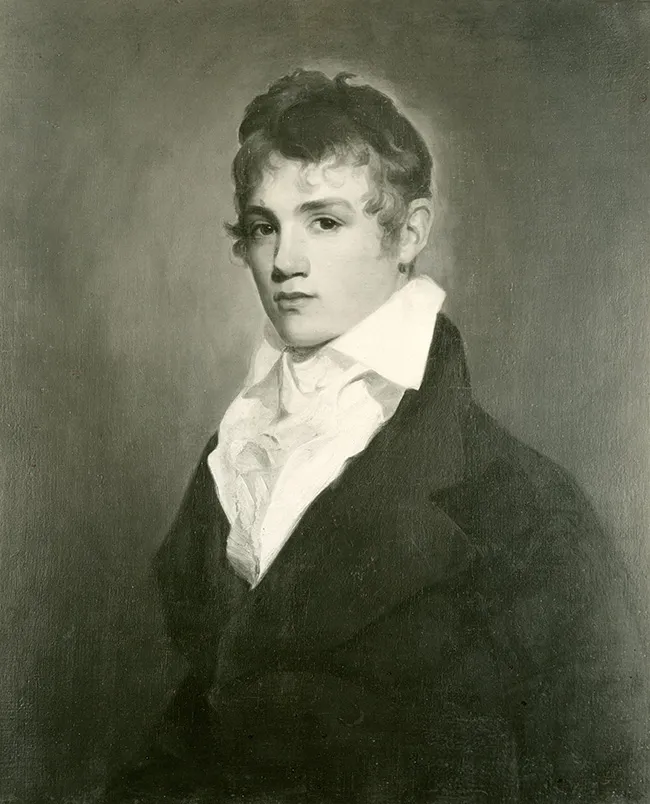
1845: George M. Dallas ’1810 is sworn in as the 11th vice president of the United States, serving with President James Polk.
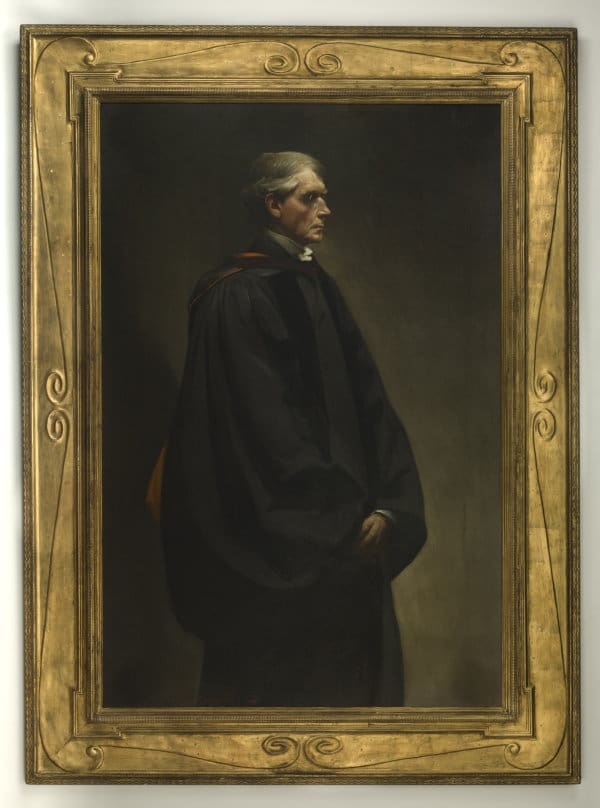
Francis Landey Patton, one of only four University presidents who are not buried in Presidents’ Plot in Princeton Cemetery, was born and died (1843-1932) in Bermuda.
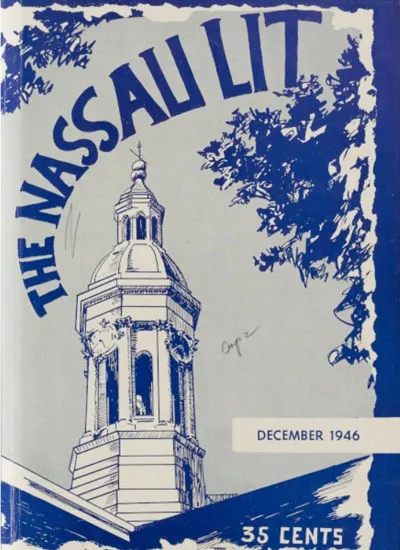
1842: Founded as the Nassau Monthly, the Nassau Literary Review (NassLit) is the oldest student publication at Princeton and the second-oldest undergraduate literary magazine in the nation. Originally designed to allow students to publish work anonymously, it was renamed in 1930 and has featured prominent writers such as F. Scott Fitzgerald.
1850s
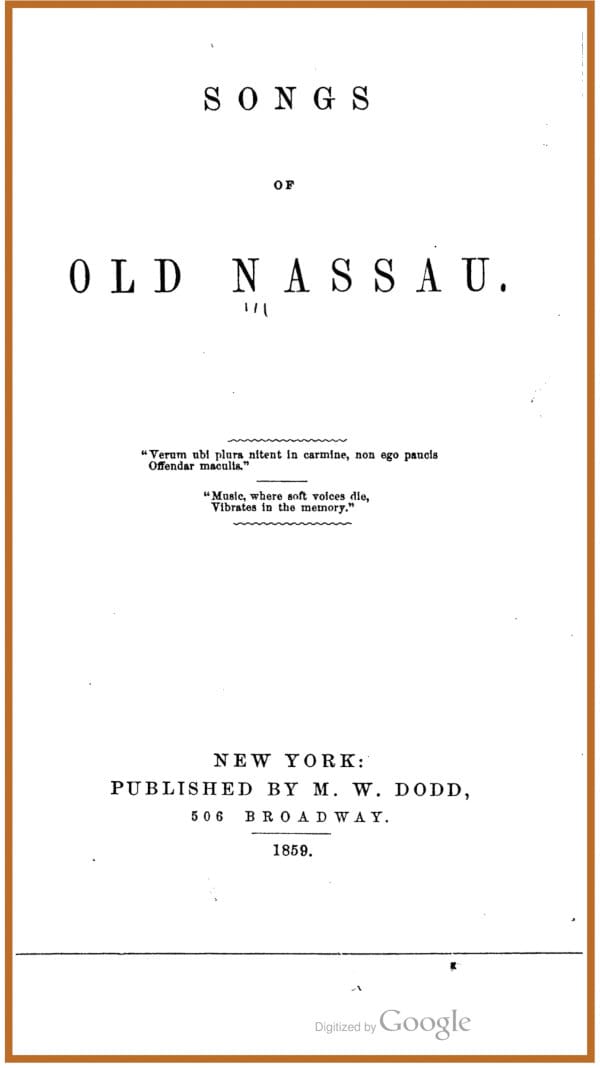
1859: “Old Nassau” is first sung — originally to the tune of “Auld Lang Syne.”
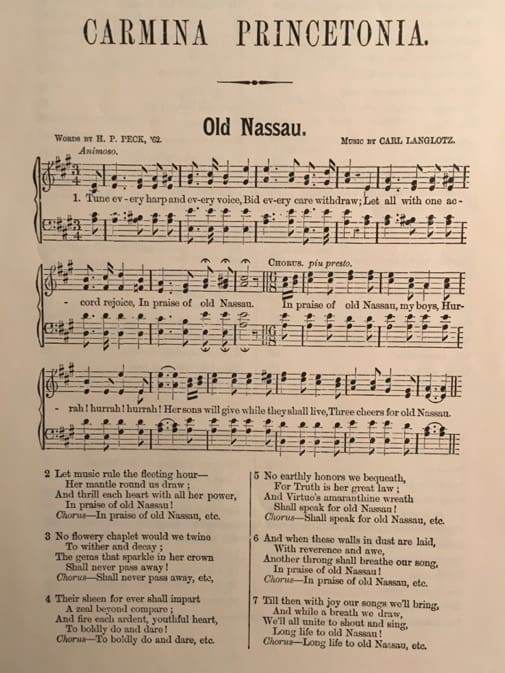
1859: Harlan Page Peck ’1862 writes the lyrics to Old Nassau, in homage to his beloved school. He sent them to the Nassau Literary Magazine, winning the magazine’s prize for the “Best College Song.”
1860s
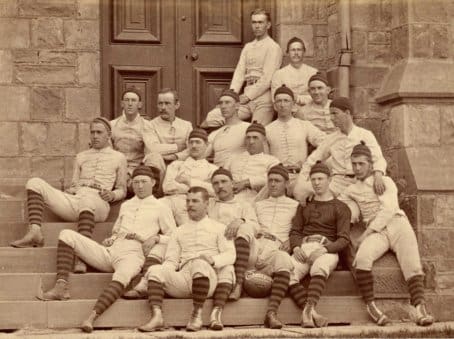
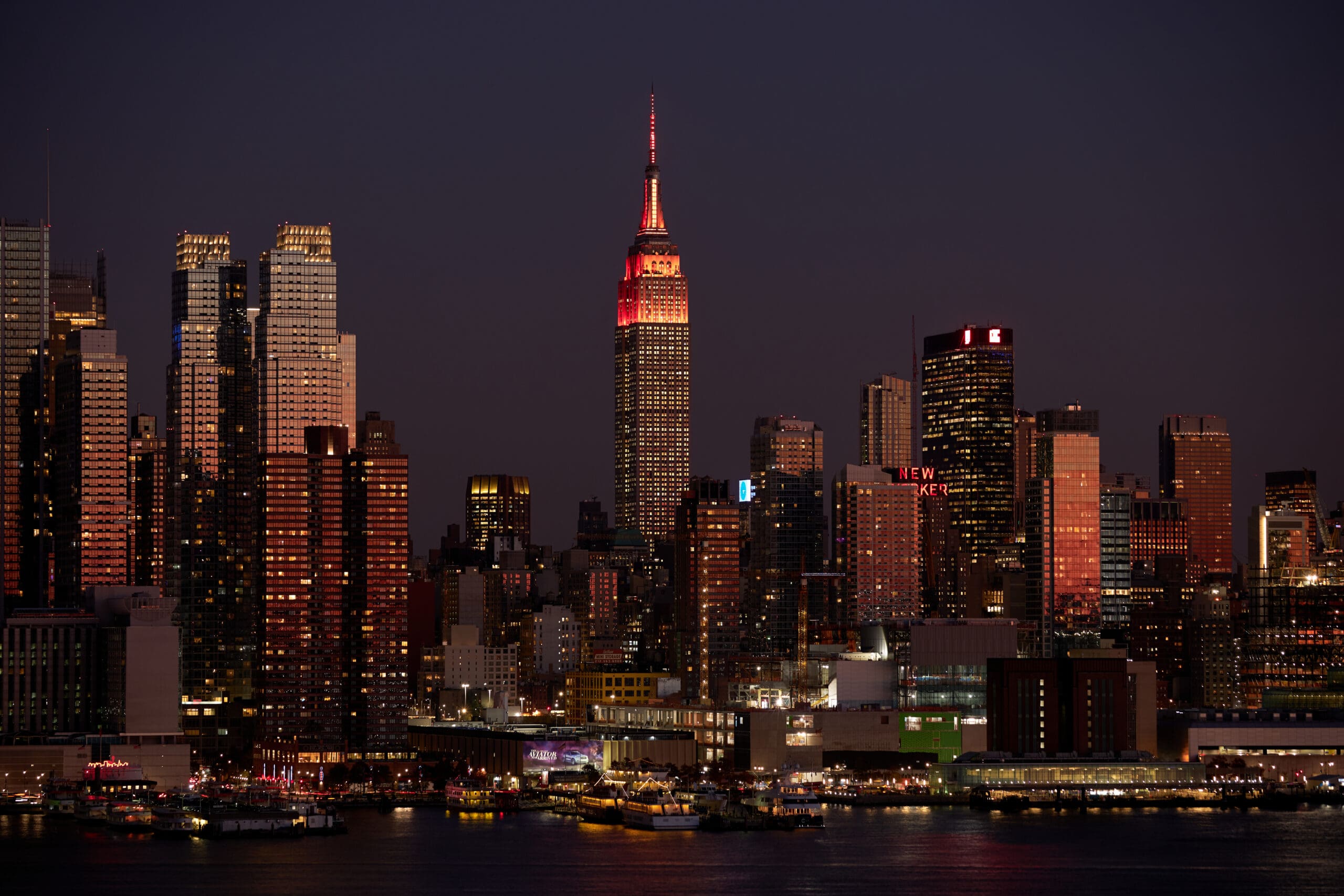
1866: The first regional association of Princeton alumni, the Princeton Alumni Association of New York, is established. Today, there are more than 150 regional Princeton alumni associations across the globe.
1870s
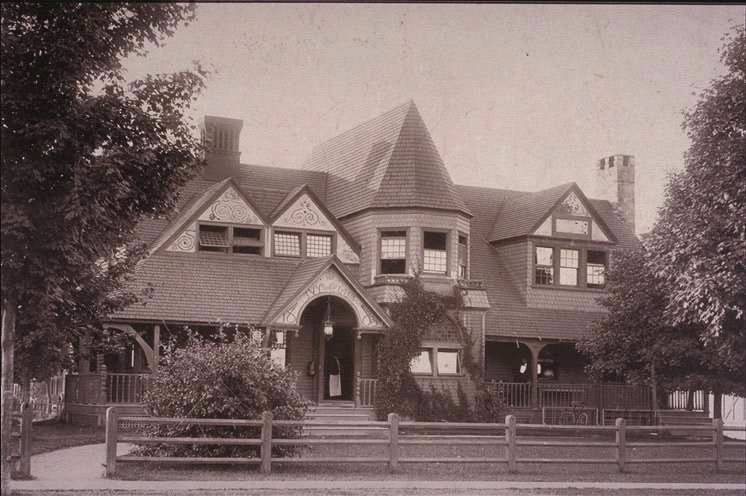
1879: A group of students rent Ivy Hall and establish the first formal eating club at Princeton. Others follow, and by 1910, two-thirds of juniors and seniors were eating at 14 clubs.

1879: Graduating classes begin placing a stone engraved with their class year either on or near Nassau Hall.
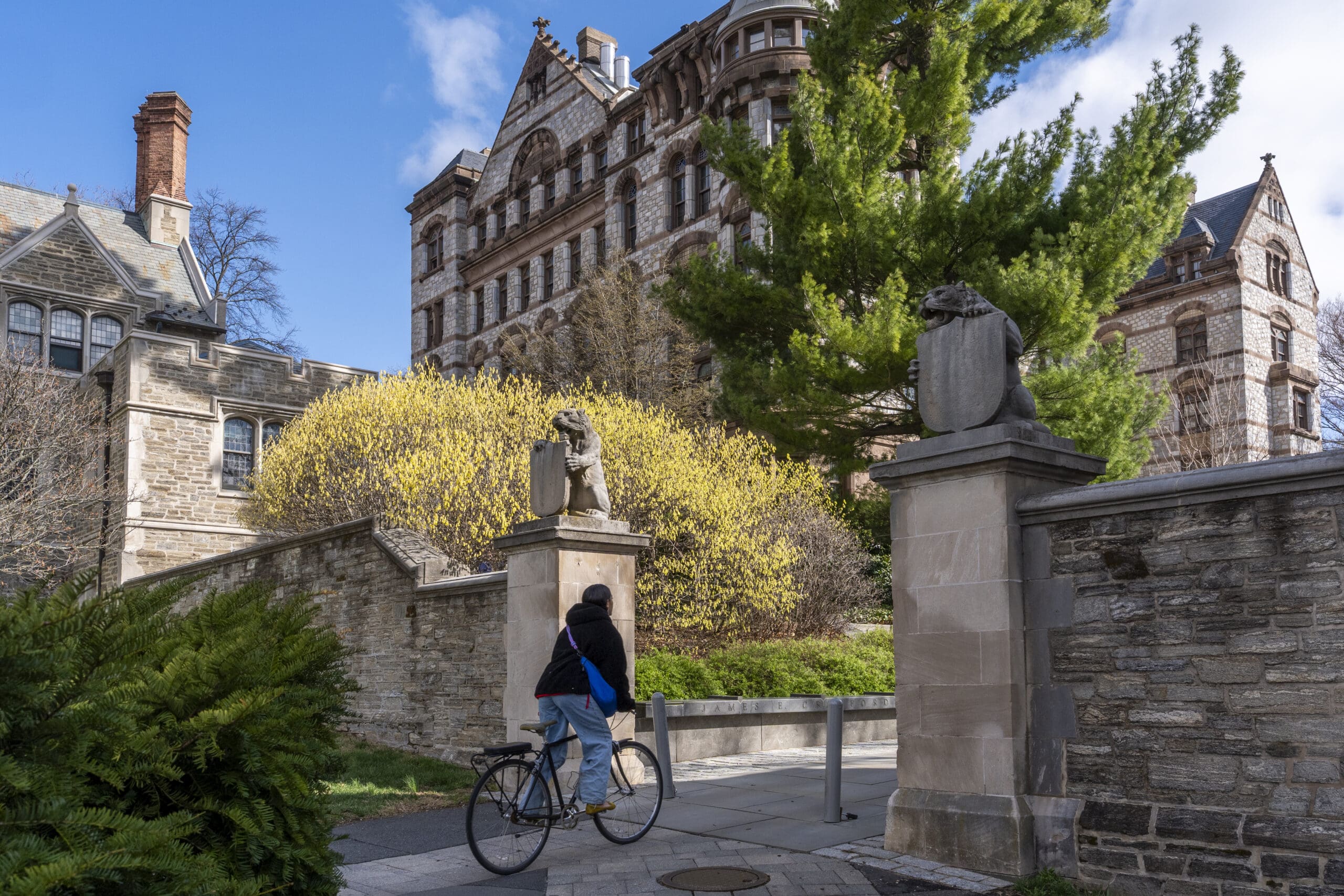
1877: Students move into Witherspoon Hall, the first college dormitory in the United States to have indoor plumbing.
1876: Founded in 1876, the Princeton Club of St. Louis celebrates its 150th anniversary in 2026. Today, alumni in the St. Louis, Greater Missouri and southwest Illinois regions show their strong Tiger spirit through participation in diverse activities, events and service opportunities, including the Princeton Prize in Race Relations, the Alumni Schools Committee and the Book Award Committee.
1876: In 1876, the Princeton Club of Chicago is founded. Celebrating its 150th anniversary in 2026, the robust regional group serves a community of approximately 2,400 alumni, with over 370 members. PCC hosts a wide range of programs and events in service to the PCC community, the University and Chicagoland. In 2024-25, the club received the University’s Austin P. Leland Award in recognition of general excellence in regional alumni activities.
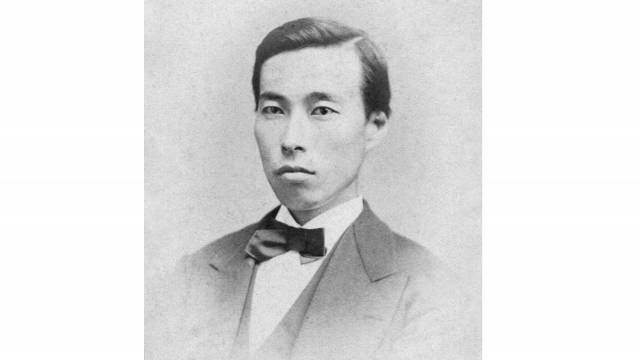
1876: Hikoichi Orita from Japan becomes the first known Asian graduate of Princeton.
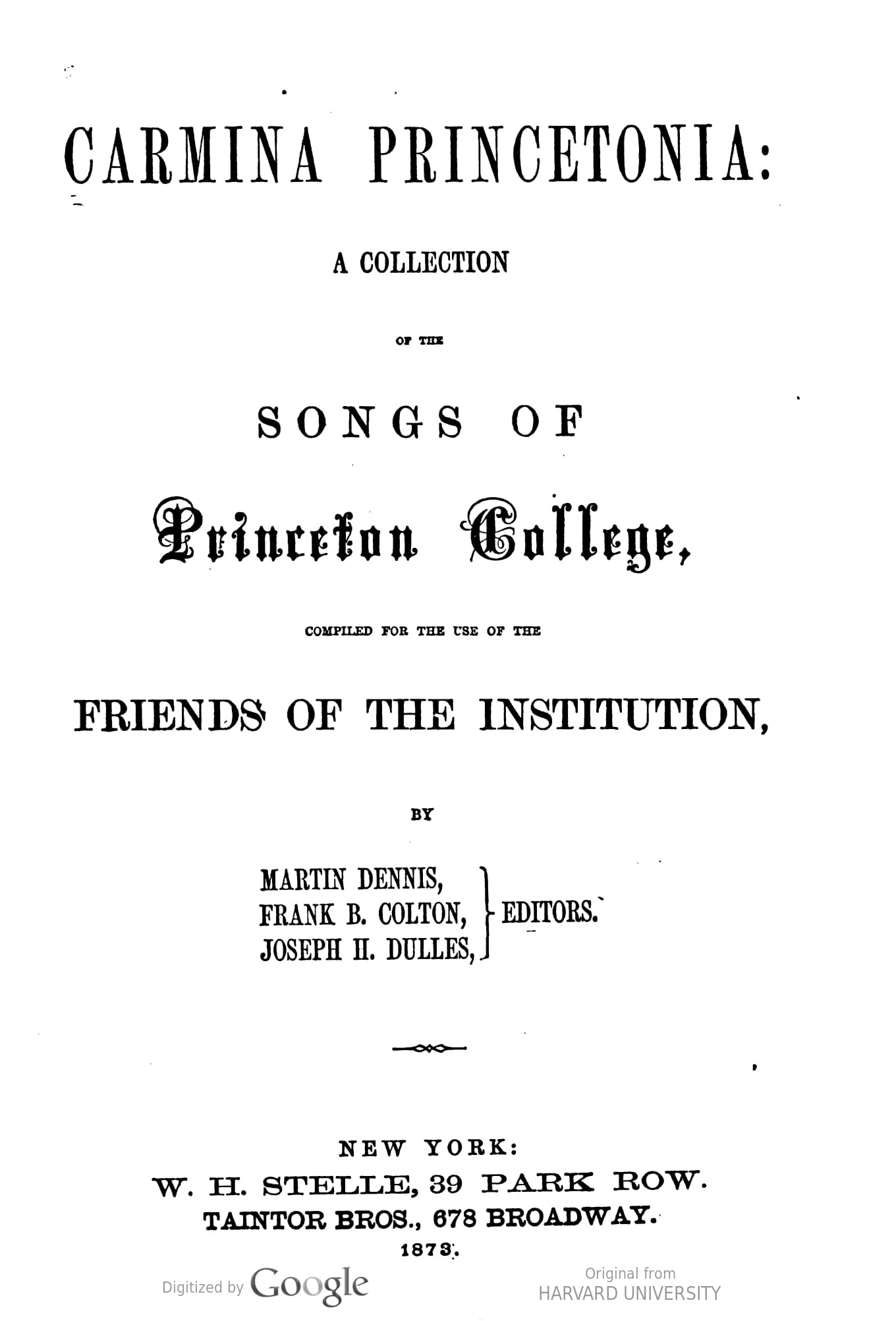
1873: The earliest class song to appear in print — the facetious “Song of the Class of ’74” — is published in the “Carmina Princetonia.” In subsequent decades, writing a class song becomes a popular way for alumni to enliven a major reunion.
1880s
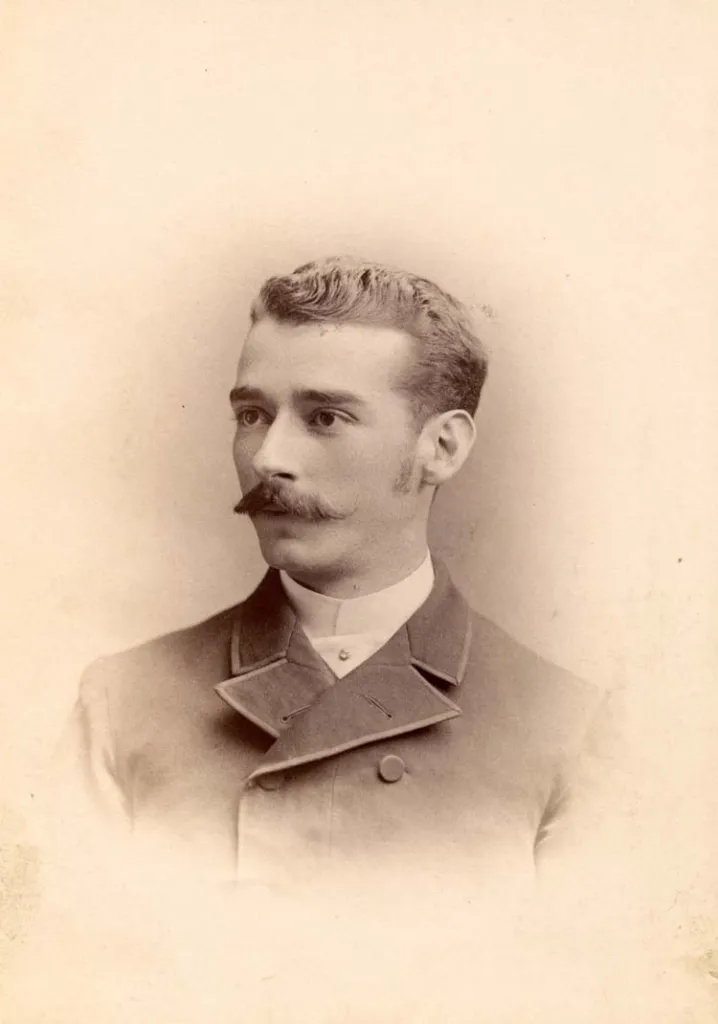
1888: Pedro Rioseco becomes the first known Hispanic graduate of Princeton.
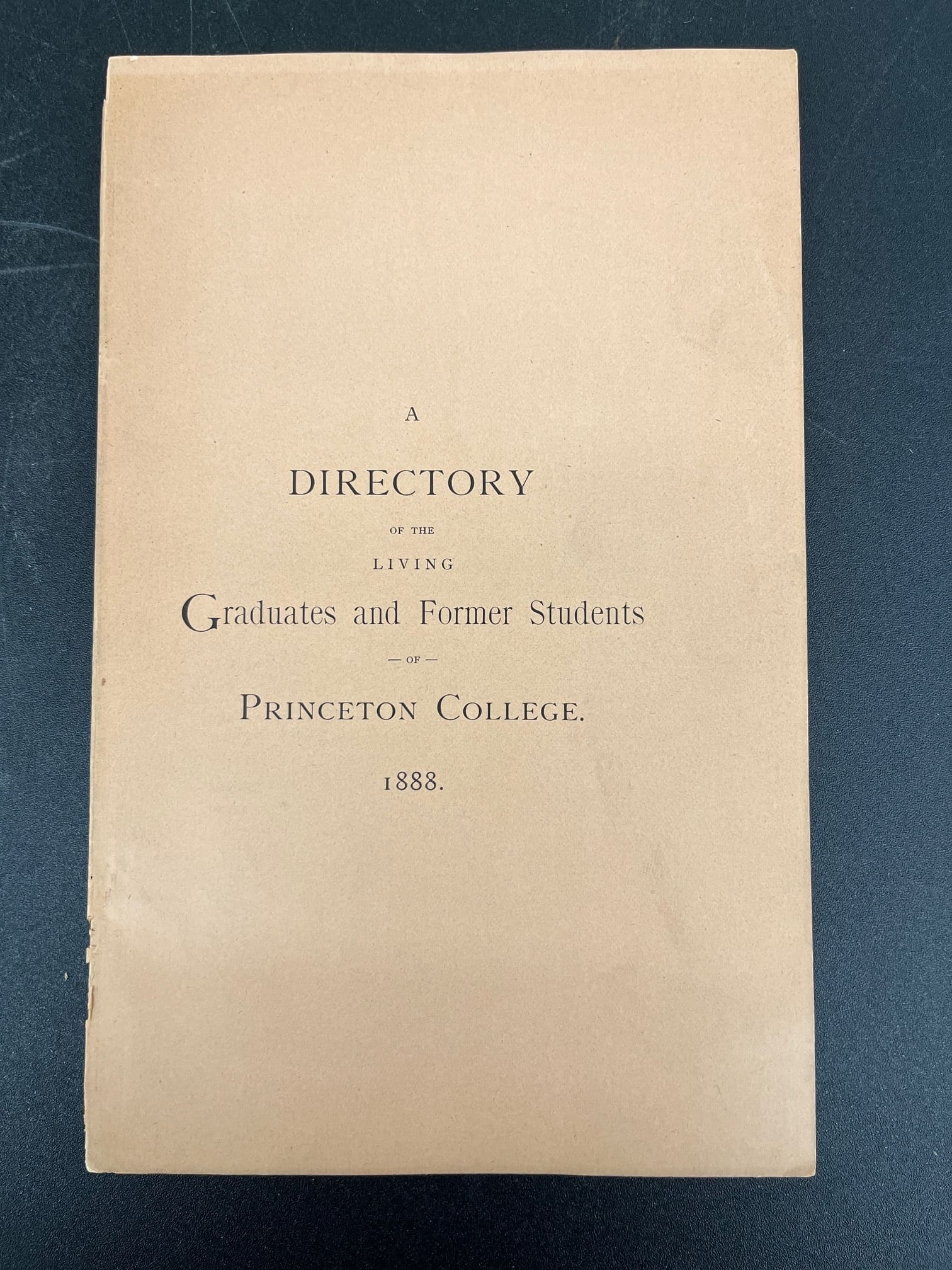
1888: Moses Taylor Pyne and William Libbey Jr., Class of 1877, collected information about alumni to create the first alumni directory.
1890s
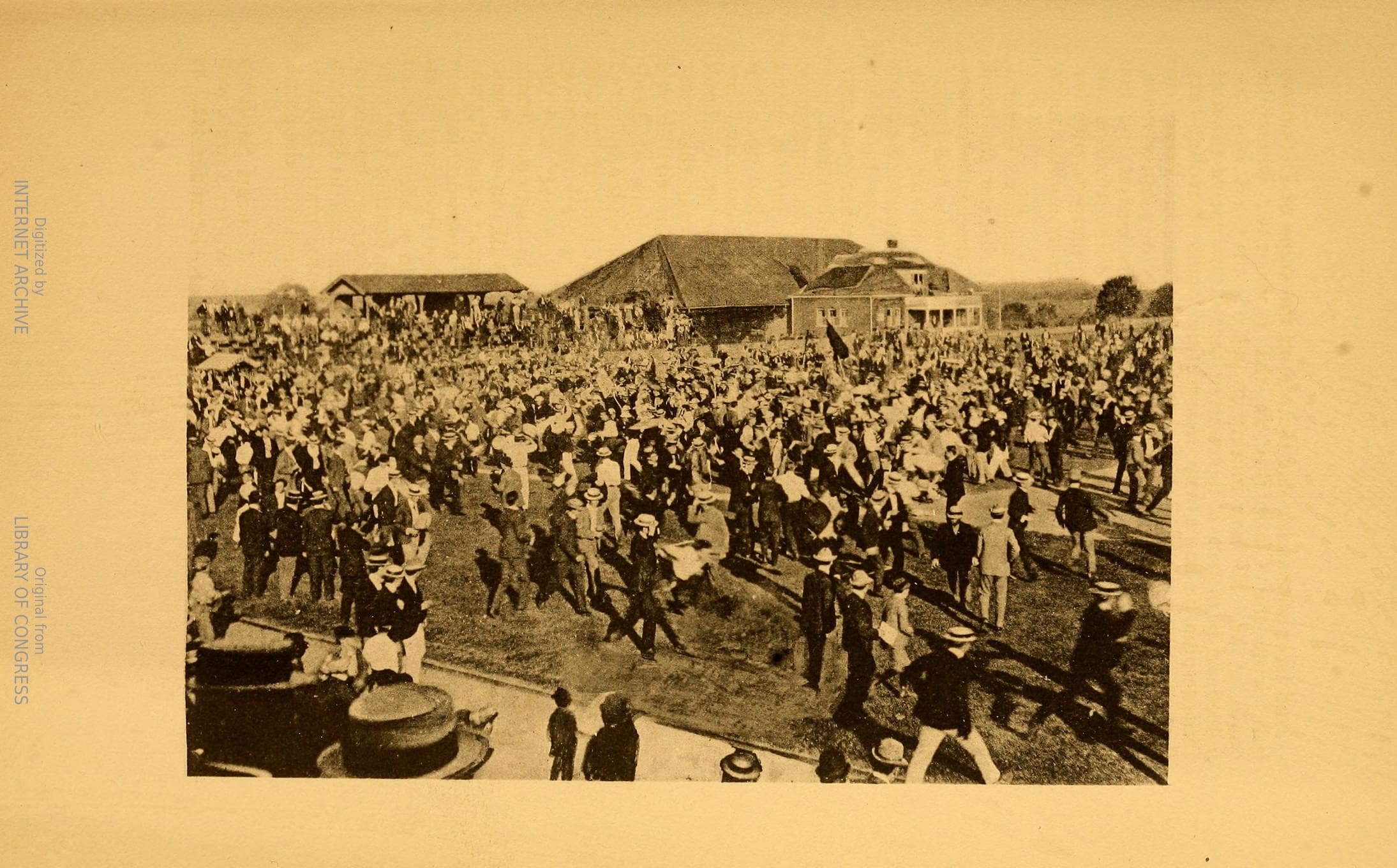
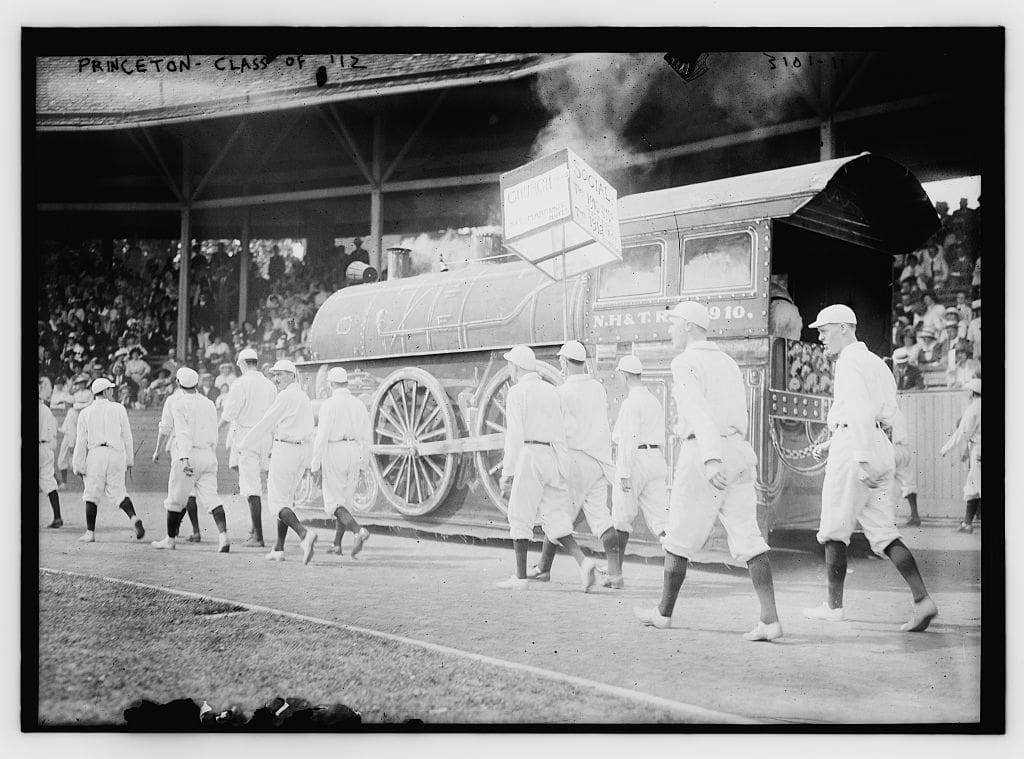
1897: Before Commencement, all returning classes march, in order, to the Princeton/Yale baseball game. It sparks a tradition that becomes the P-rade.
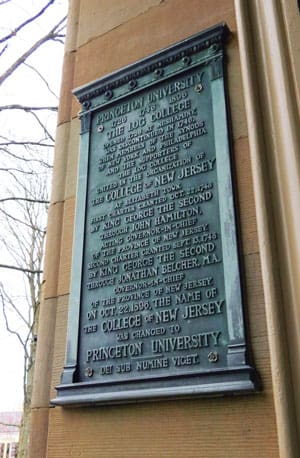
1896: Celebrating its 150th anniversary, the College of New Jersey officially is renamed Princeton University.
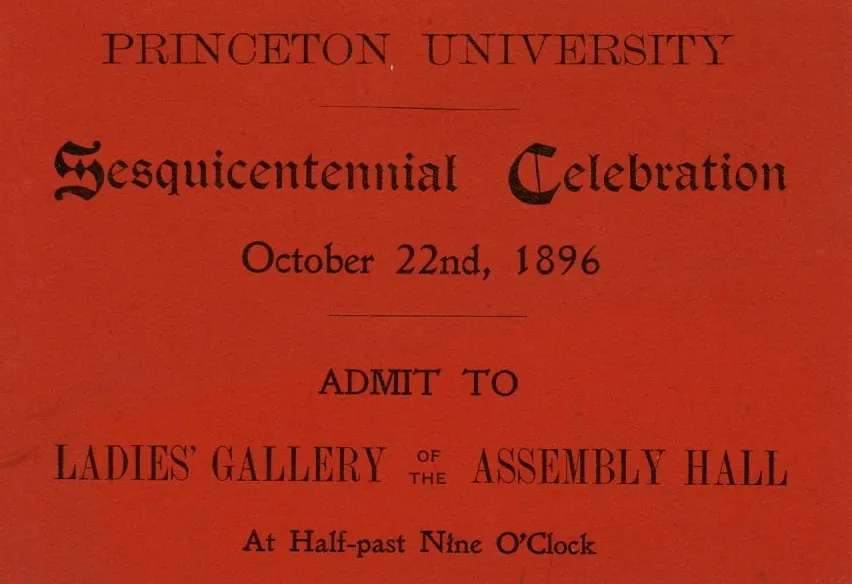
1896: The newly renamed Princeton University celebrates its sesquicentennial (150th anniversary), with 800 Princeton undergraduates and 2,000 alumni marching in a mile-long procession through the campus and town; most carried an orange torch or lantern, and many classes wore coordinated costumes.
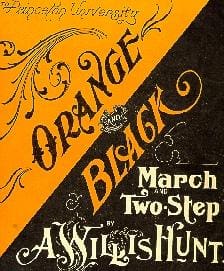
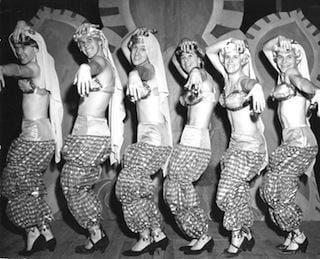
1893: The Triangle Club is established. The Triangle Club is one of Princeton’s longest-standing organizations and America’s oldest touring college musical-comedy theater group. Many alumni go on to perform professionally.
1900s
1909: The Graduate Council of Princeton University is created to provide central leadership to the numerous regional clubs and associations for Princeton alumni around the world.
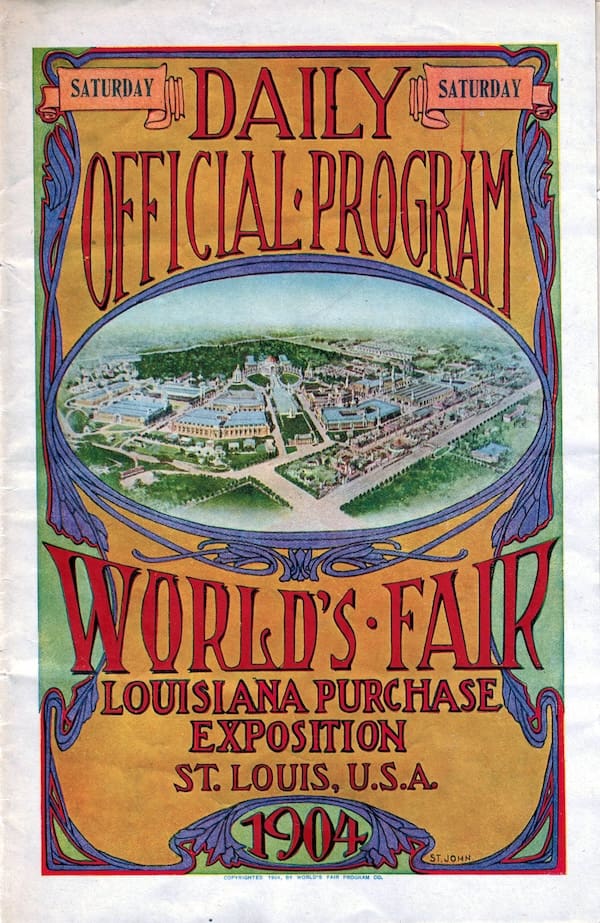
1904: May 21 is proclaimed “Princeton Day” at the St. Louis World’s Fair. The Western Association of Princeton Clubs holds its fifth annual convention there, meeting at the New Jersey state building and the German national pavilion. Some 125 alumni attend, representing 14 clubs from west of the Alleghenies.
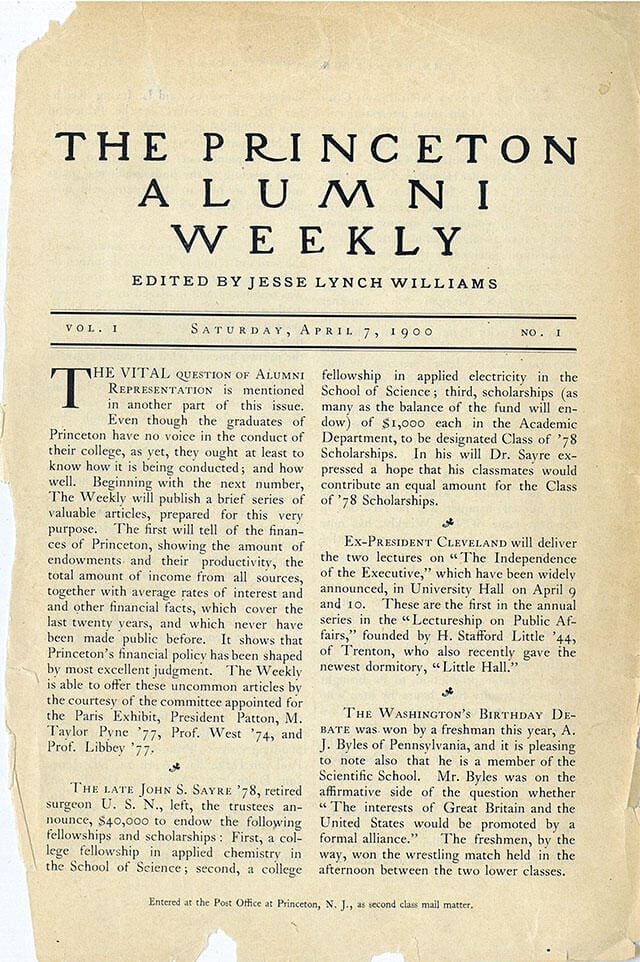
April 7, 1900: The first issue of the Princeton Alumni Weekly is published. The publication aims to keep Princeton’s growing alumni body informed about University life because, as founding editor Jesse Lynch Williams ’1892 writes, “the abstract sentiment of affection for alma mater, being a matter of the heart, cannot well supply the head with actual facts.”
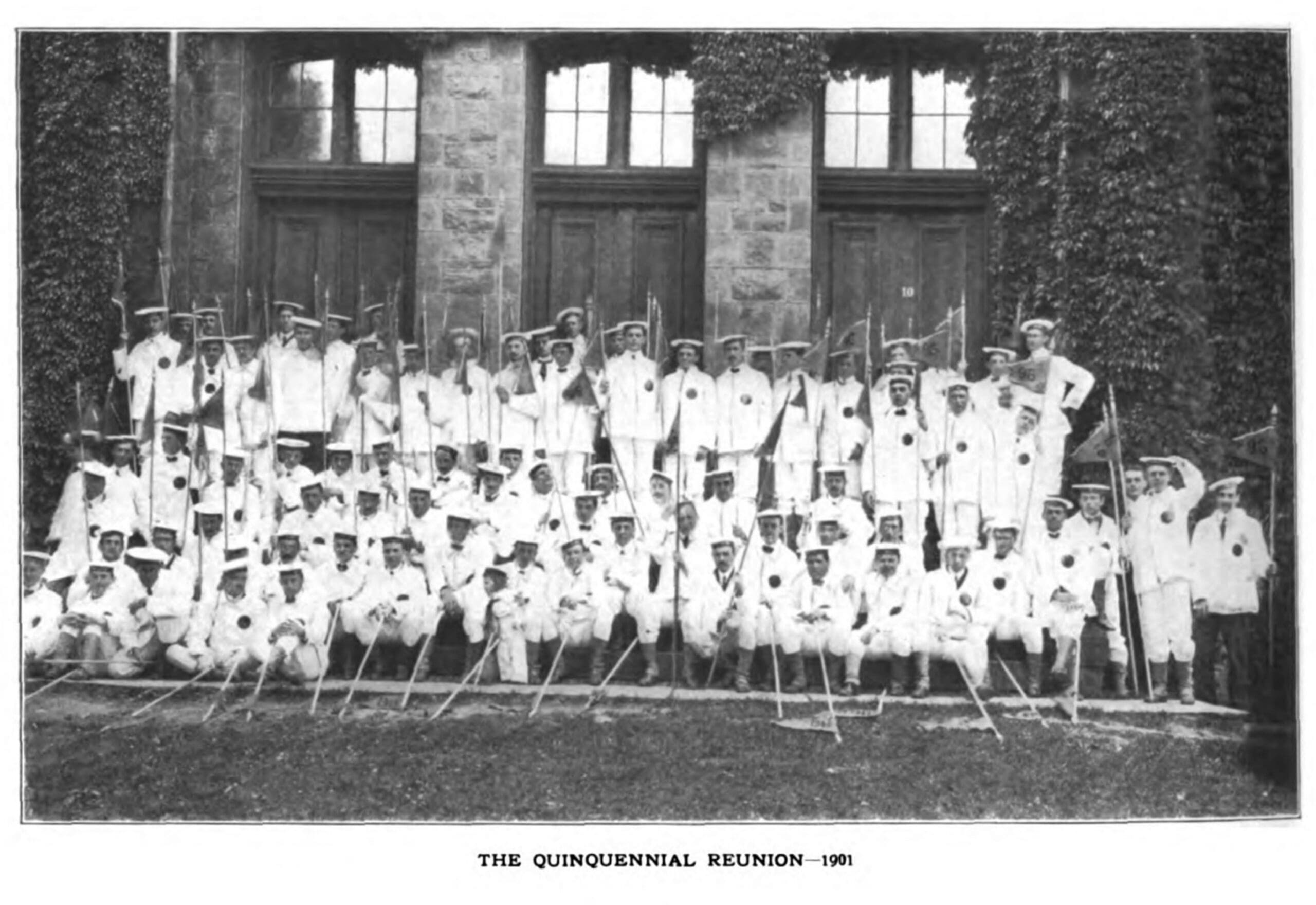
1901: The Class of 1896 introduces the first full-body P-rade costume — “sailors’ uniforms of white, with khaki leggings.” (Two years earlier, they had issued the first custom-designed class hat.) This sparks the enduring tradition among generations of major reunion classes creating elaborate costume ensembles.
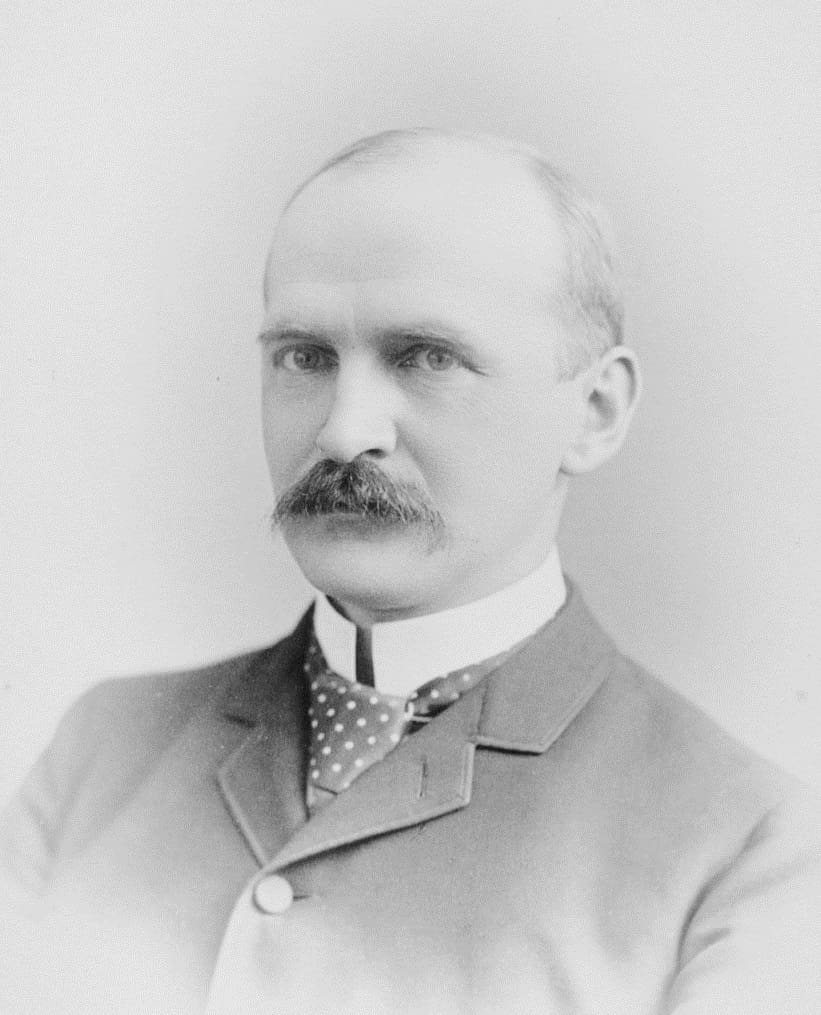
1900: The Princeton Graduate School is formally established by the trustees. Latin professor Andrew Fleming West ’1874 is named its first dean.
1910s
Nov. 1, 1919: The National Alumni Association of Princeton University is formed from the consolidation of the Princeton Alumni Graduate Council and various local alumni clubs and associations.
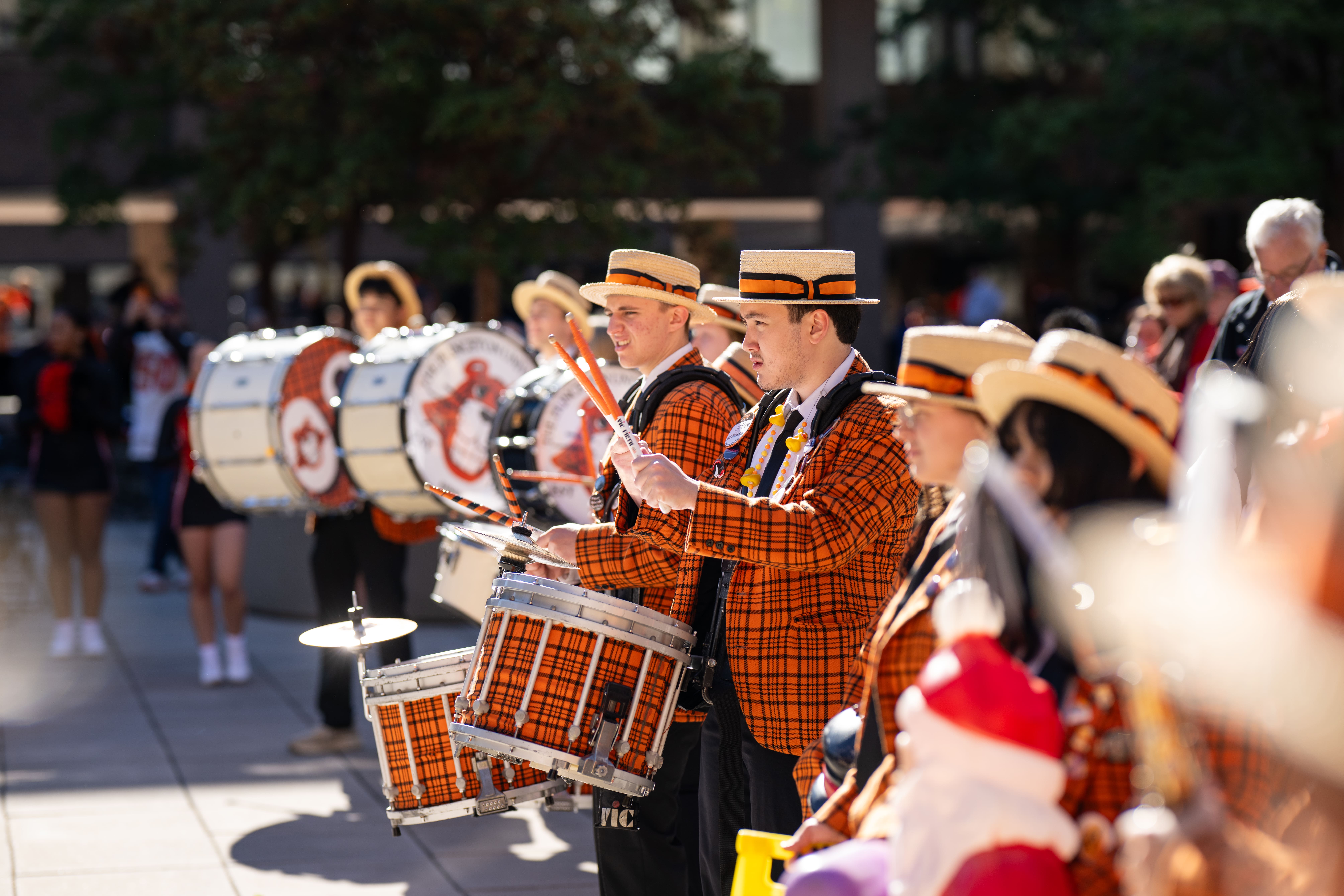
1919: the Tiger Band is formed. The band is one of the nation’s oldest collegiate marching bands. The band was reorganized in 1938 by the Friends of the Princeton Band society, which continues to provide financial support.”
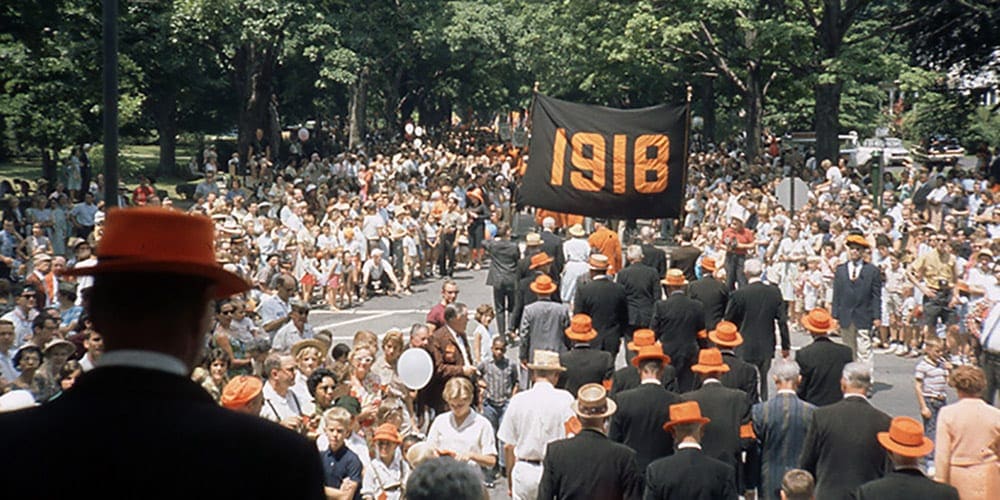
1919: Following World War I, more than 5,000 alumni return for a “victory commencement,” the first Reunions since 1916.
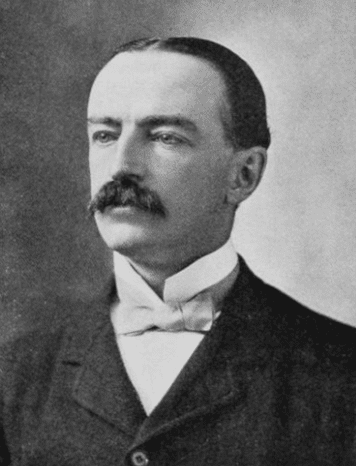
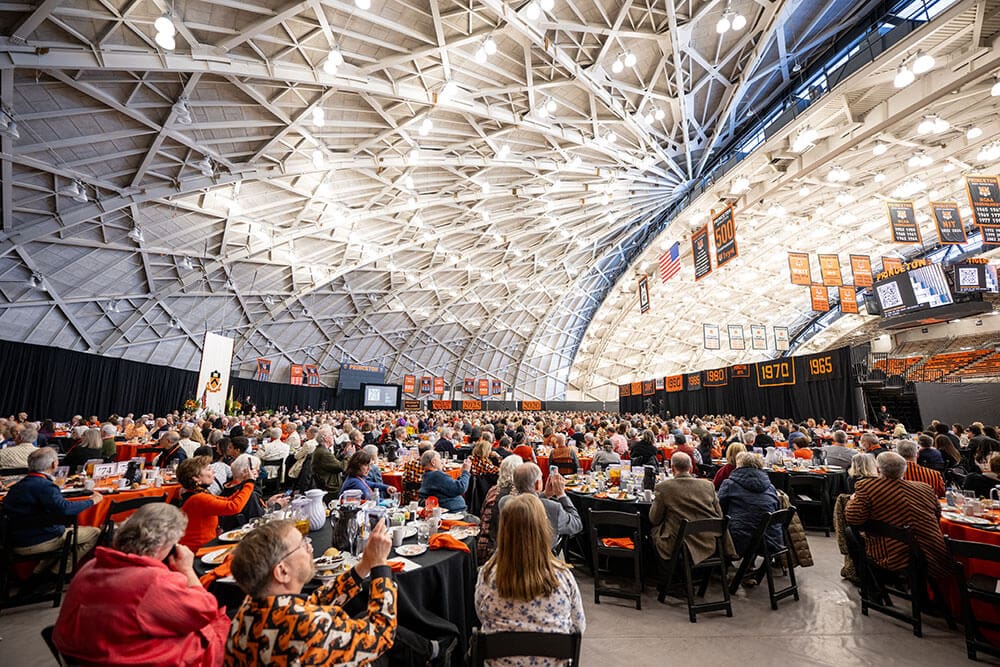
1915: Alumni join what the PAW called “an intellectual pilgrimage to their Alma Mater” on Lincoln’s birthday for the first Alumni Day. The next year it was observed on Washington’s birthday, where it remained until 1955 when it moved to the Saturday closest to Feb. 22.
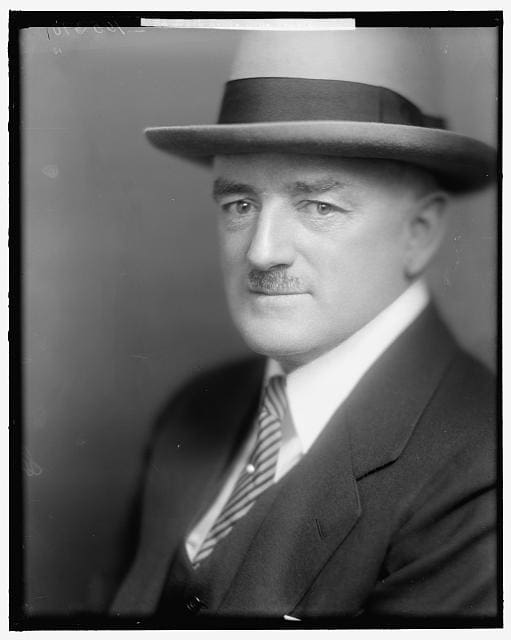
1914: Walter E. Hope, Class of 1901, becomes president of the Alumni Association. A lawyer by trade, Hope would go on to serve as Assistant Secretary of the Treasury.
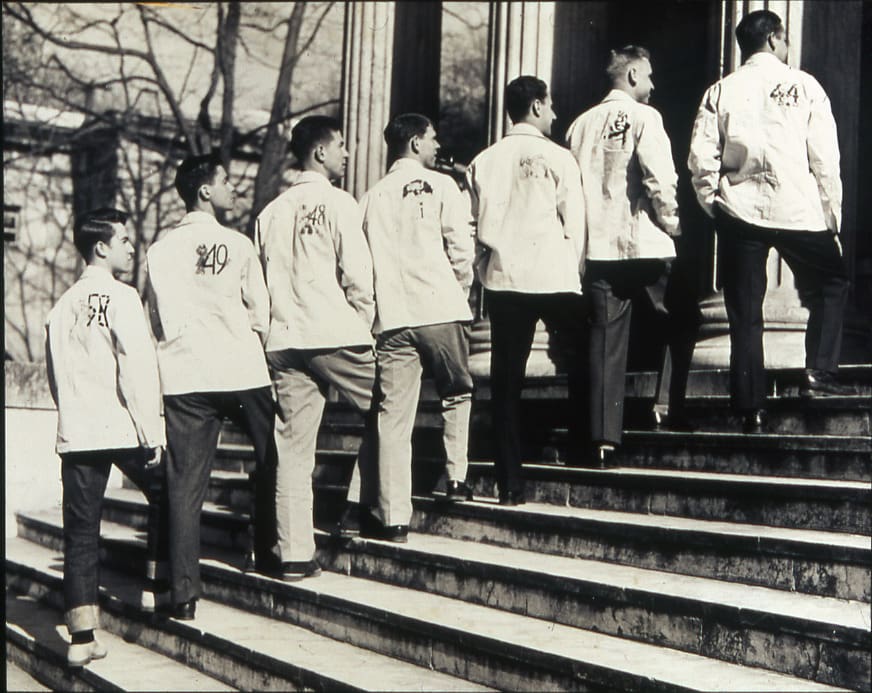
1913: The graduating class dons white denim beer jackets as a means of class identification and protection against beer stains.
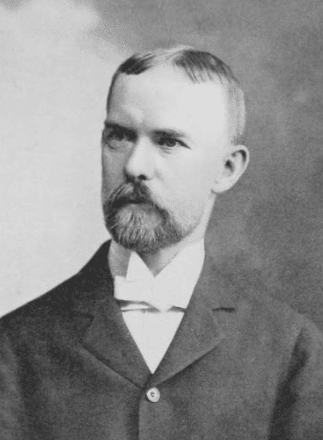
1912: Francis Speir, Class of 1877, becomes president of the Alumni Association. As an undergrad, Speir co-led the first Princeton Science Expedition in paleontology.
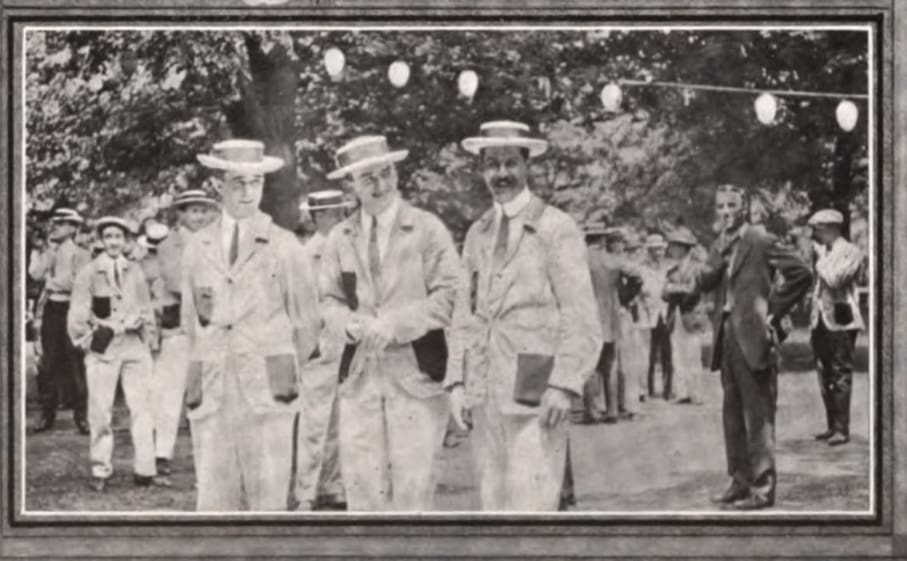
1911: The Class of 1901 becomes the first class to wear their official class blazers at Reunions.
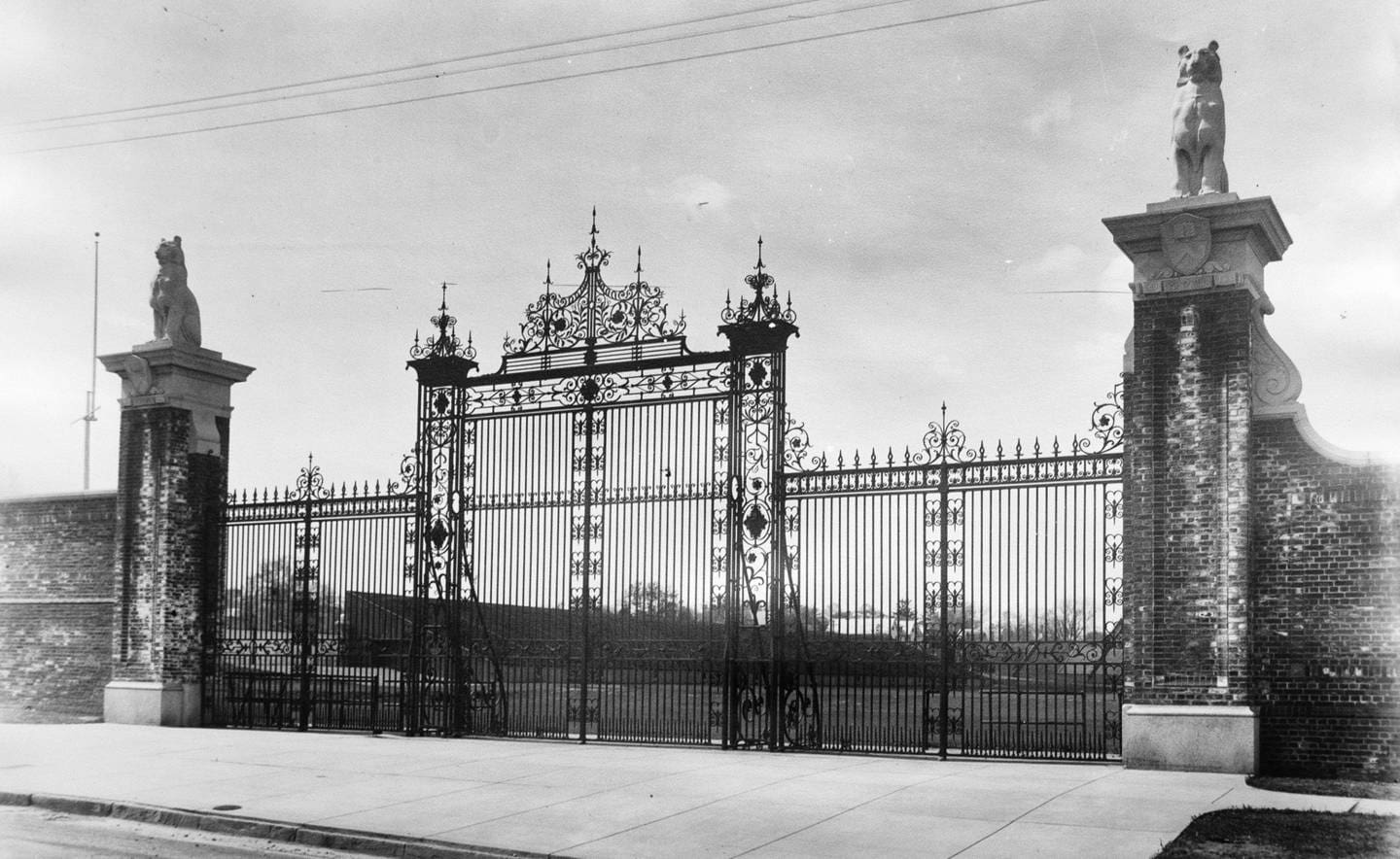
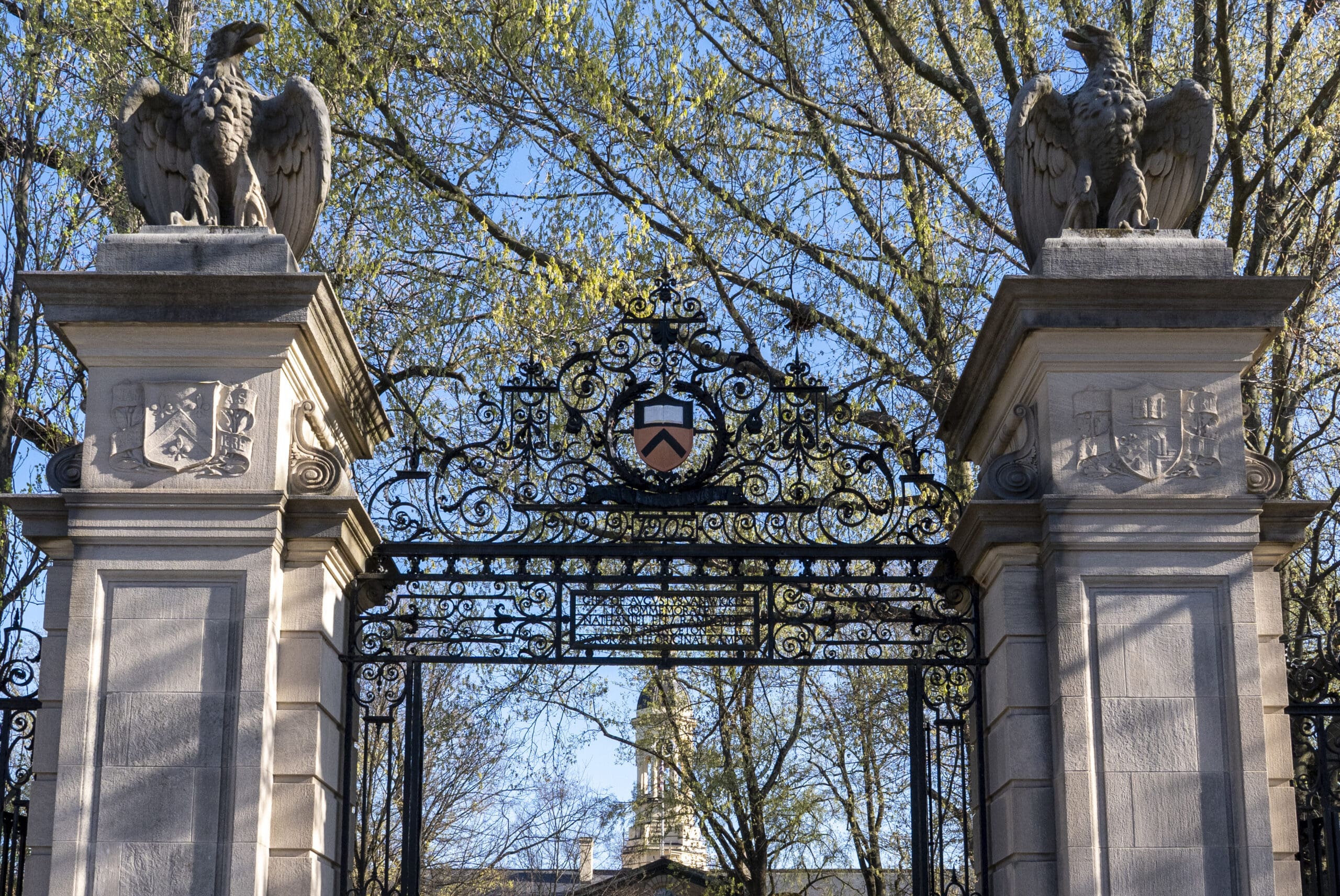
1911: The Ferris Thompson Gateway is built at the southwest corner of University Field. For the next five decades, it is opened on Reunions Saturday to admit the P-rade to the Princeton/Yale baseball game. Marching in from Prospect Avenue, each class would circle the infield and pass by the president’s box, doing a cheer there and sometimes a stunt.
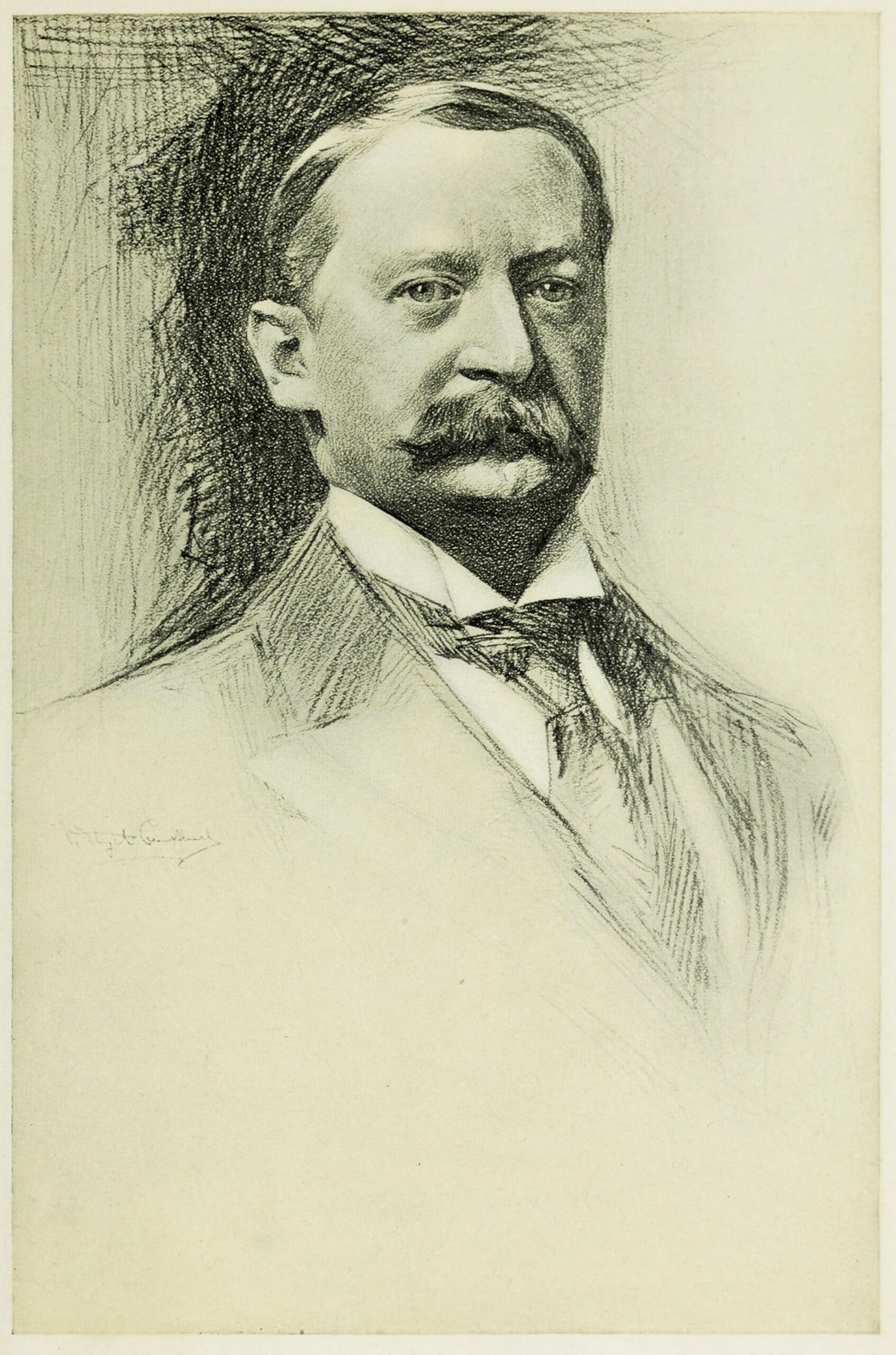
1910: New York publisher Charles Scribner II, Class of 1875, becomes president of the Alumni Association.
1920s
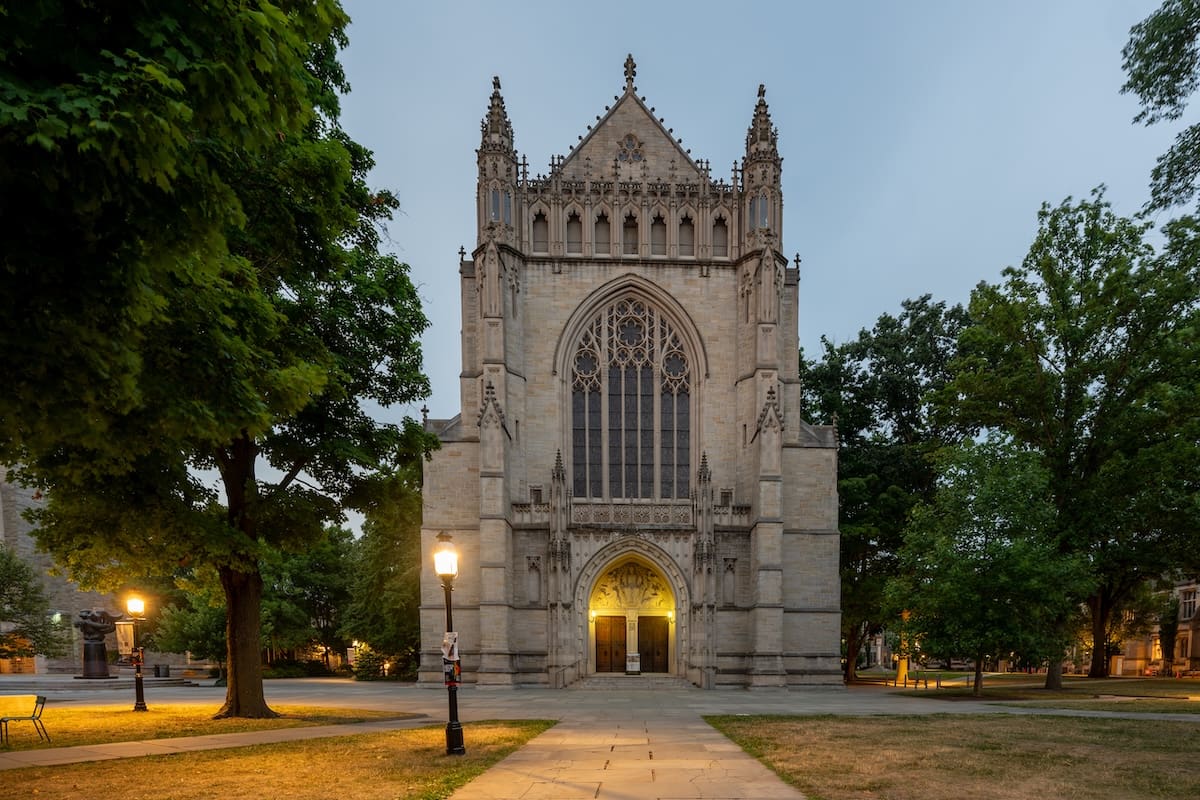
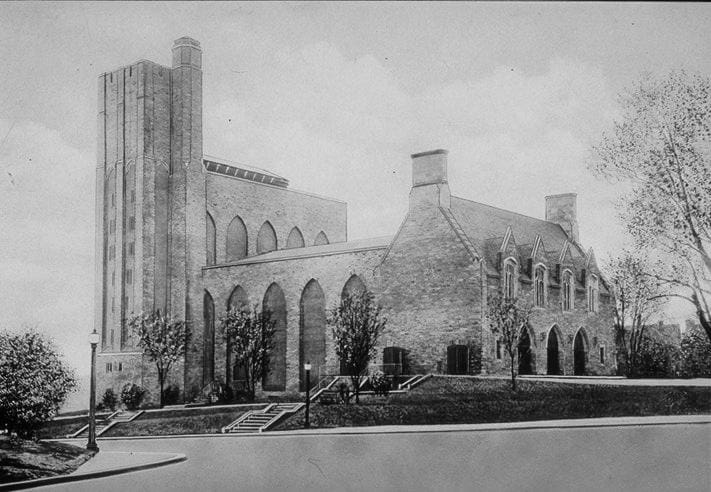
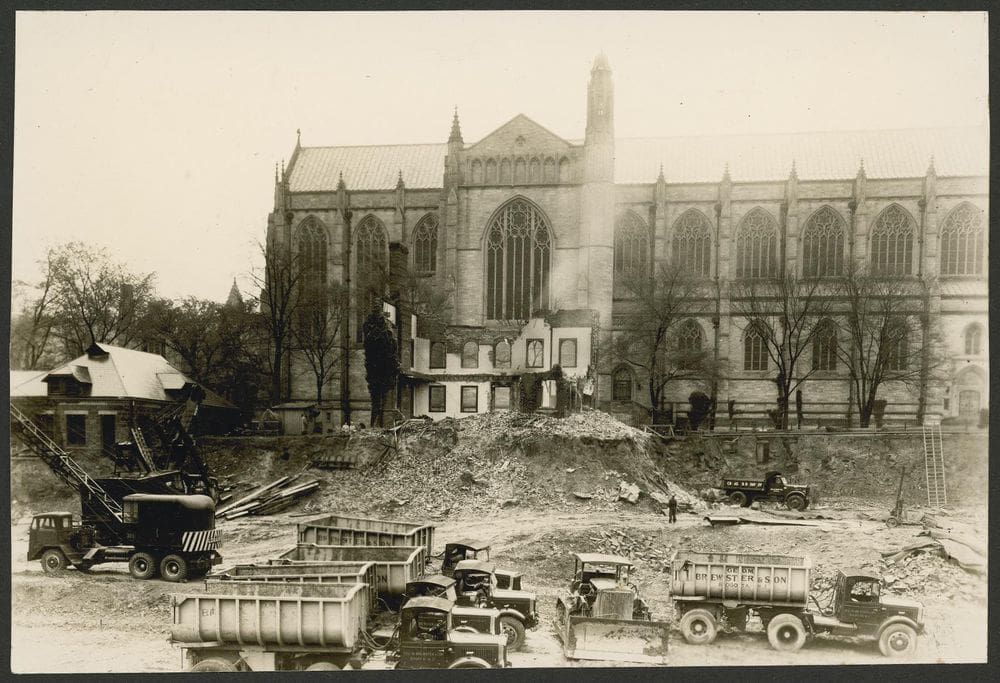
1928: The interdenominational Princeton University Chapel is completed. It was designed in 1921 by Ralph Adams Cram, who also designed the Graduate College and who played a large role in bringing the Gothic style to educational buildings across the United States in that era.
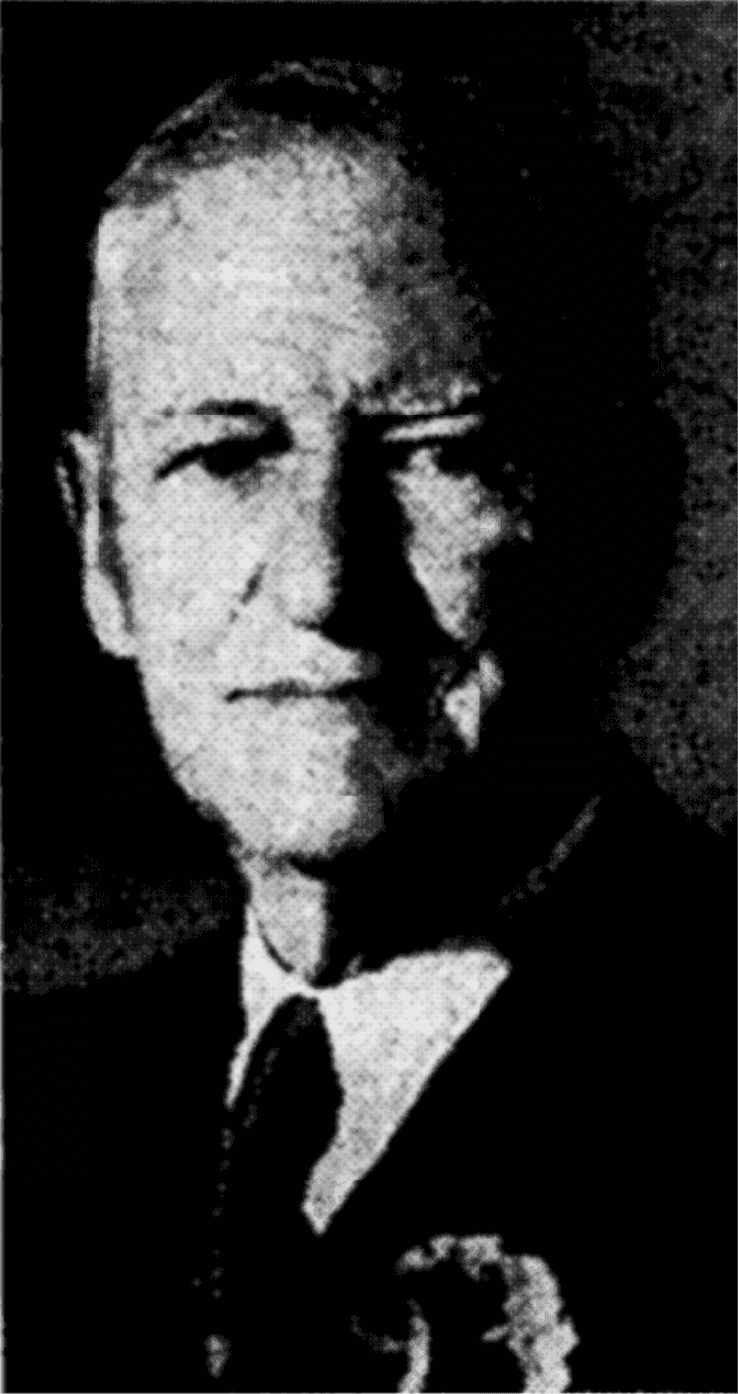
1927: Walter L. Johnson, Class of 1897, becomes president of the Alumni Association. Johnson’s term would overlap with his serving as vice president of the New York Stock Exchange.
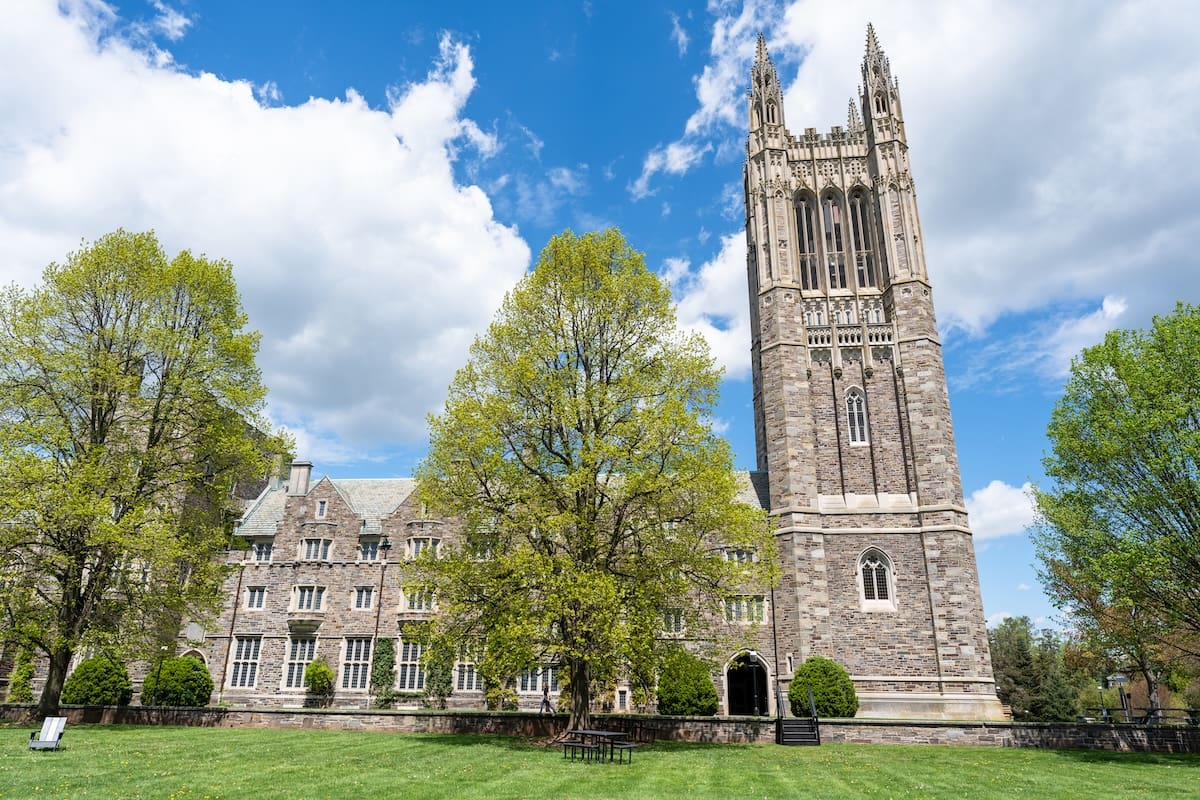
1927: The Class of 1892 gifted the University a 35-bell carillon, installed in the Graduate School’s Cleveland Tower. With additional bells added over the years, the carillon now boasts 67 bronze bells and is the fifth-largest in the United States and 10th-largest in the world. The bells ring every Sunday at 1 p.m., played via a manual keyboard.
1926: Convening 11 Princeton alumni for a luncheon, Gaston Drake, Class of 1894, establishes the Princeton Club of South Florida. Today, the Princeton Club of South Florida presents the Gail Serota ’75 Princeton Club Service Award each year to a South Florida high school student who demonstrates a wide-ranging, extraordinary commitment to civic service as reflected in the life of past club president Gail Dorff Serota ’75 P14.
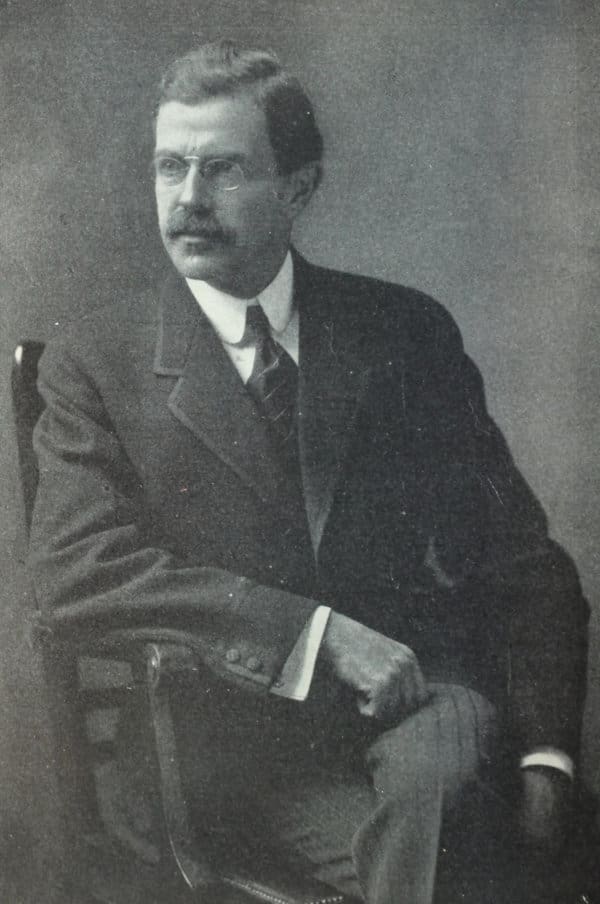
1926: President John Grier Hibben ’1882 *1893 introduces the thesis requirement.
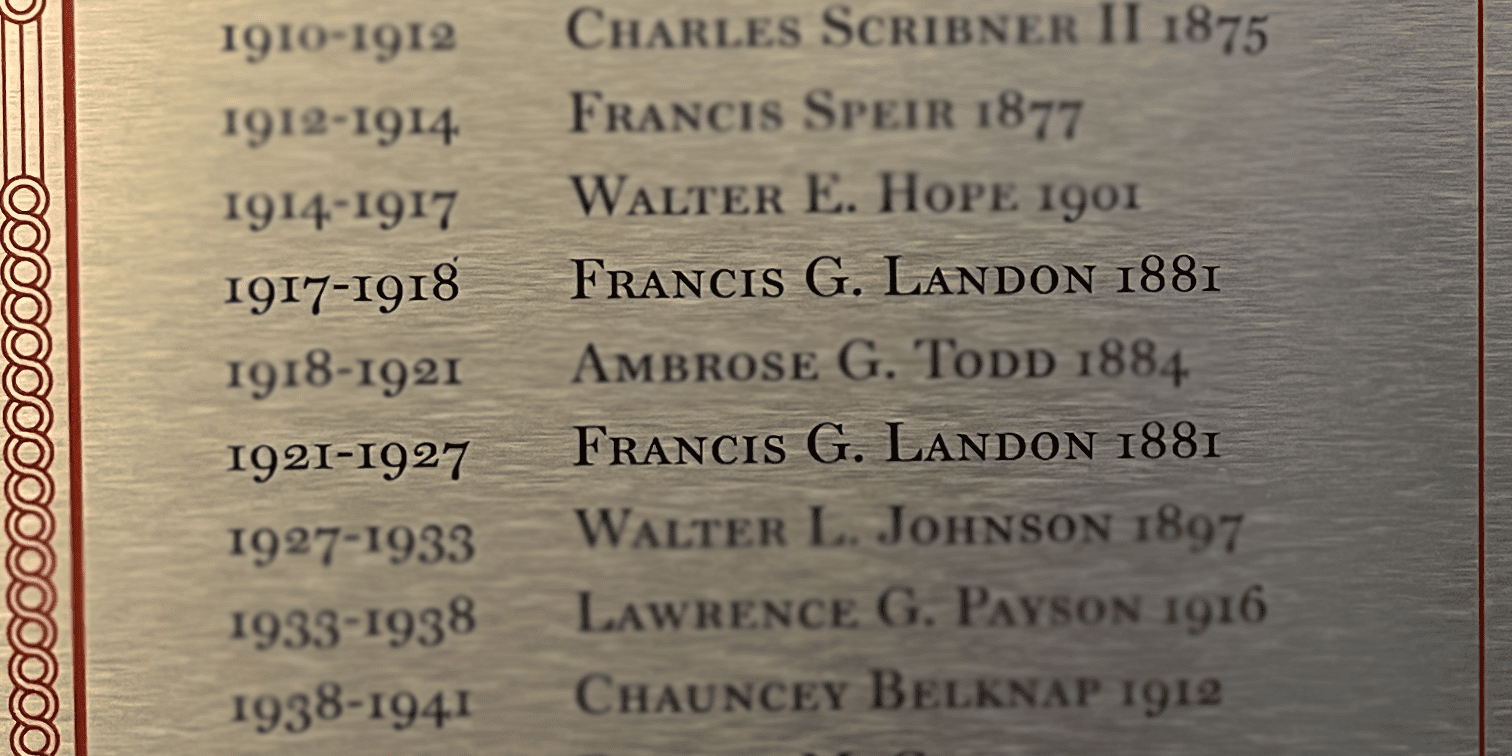
1921: Francis G. Landon, Class of 1881, begins his second term as president of the Alumni Association. Notably, Francis is the only alumni to serve two non-consecutive terms.
1930s
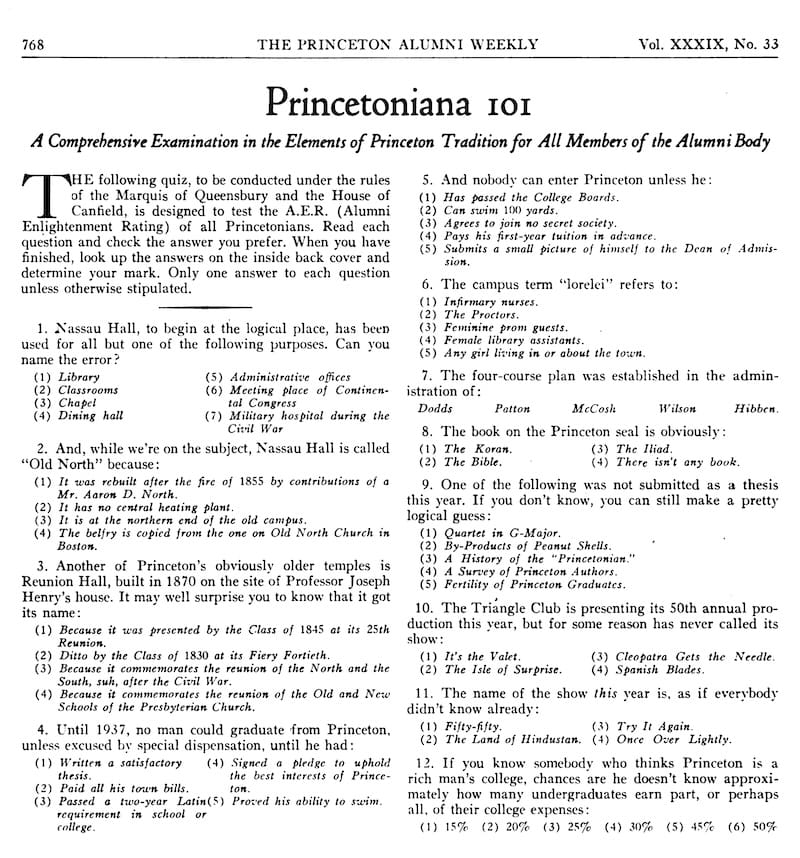
1939: The PAW prints a trivia quiz for alumni titled “Princetoniana 101.” One of the brainteasers asks: “Can you tell me what the Graduate Council is at Princeton?” Answer: “Executive Committee of the National Alumni Association.”
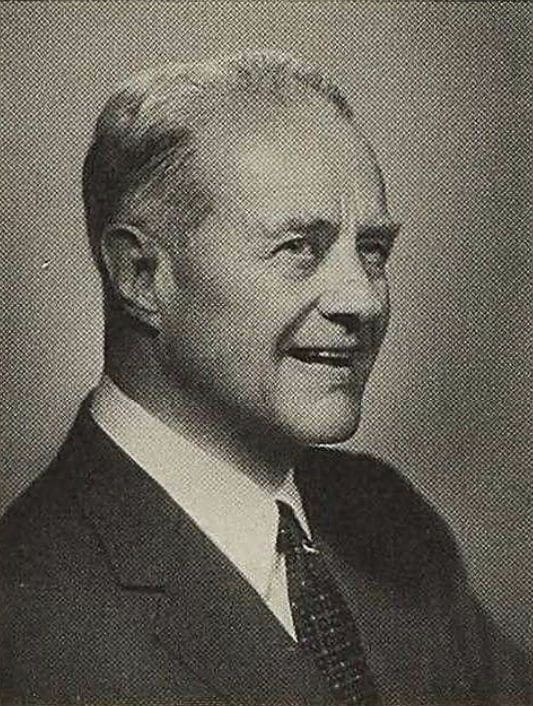
1938: Chauncey Belknap, Class of 1912, becomes president of the Alumni Association. An infantryman in World War I, he worked under Maj. George C. Marshall to help supervise the movement of American troops in France . Marshall described Belknap as “an interesting example of the rapidity with which an American can adapt himself to the performance of an intricate and difficult task.” Known as “Chick” to his colleagues, Belknap became a prominent New York lawyer and also served as a University trustee for 20 years.
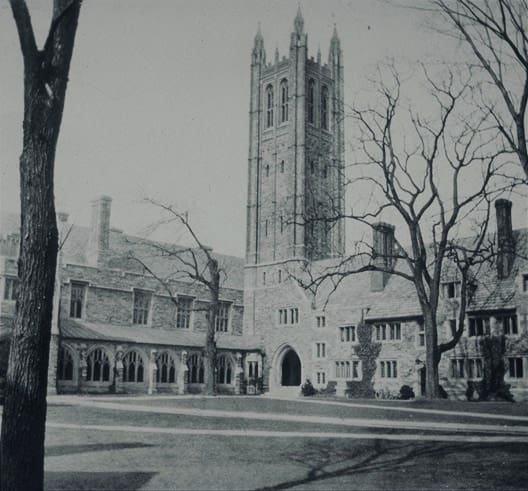
1935: Now an annual highlight of Reunions, the first luncheon for the Princeton National Alumni Association is held in Holder Hall for members and their families.
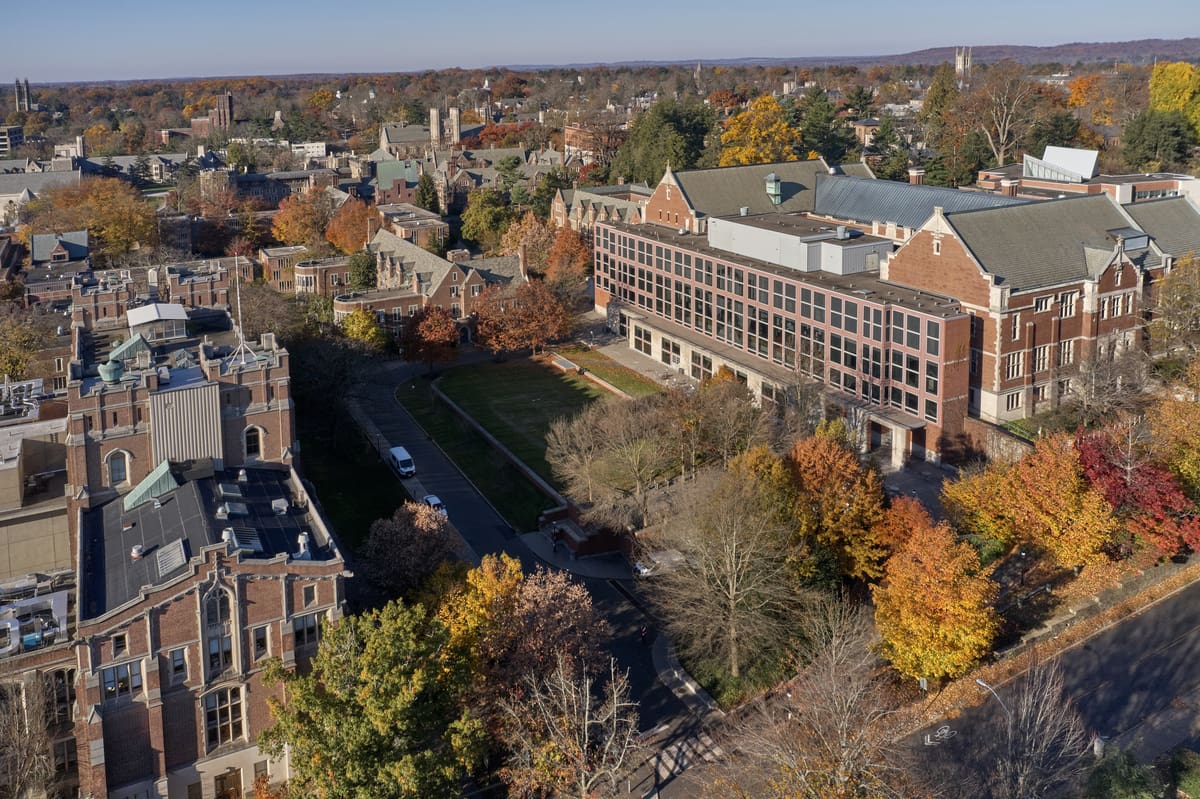
1933: Laurence G. Payson, Class of 1916, becomes president of the Alumni Association. Payson championed financial aid by establishing a tuition savings trust fund during his term. In June 1935, he presided over the annual meeting of the Princeton National Alumni Association, which followed the first-ever Reunions luncheon for members of the association and their families. He became a noteworthy banker in New York City and served as a trustee of the University.
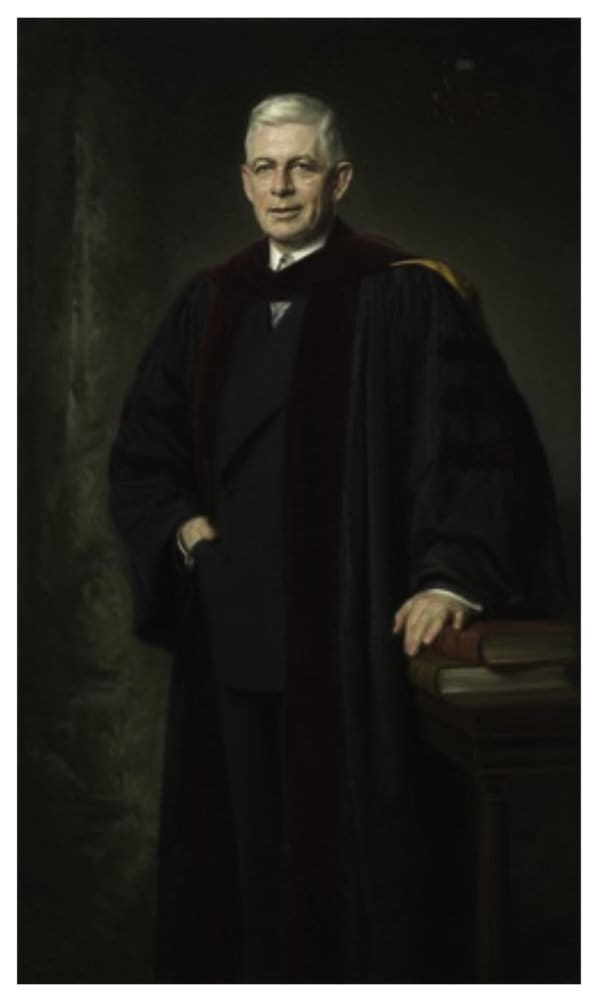
1933: Harold Willis Dodds *1914, chair of the School of Public and International Affairs, is named president of the University.
1940s
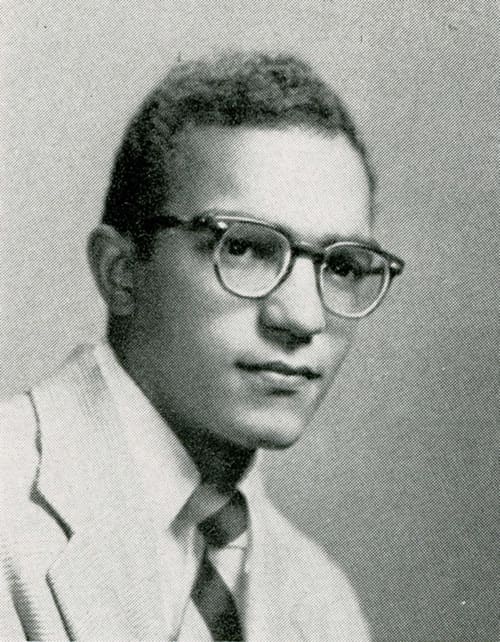
1949: Robert Joseph Rivers ’53 becomes one of Princeton’s first Black undergraduate students. Later, Rivers would become one of the first Black members of the Board of Trustees (1969), and the roadway that enters campus from Nassau Street between Firestone Library and the Andlinger Center for the Humanities was renamed Rivers Way in honor of his impact (2019).
1949: Richard K. Stevens, Class of 1922, becomes president of the Alumni Association. A lawyer by trade, Richard was a devoted Princetonian, attending 60 consecutive reunions from 1927 to 1987.
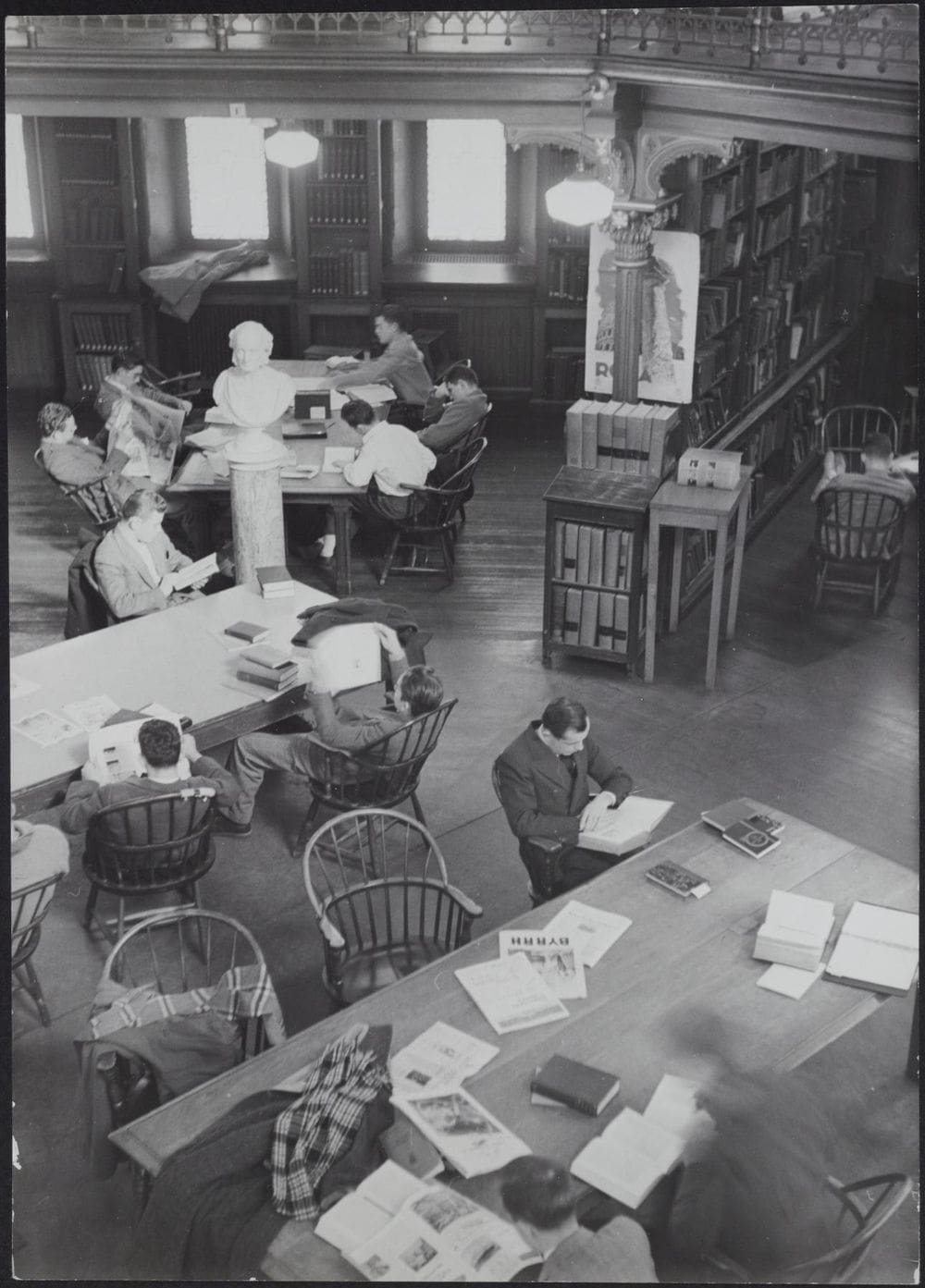
1948: The Harvey S. Firestone Memorial Library opened in 1948 as the first large American university library constructed after World War II. Though not the largest university library in the world, the library has more books per enrolled student than that of any other university in the United States.
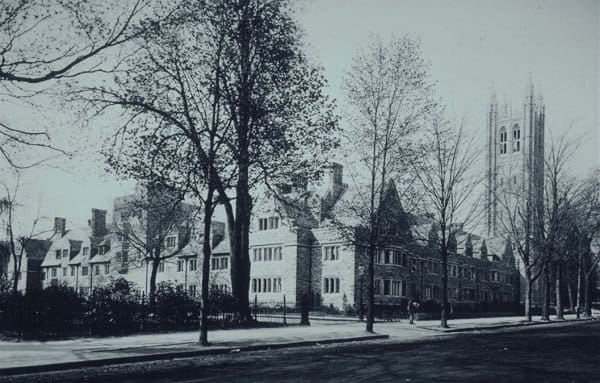
1947: The Class of 1922 holds its 25th Reunion in Holder Hall courtyard, making it the first on-campus reunions site.
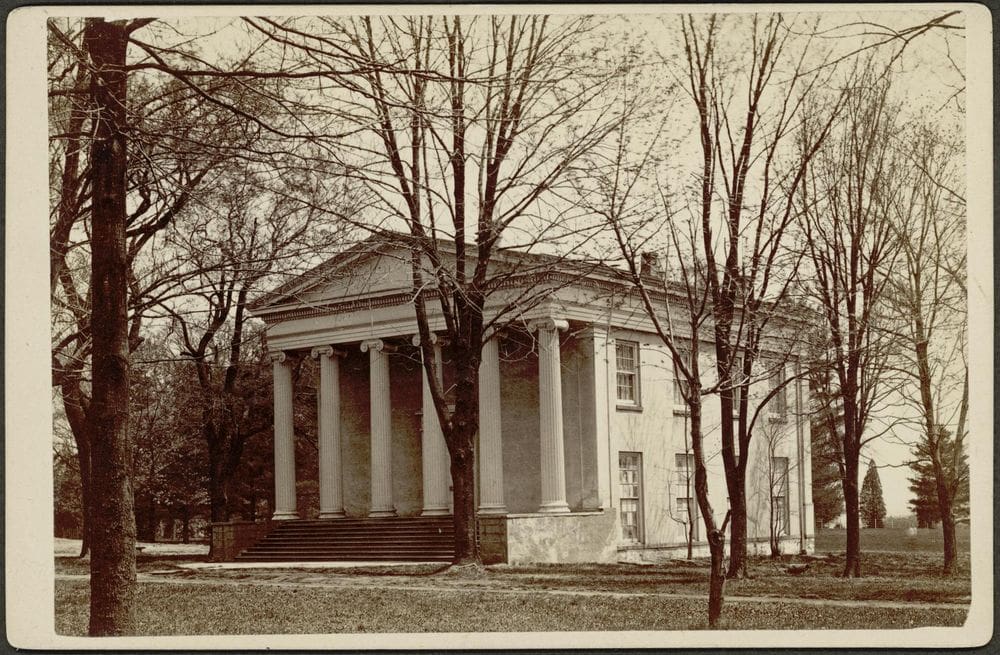
1947: Lewis L. Lukens, Class of 1917, becomes president of the Alumni Association. After his service in World War I, Lewis would go on to serve as a senior partner of Lukens, Savage & Washburn, a Philadelphia based insurance brokerage.
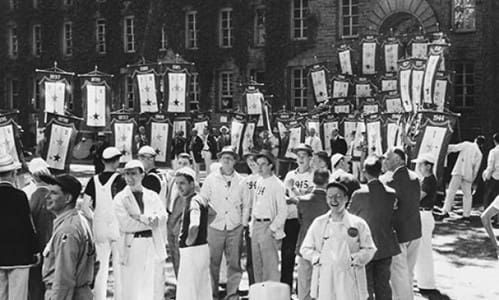
1946: More than 7,000 alumni return to Princeton for the “victory reunion” following World War II.
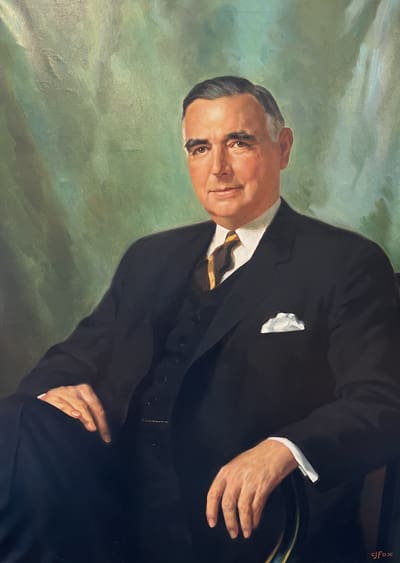
1945: Harold H. Helm, Class of 1920, becomes president of the Alumni Association. Harold served as the inaugural chairman of Annual Giving (1940-42) and is the namesake of the Harold H. Helm ’20 Distinguished Service Award, which is the highest distinction Princeton confers for volunteer service to Annual Giving.
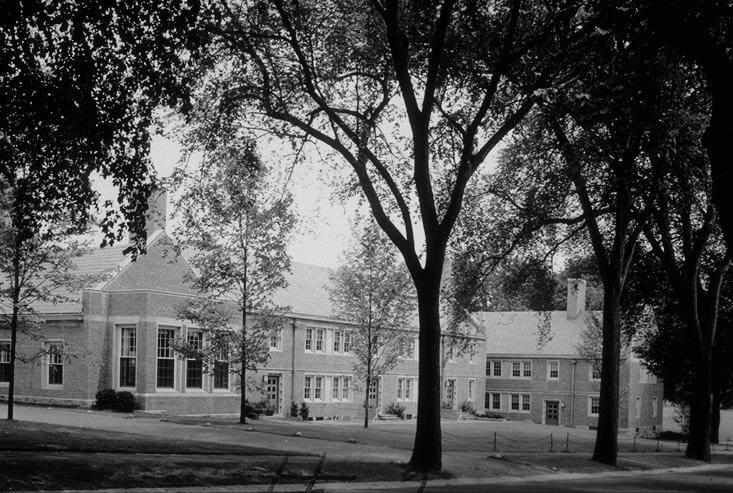
1941: Robert M. Green, Class of 1913, becomes president of the Alumni Association. Green would later be awarded the Class of 1913 Memorial Cup by his classmates for “outstanding contribution to Canadian-American relations” for his work as vice president of the Prudential Life Insurance Company, where he was in charge of all Canadian operations.
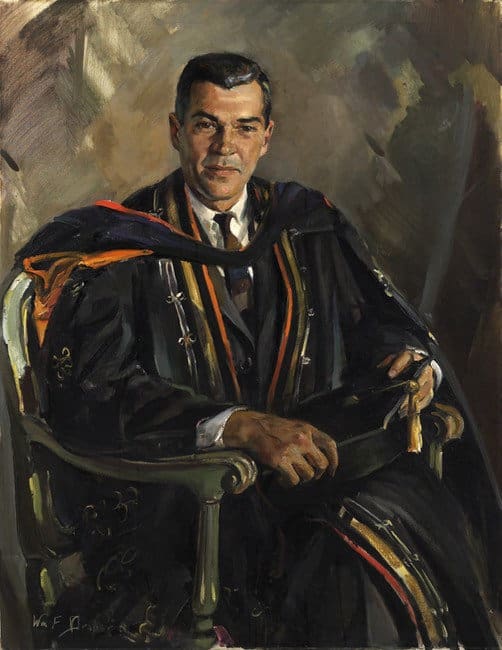
1940: Robert F. Goheen ’40 *48 becomes the only future Princeton president to win the Pyne Prize.
1950s
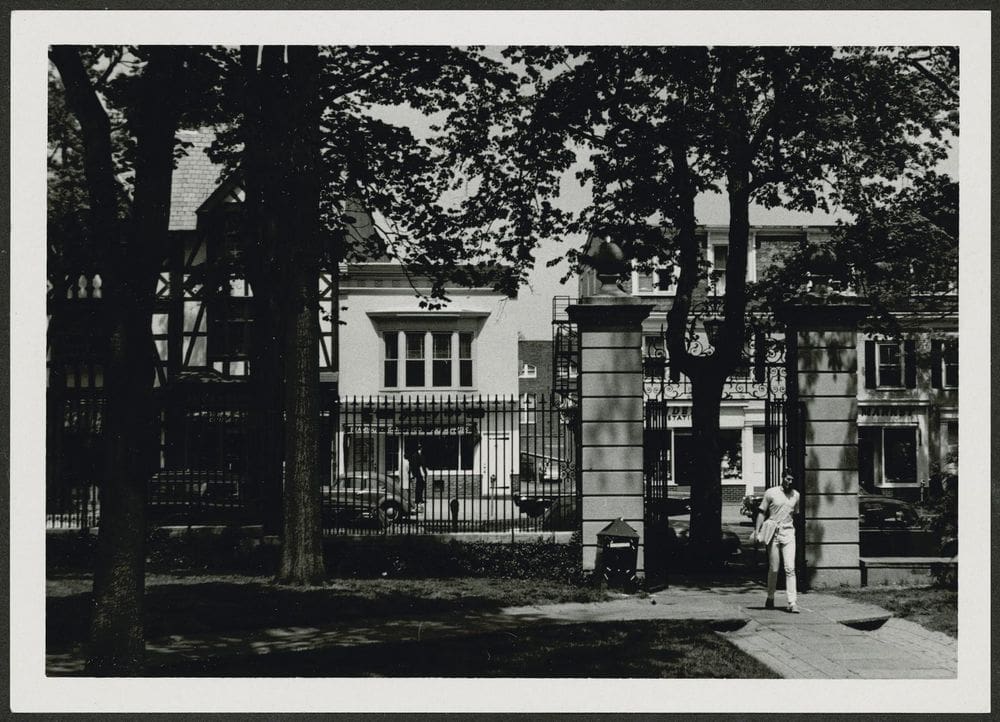
1959: Walker W. Stevenson ’35 becomes president of the Alumni Association. Stevenson was a direct descendant of Declaration of Independence signatory and former university president John Witherspoon. at Princeton, he served as editor of The Daily Princetonian and was on the tennis team. His memorial service was held at the University Chapel and the flag over East Pyne was flown at half-mast for five days in his honor.
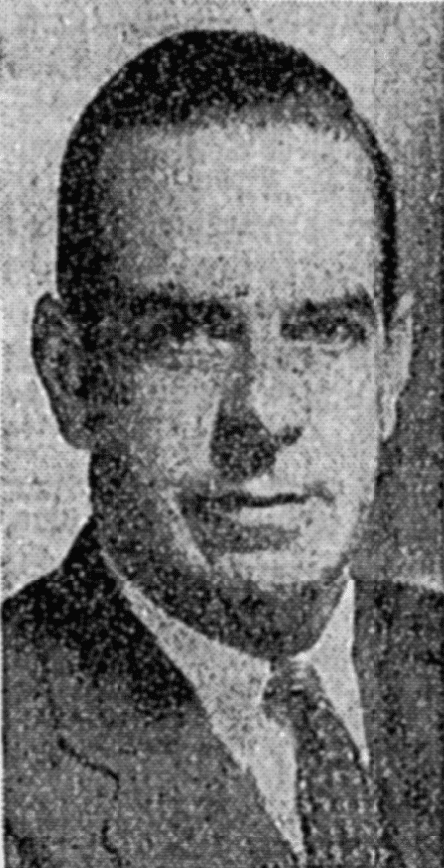
1957: Dorrance Sexton ’33 becomes president of the Alumni Association. The former chairman and chief executive officer of the international insurance firm Johnson & Higgins, Sexton also earned his varsity letter on the 1933 baseball team
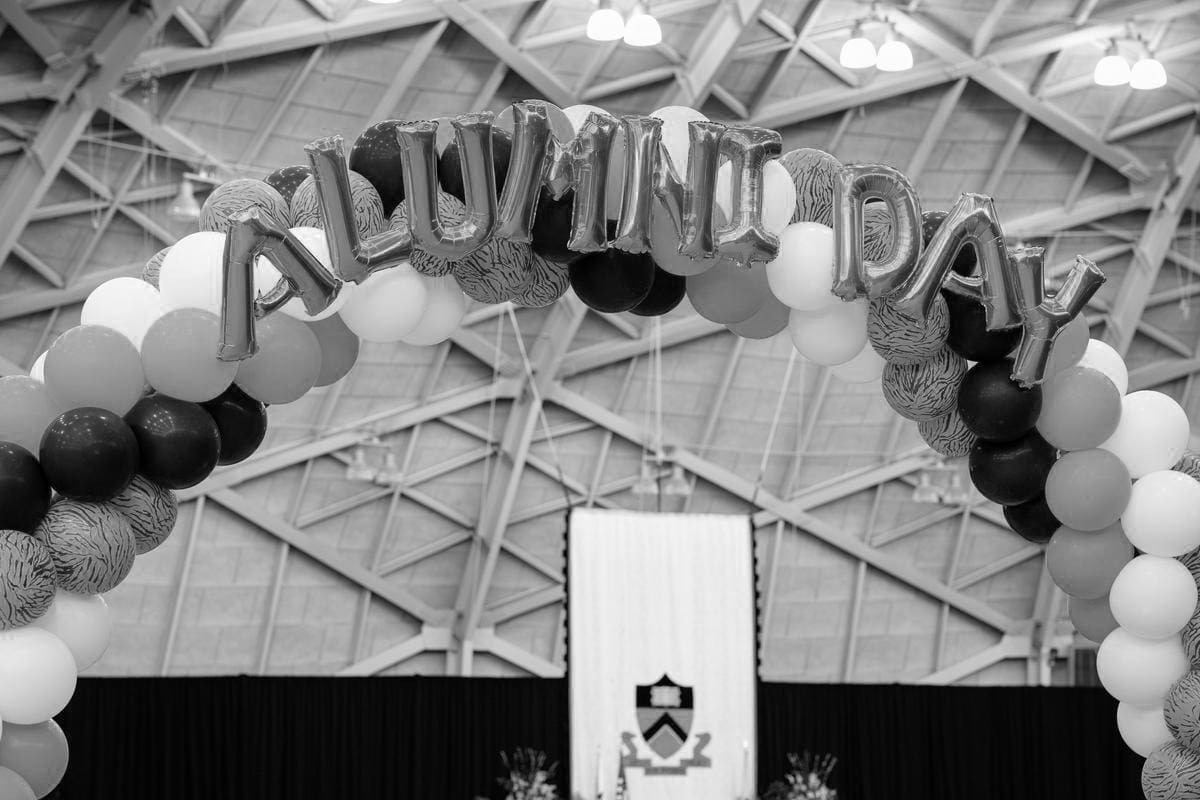
1955: Alumni Day was first observed on Abraham Lincoln’s birthday in 1915; the date shifted to George Washington’s birthday the following year. The date shifted again in 1955, when it began to be observed on the Saturday nearest February 22nd, a tradition that continues to this day.
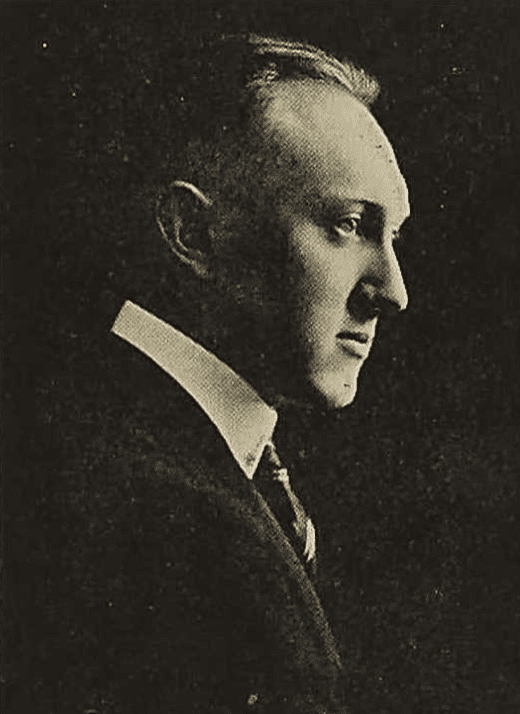
1955: Chandler Cudlipp, Class of 1919, becomes president of the Alumni Association. His interior design firm, Chandler Cudlipp Associates, was responsible for the interior styling of the former Princeton Club of New York and the decor of The Coach Room, a restaurant that opened in 1959 in Nassau Inn.
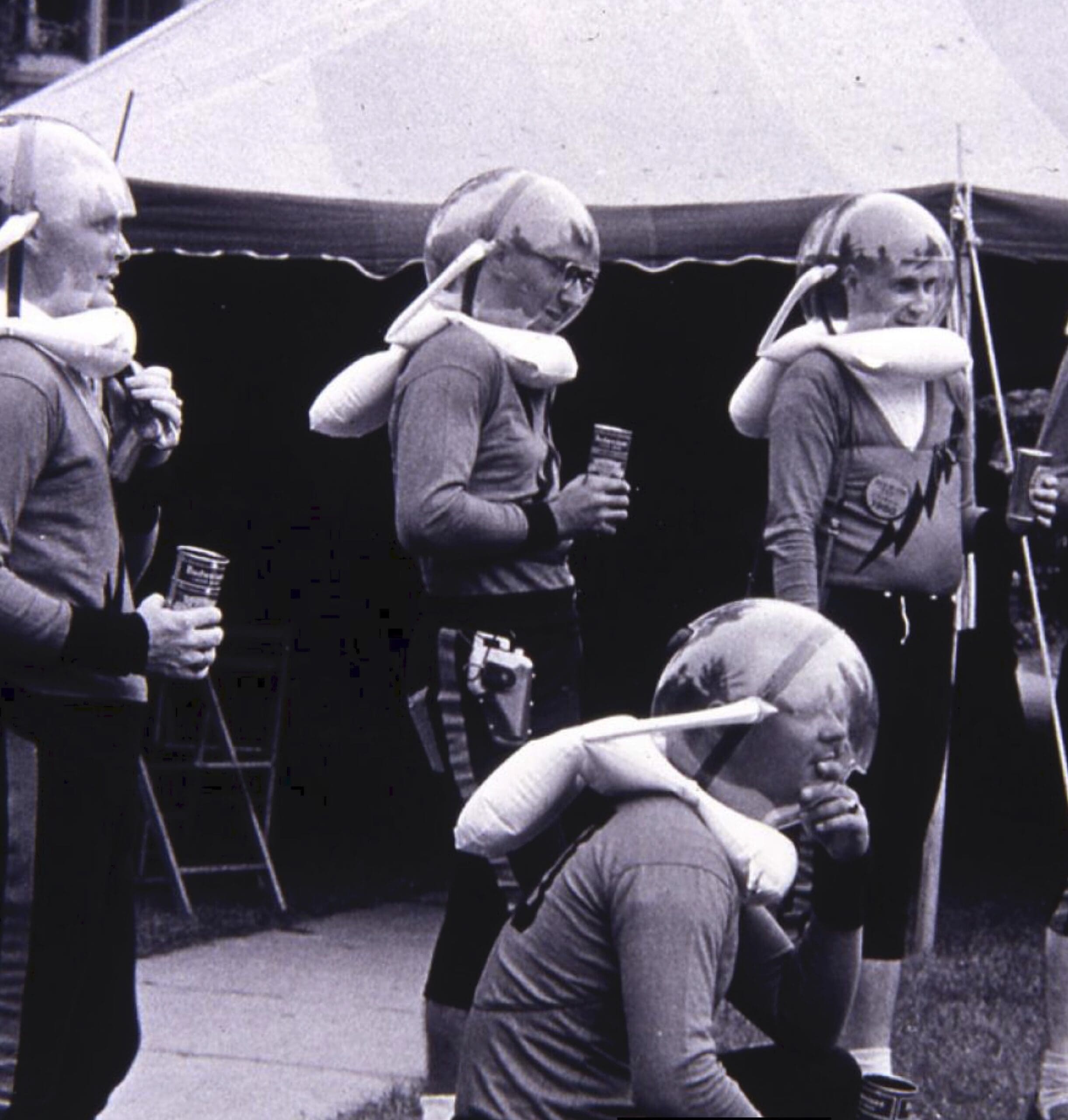
1955: A cherished Princeton tradition, classes celebrating major reunions concoct elaborate and imaginative costumes for the one and only P-rade. One of the more memorable examples occurred in 1955, as the great Class of 1950 returned to campus costumed as “men of the future.”
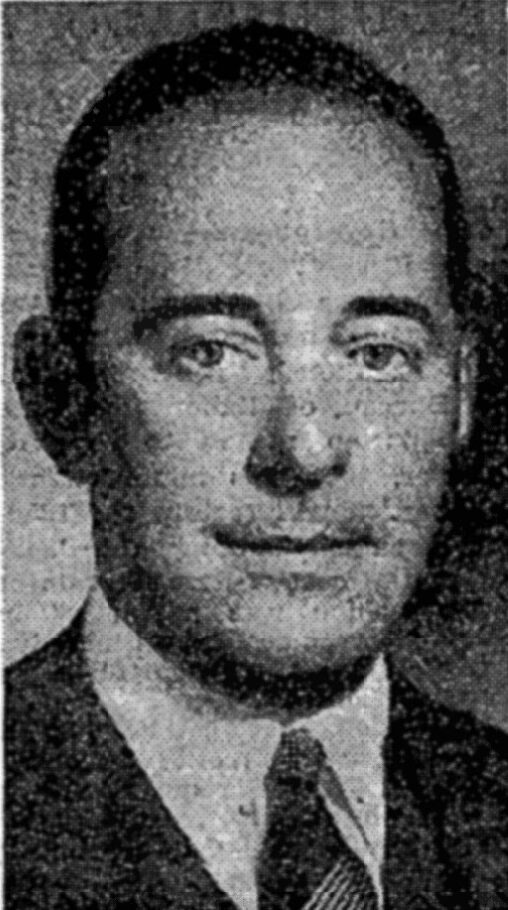
1953: George E. Clark ’29 becomes president of the Alumni Association. No stranger to the title of president, Clark served that same role at the New York-based investment firm Adams Express from 1948 to 1970.
1951: John C. Williams, Class of 1925, becomes president of the Alumni Association. Williams was one of 18 classmates who traveled to Japan in 1956 for eight days of unique cultural immersion in celebration of the great Class of 1925’s 25th Reunion.
1960s
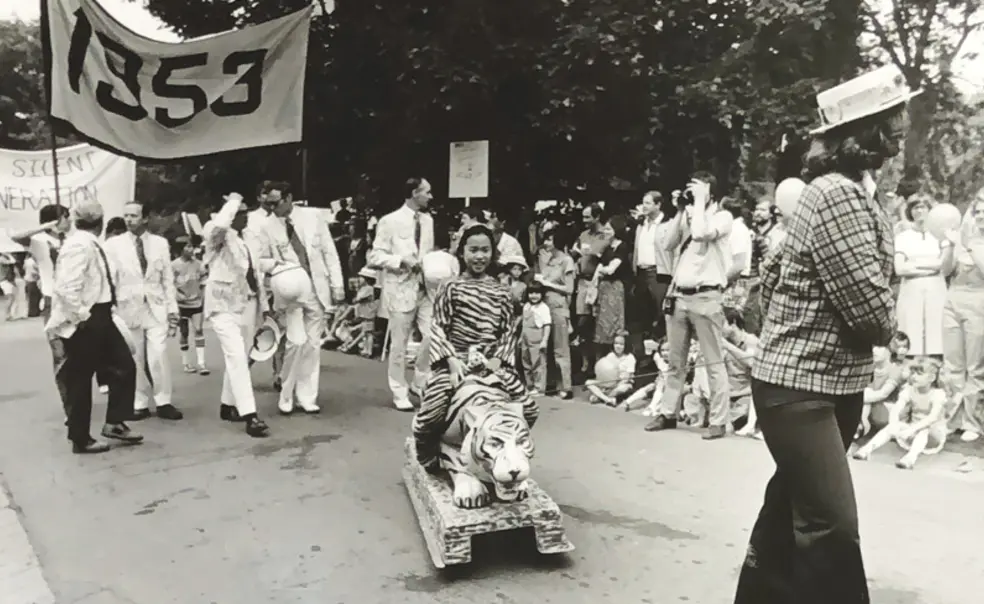
1969: Women participate in the P-rade for the first time after Princeton began admitting women as undergraduates.
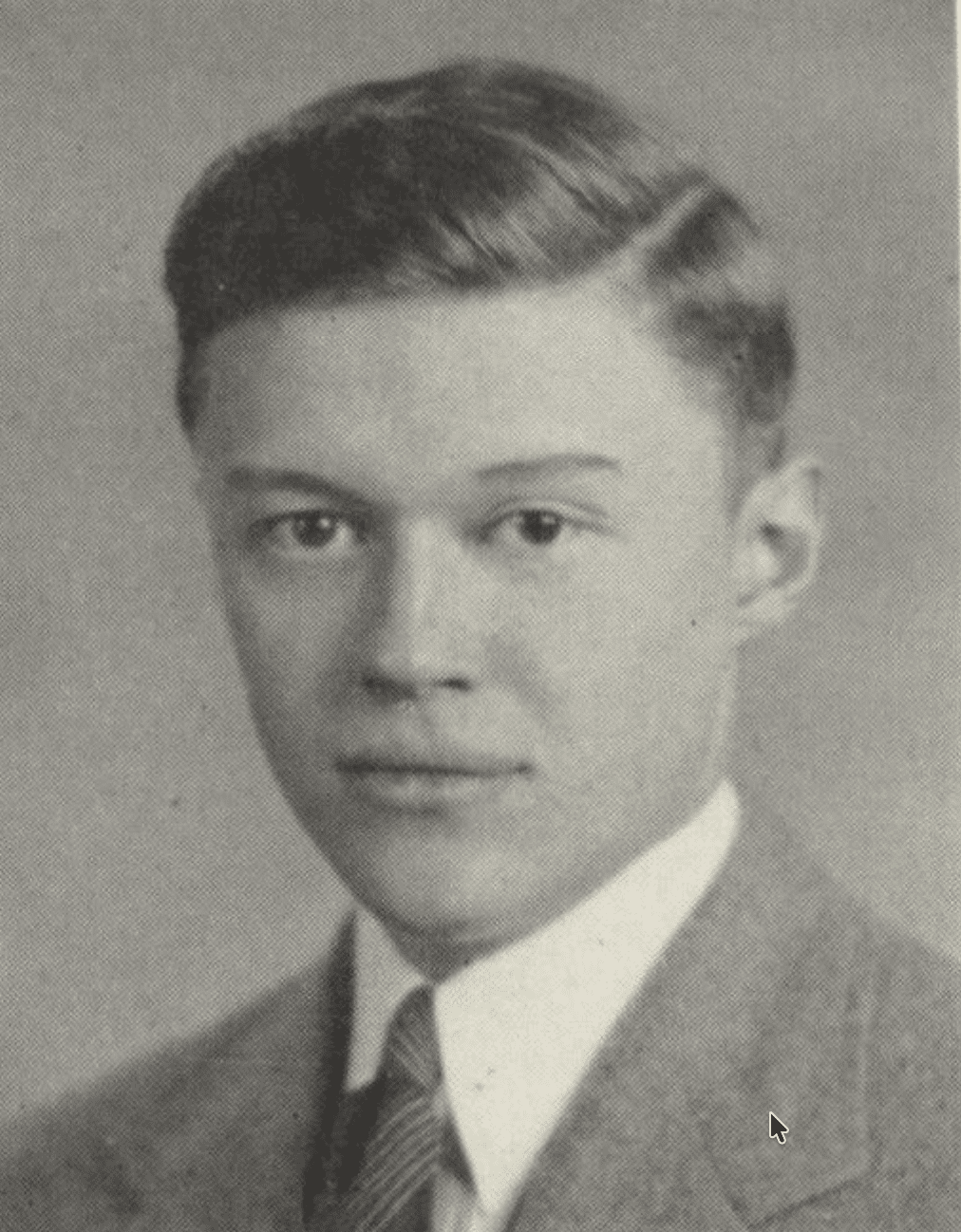
1969: D. Bruce Merrifield ’42 becomes president of the Alumni Association. A chemistry major and member of the varsity baseball team at Princeton, Merrifield was appointed to the position of assistant secretary of commerce/technology by President Ronald Reagan in 1981.
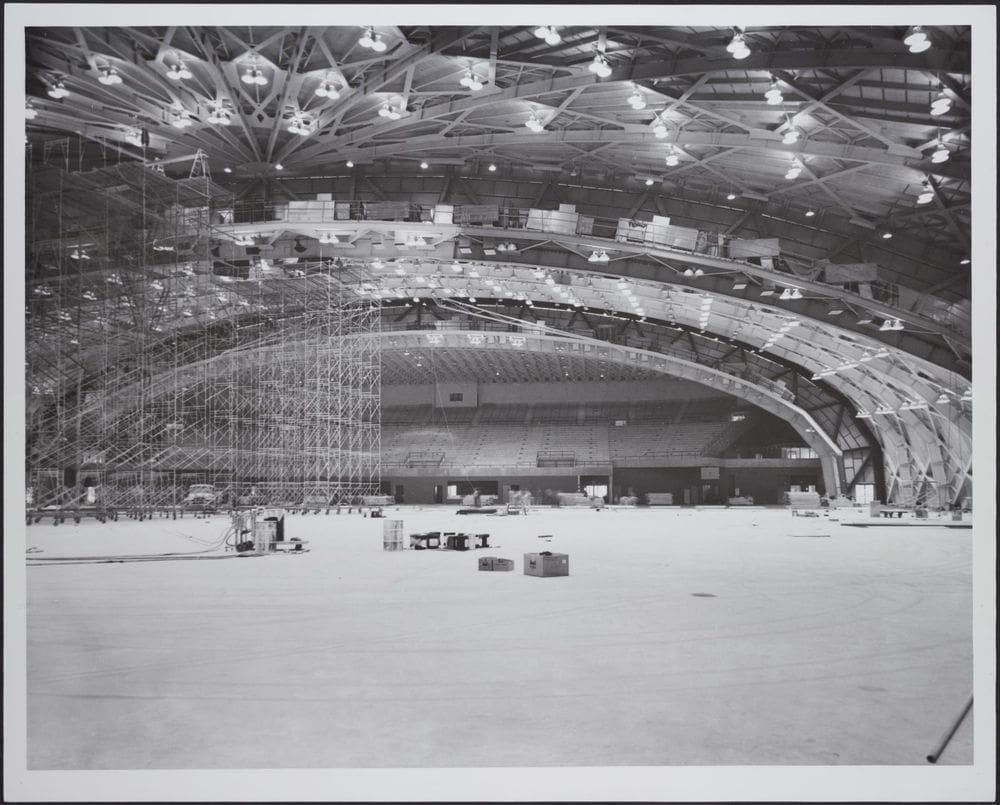
1969: Construction of Jadwin Gymnasium is completed. The sprawling venue hosts its first athletic event, a men’s basketball game against the University of Pennsylvania, on Jan. 25, 1969. Princeton defeated Penn 74-62. The annual meeting of the Alumni Association continues to be held in Jadwin each year on Alumni Day.
1968: Princeton receives the American Alumni Council’s Grand Award for Sustained Performance in Annual Giving, becoming the only university to receive this award more than once (1962 and 1968). The American Alumni Council would merge with the American College Public Relations Assocation in 1974 and become the Council for Advancement and Support of Education (CASE).
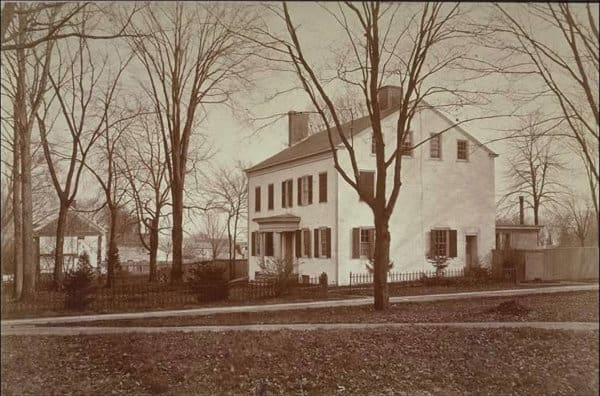
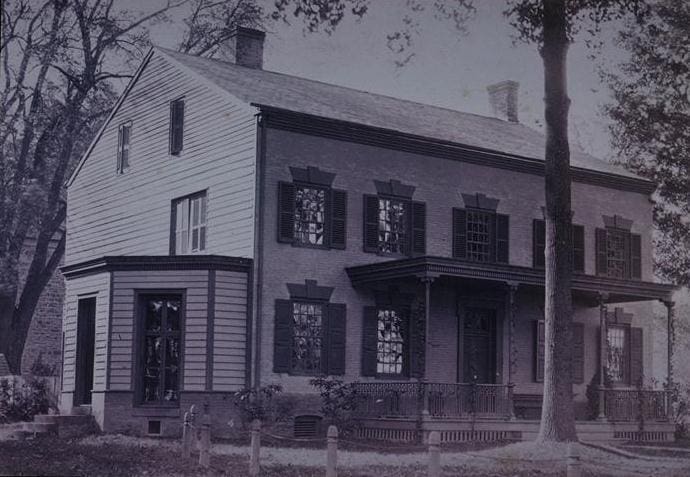
1968: The Dean’s House becomes the home of the Alumni Council and is renamed in honor of John Maclean Jr. ’1816, founder of the Alumni Association and the last Princeton president to occupy the house throughout his administration.
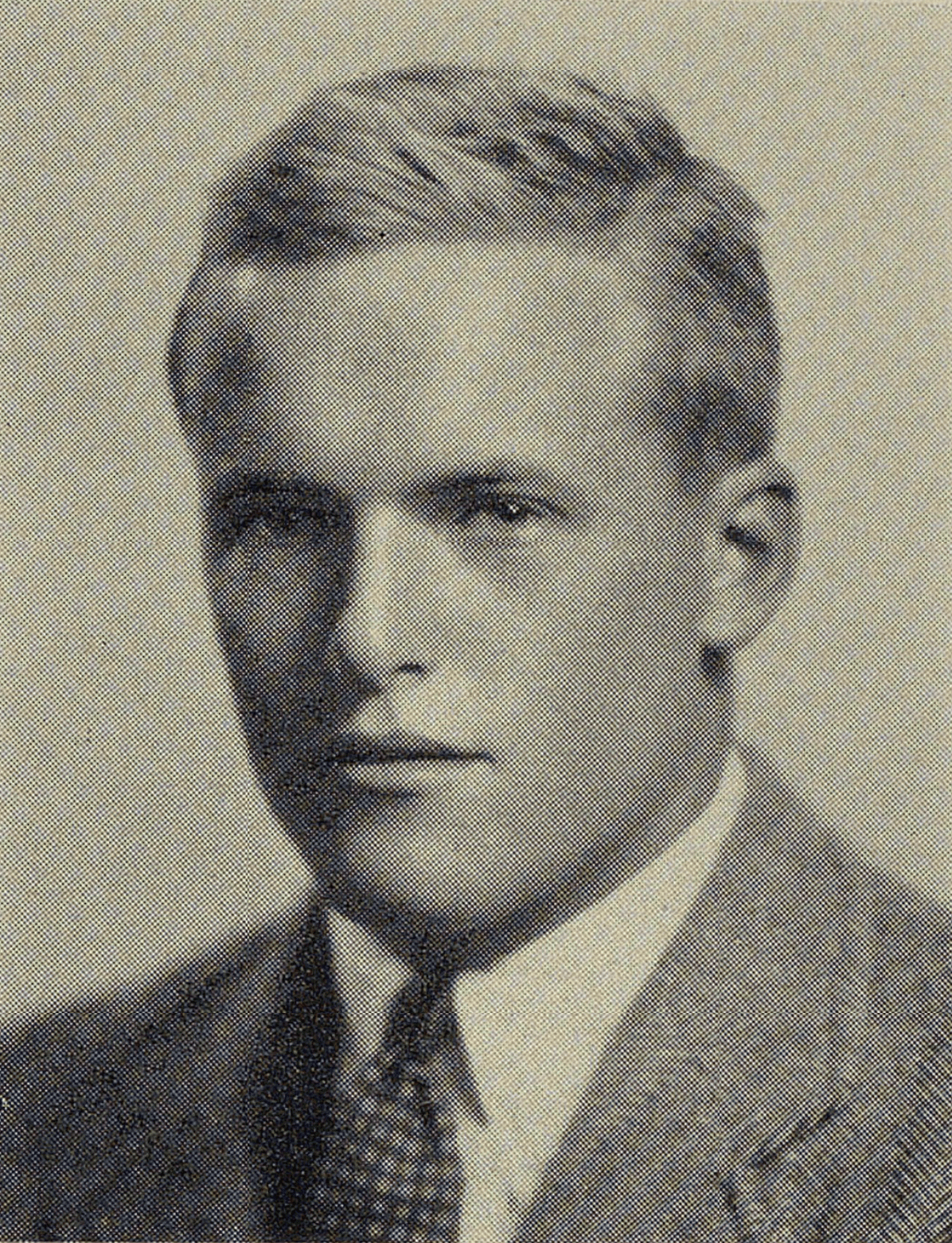
1967: T. Henry Dixon ’40 becomes president of the Alumni Association. An English major and quarterback of the football team while at Princeton, Dixon was a decorated veteran of World War II. A lifelong devotee to education, he served as a trustee at multiple institutions, including Princeton University.
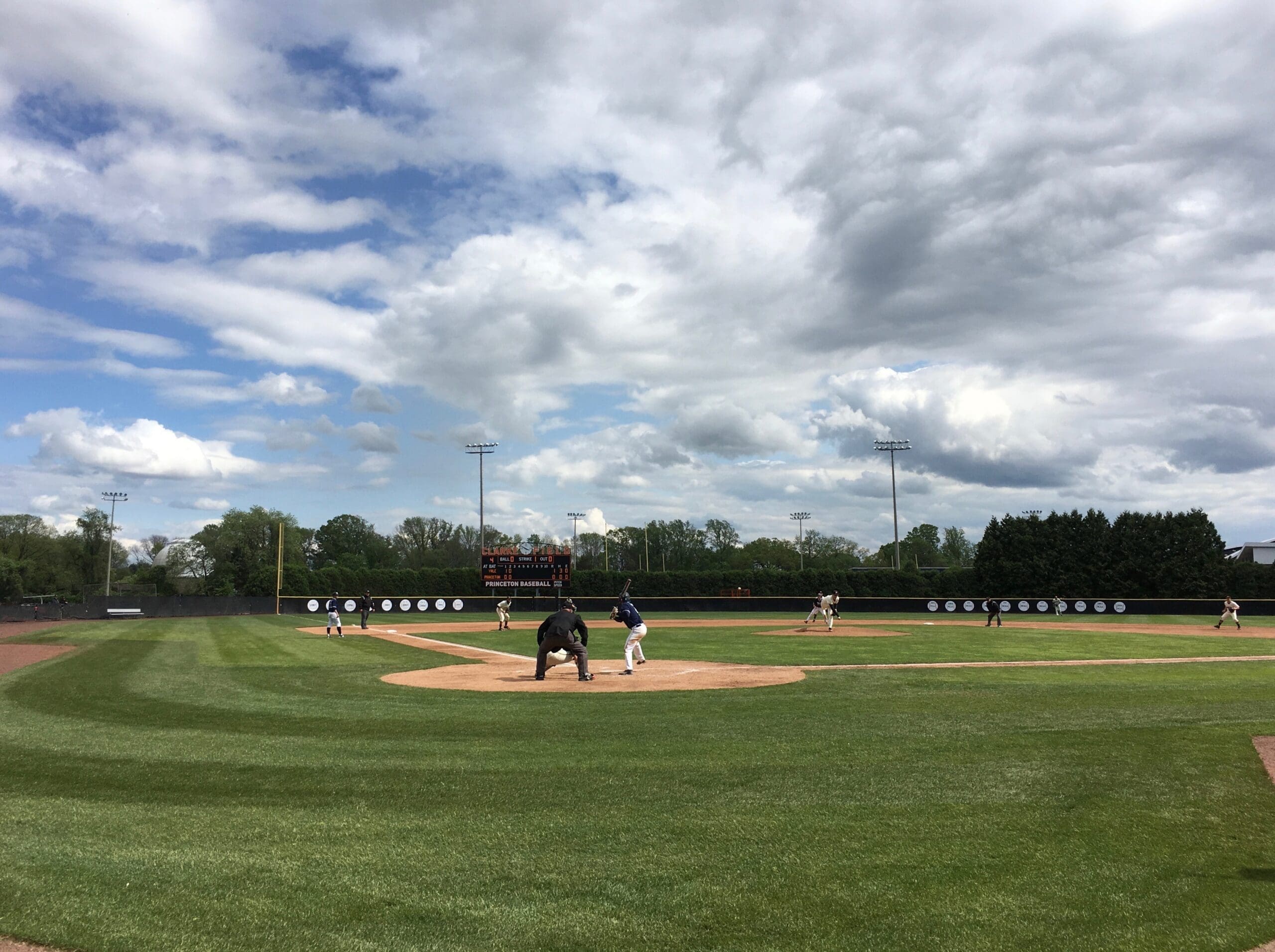
1966: For the last time, the P-rade finishes at the baseball field for the Princeton/Yale game.
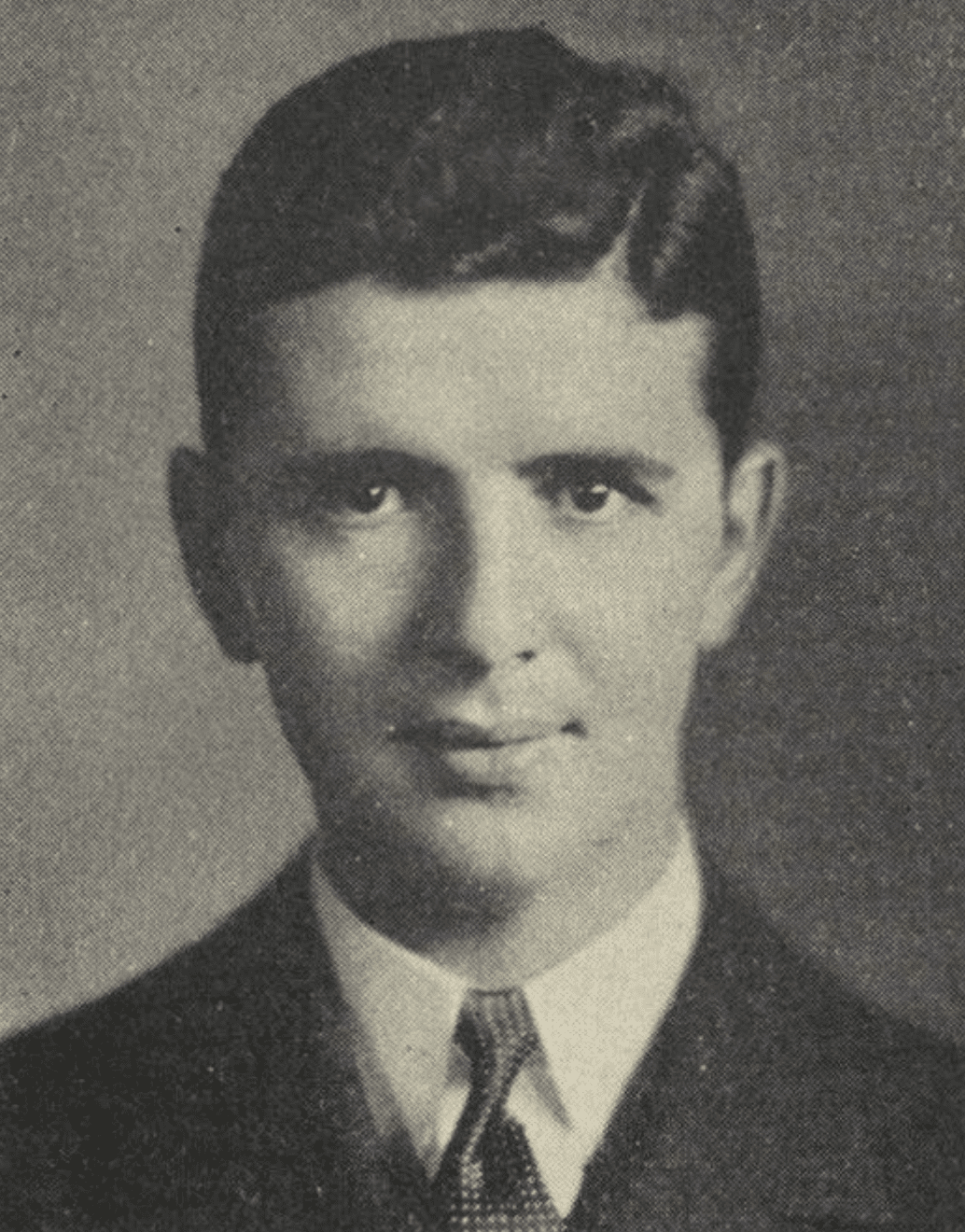
1965: Grant Sanger ’31 becomes president of the Alumni Association. Rising to the rank of commander in the United States Navy during World War II, Sanger went on to have a distinguished career as a surgeon and professor. A lifelong supporter of the Princeton Rowing Association, Grant was a member of the 1931 150-pound crew team.
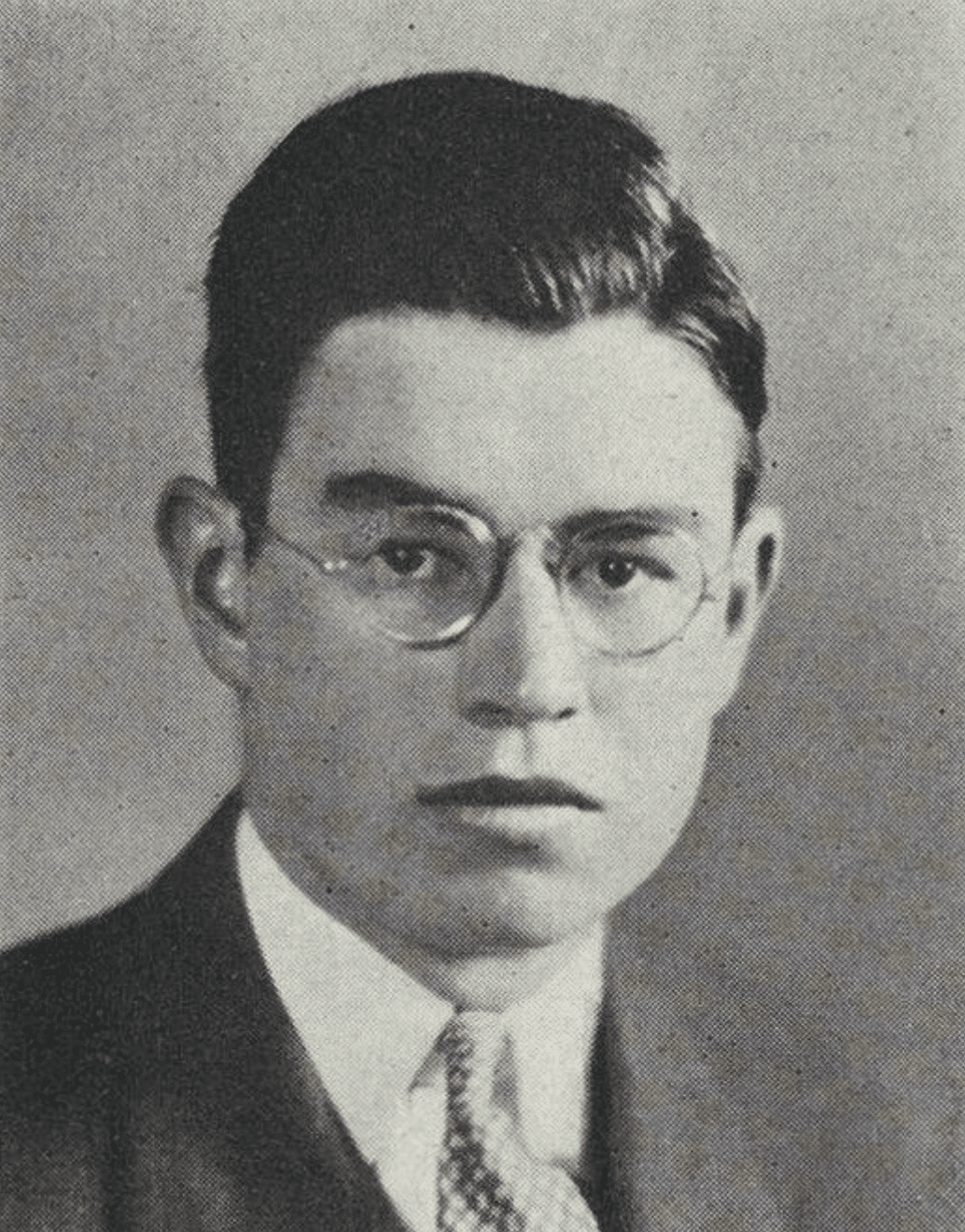
1963: William P. Wright Jr. ’33 becomes president of the Alumni Association. While at Princeton, Wright contributed to the Daily Princetonian and was a member of the Glee Club. He spent most of his career in the textile industry, except for his time in the United States Air Force during World War II. During his time in the services, Wright attained the rank of lieutenant colonel.
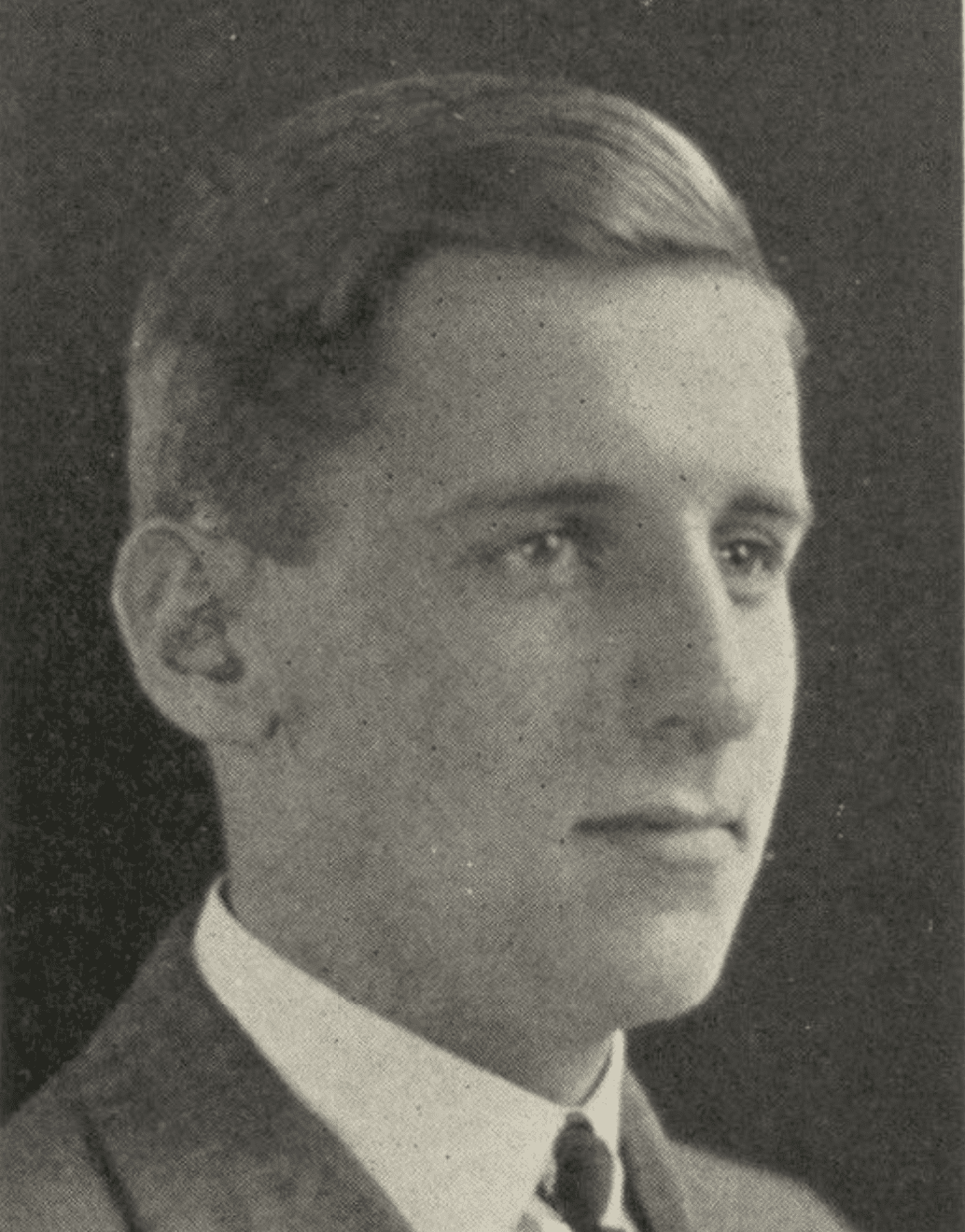
1961: George C. Denniston, class of 1927, becomes president of the Alumni Association. An attorney by trade, George was a 1978 Award for Service to Princeton recipient.
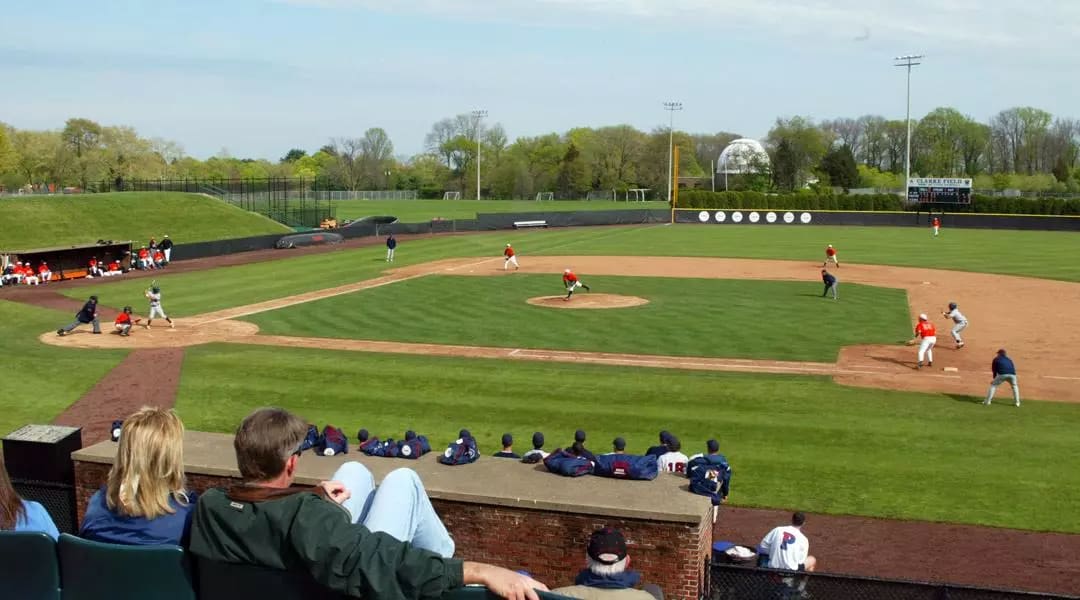
1961: The terminus of the P-rade route gets relocated after University Field is razed to make way for construction of the Engineering Quad. The march would now turn south off Prospect Avenue and end at the new Clarke Field baseball diamond.
1970s
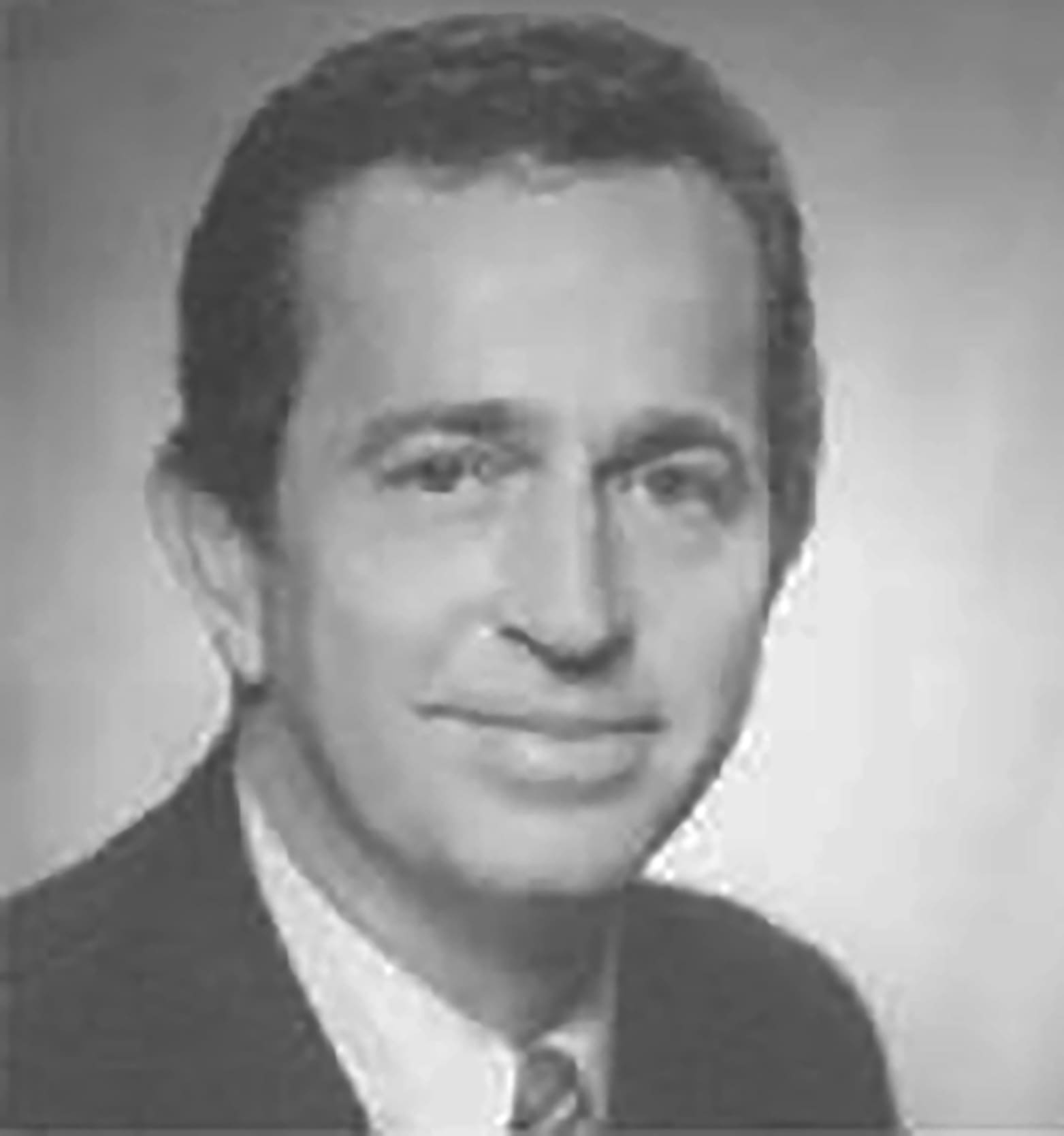
1979: Franklin E. Schaffer ’45 becomes president of the Alumni Association. As chairman of the board and chief executive officer of Doremus & Company, he helped elevate the public relations firm into one of the top agencies in the country. In retirement, Schaffer held several leadership and board roles within community and social services organizations like Blueberry Treatment Centers, Covenant House and the Federation of Protestant Welfare Agencies.

1977-1979: Asian American Alumni Association of Princeton (A4P) is created.
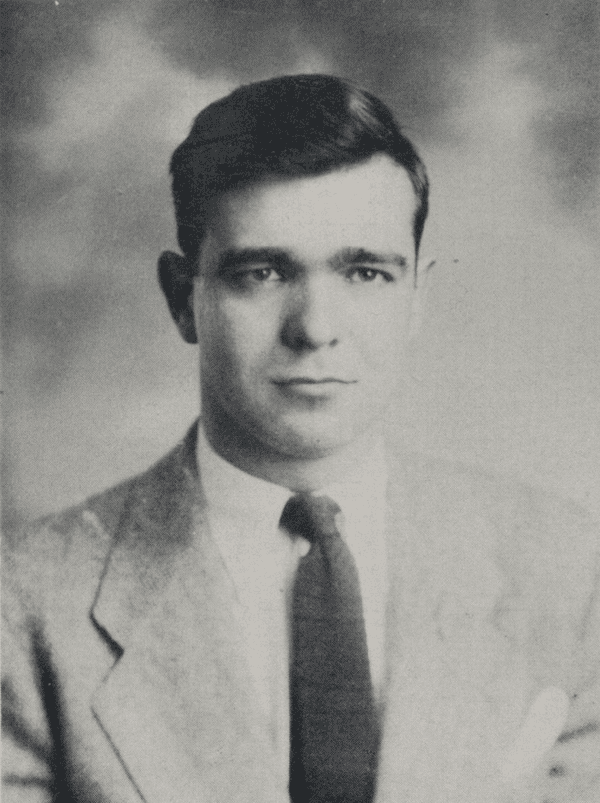
1977: Donald P. Dickson ’49 becomes president of the Alumni Association. Before coming to Princeton, Dickson fittingly attended James Madison High School in his hometown of Brooklyn, New York. He was a recipient of the Princeton Award for Service to Princeton in 1974.
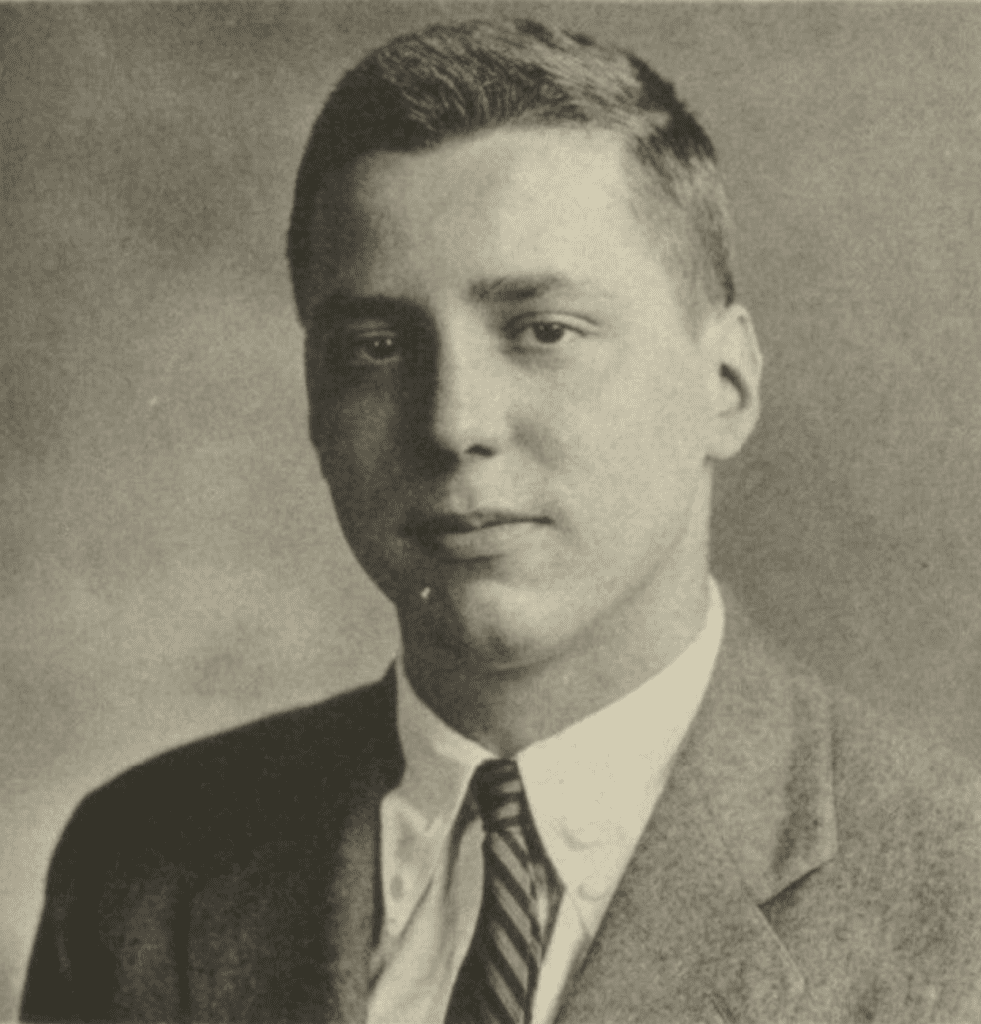
1975: George Faunce III ’47 becomes president of the Alumni Association. His time as an undergraduate at Princeton bookended his time as a naval officer in World War II. He also served in the Korean War. Faunce retired in 1981 as managing director and chief administrative officer of the employee-benefit consulting firm William M. Mercer, Inc., in New York City.
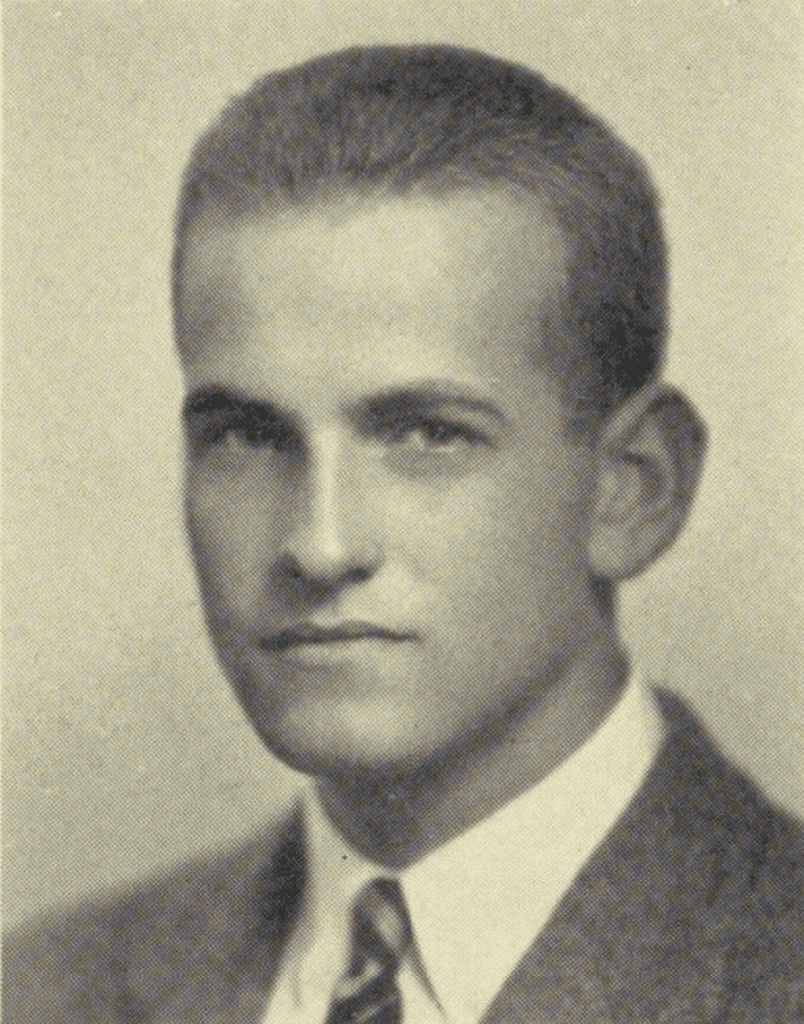
1973: Frederick L. Redpath ’39 becomes president of the Alumni Association. Redpath was instrumental in establishing the Award for Service to Princeton. In addition to a sucessful career as a salesman, Frederick was an ordained deacon in the Episcopal Church, serving St. Luke’s Church in Montclair, New Jersey.
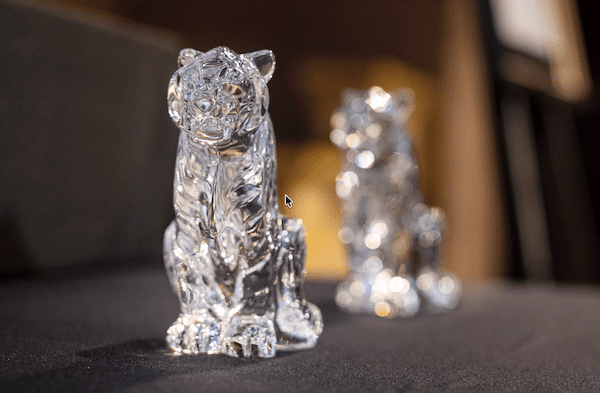
1972: The Award for Service to Princeton is established. Conferred annually, this award recognizes outstanding service contributions to Princeton by any member of the Princeton family. The inaugural honorees were George J. Cooke, Jr., Class of 1922, Walter F. Hollenbach, Class of 1903, GS 1907, and Theodore E. McAlister ’52.
1972: The Association of Black Princeton Alumni (APBA) is formed.
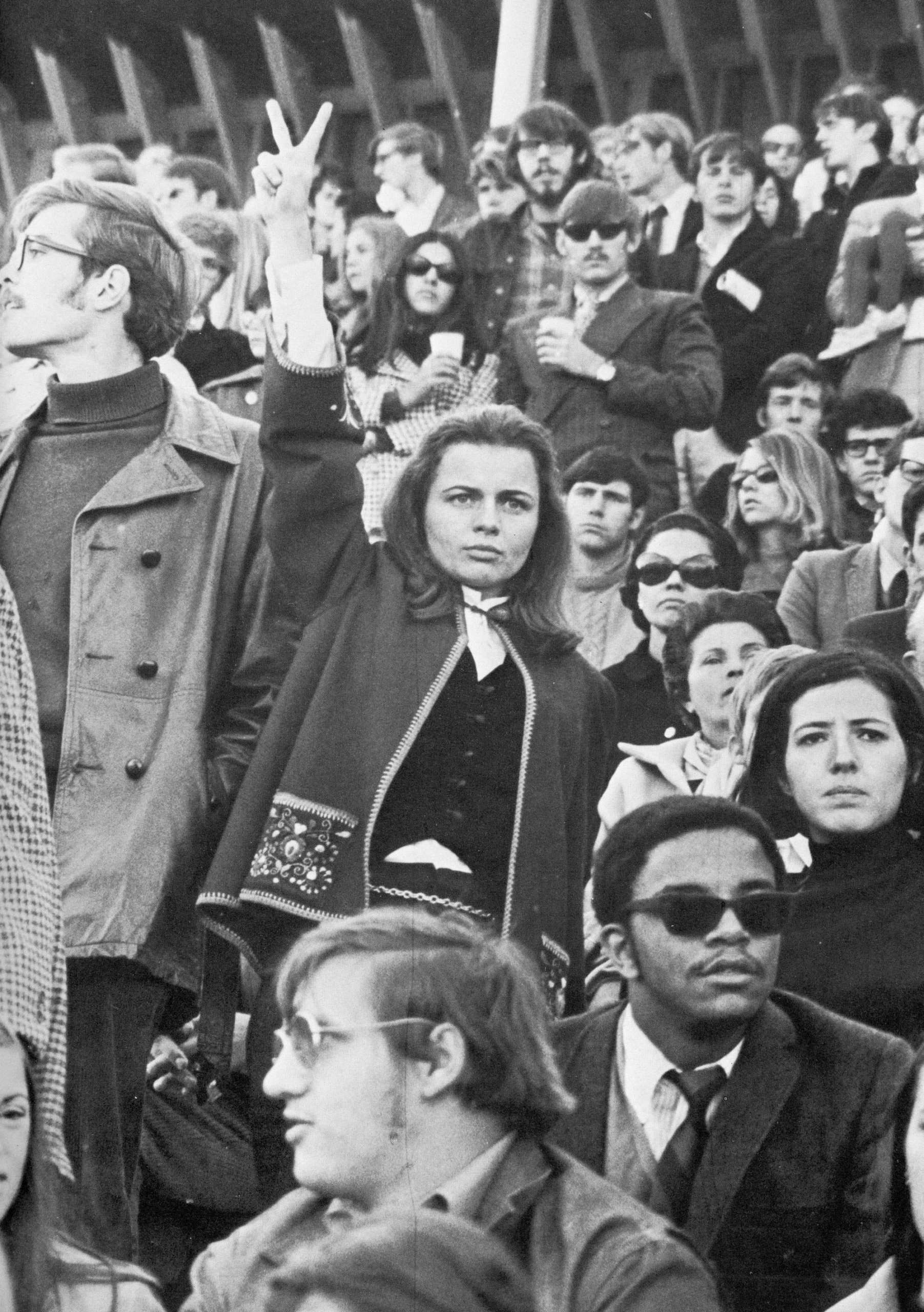
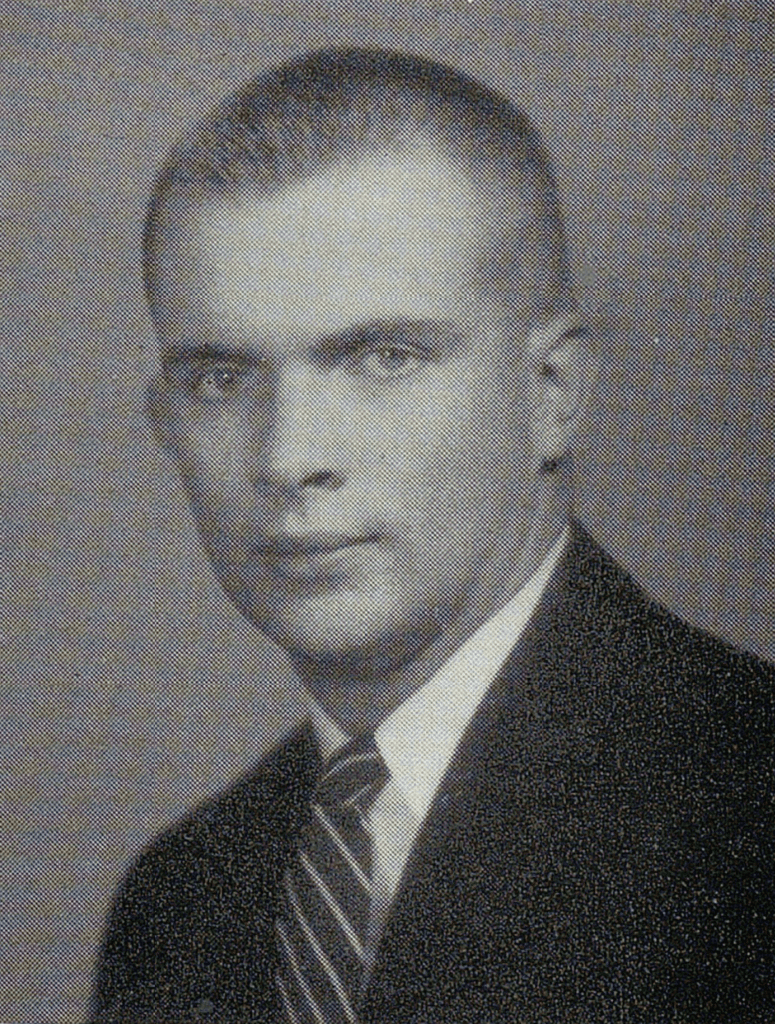
1971: Mary St. John Douglas and Susan Savage Speers become the first two female trustees.
1980s
1989: Association of Latino Princeton Alumni (ALPA) is formed.
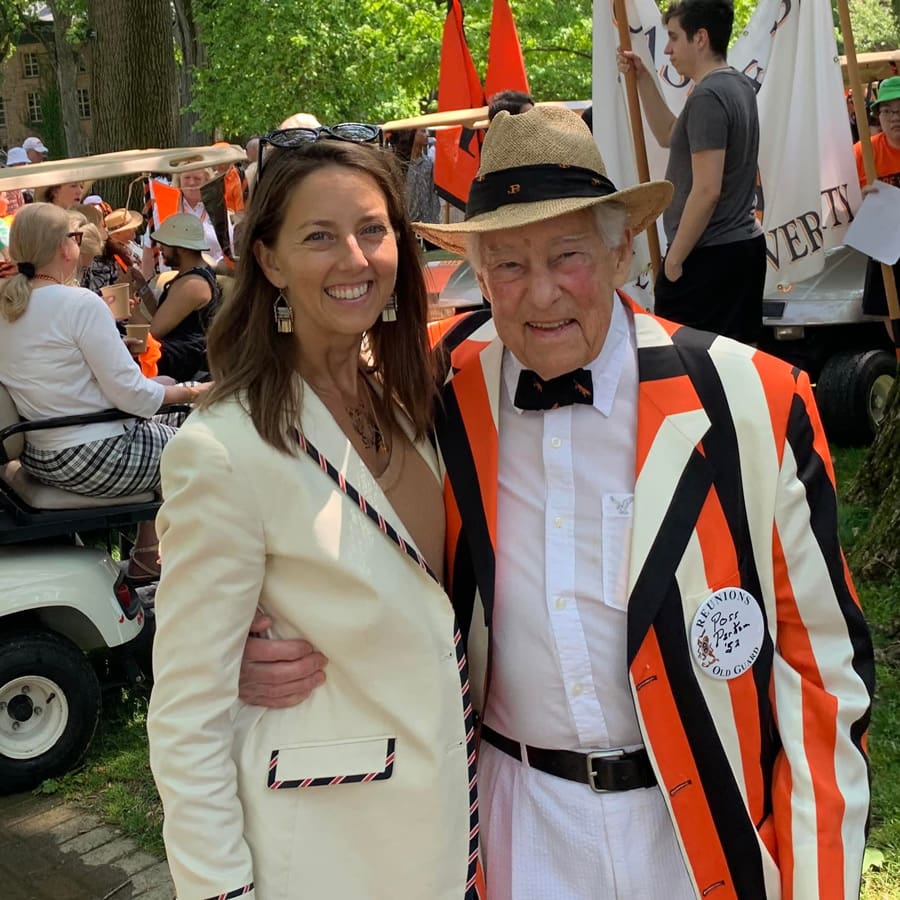
1989: James C. Parham Jr. ’52 becomes president of the Alumni Association and chair of the Alumni Council. Also known as “Poss,” in his sophomore year at Princeton, he led a “100-percent-or-none” movement that sought inclusivity in the University’s eating clubs. He was an accomplished trial lawyer and served as the first president of the South Carolina Bar.
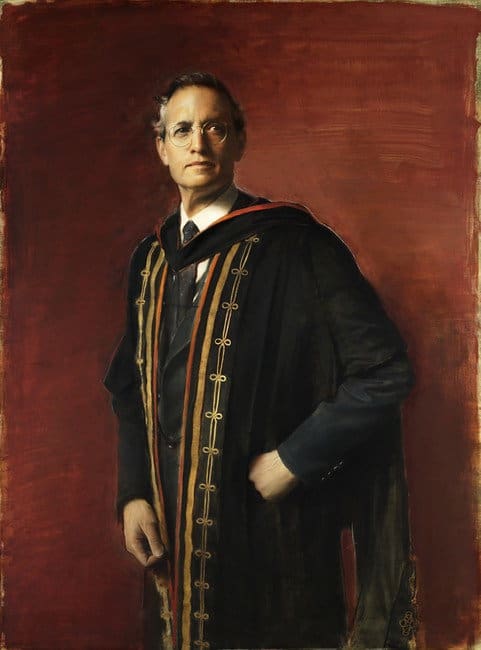
1988: Harold T. Shapiro *64 becomes the first Canadian to be named Princeton president.
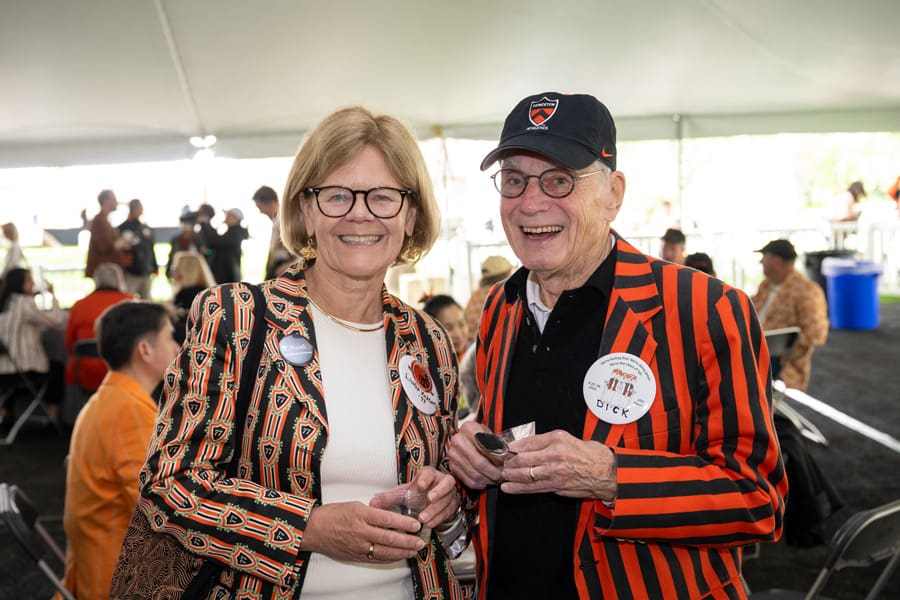
1987: Richard O. Scribner ’58 becomes president of the Alumni Association and chair of the Alumni Council. A lawyer by training, he served as senior vice president for legal and regulatory affairs at the American Stock Exchange before capping off his career as president and CEO of Recording for the Blind & Dyslexic, Incorporated. Additionally, he served as chair of the Annual Giving Committee from 1996 to 2001.
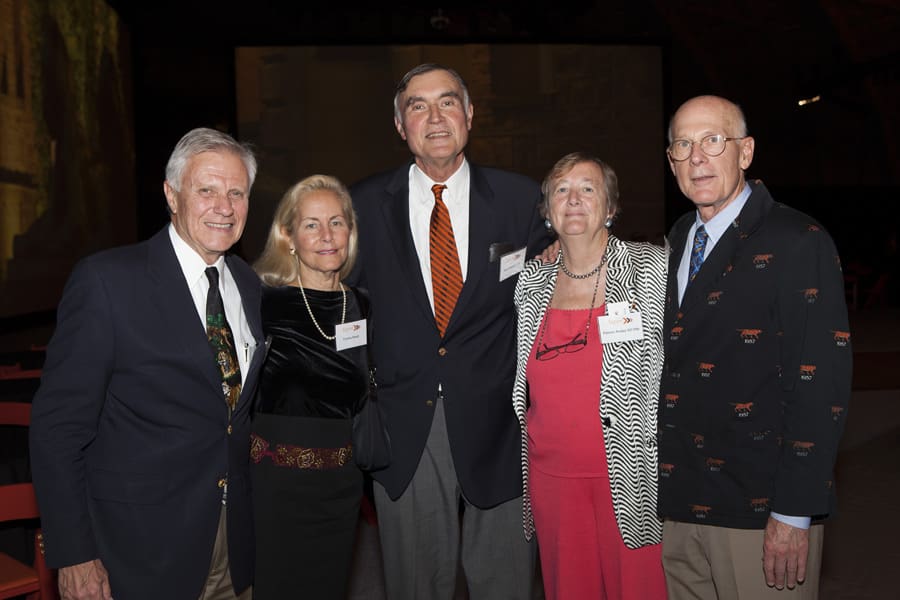
1985: W. Scott Magargee III ’62 becomes president of the Alumni Association and chair of the Alumni Council. While at Princeton, he served as both chairman of the Inter-Club Council and president of the Cap and Gown Club. Scott would go on to be a successful attorney, making partner at Dechert LLP.
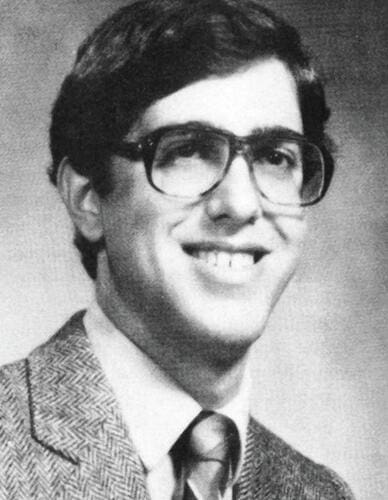
1983: Christopher L. Eisgruber ’83 is named a Rhodes Scholar, sending him to Oxford to study politics.
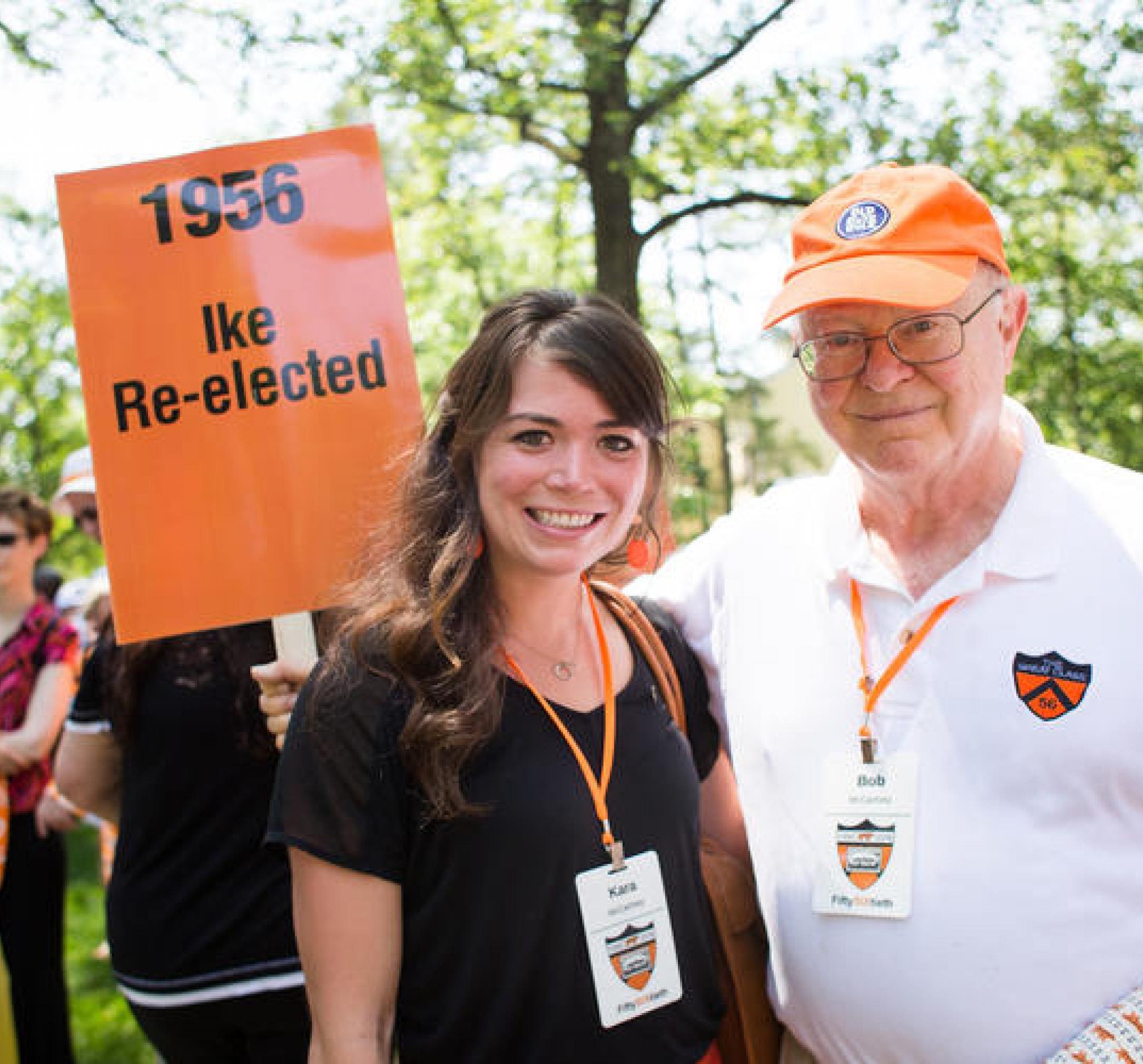
1983: Robert C. McCartney ’56 becomes president of the Alumni Association and chair of the Alumni Council. McCartney was the chief architect in the formation of the Maclean Society. He established the society’s mission in a letter: “I would like to see us come up with some means of recognizing long-term alumni service to the University in various areas of activity. Perhaps one means of doing so might be the creation of a president’s club or similar group.”
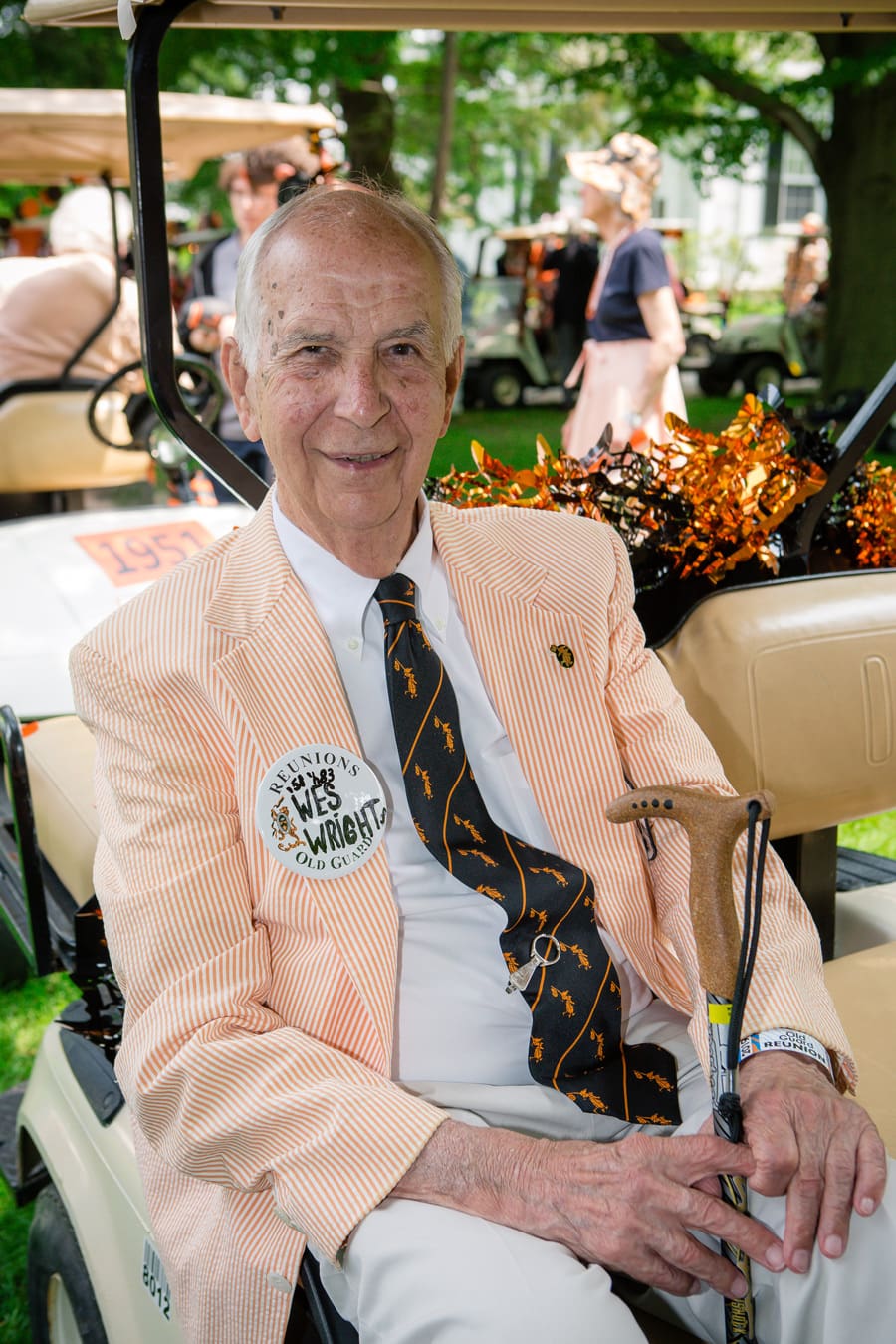
1981: Wesley Wright Jr. ’51 becomes president of the Alumni Association and chair of the Alumni Council. With a steadfast devotion to service to Princeton, Wright volunteered for the Alumni Schools Committee, Annual Giving and regional and class affairs and also served as class president from 1985 to 1991. He was recognized for his contributions with the Harold H. Helm ’20 Distinguished Service Award in 1995 and the Alumni Council Service to Princeton Award in 2014.
1990s
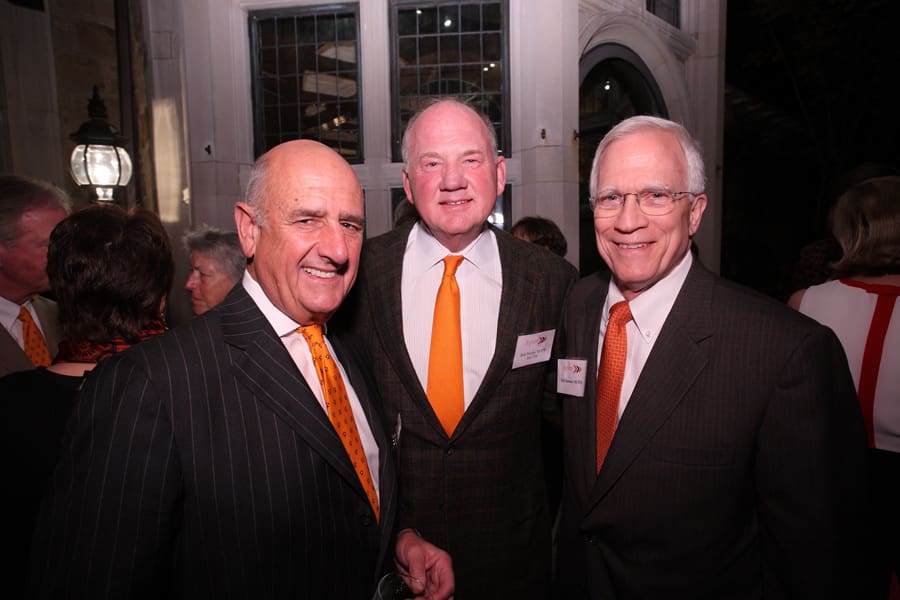
1999: Joe Serafini ’64 becomes president of the Alumni Association and chair of the Alumni Council. To commemorate the 200th anniversary of the Alumni Association, Serafini was one of the former chairs who returned to campus in 2026 to march in the P-rade and lead the way for the special 200th anniversary sculpture, affectionately referred to as “Foamy.” Serafini is an attorney with a concentration in real estate development and finance.
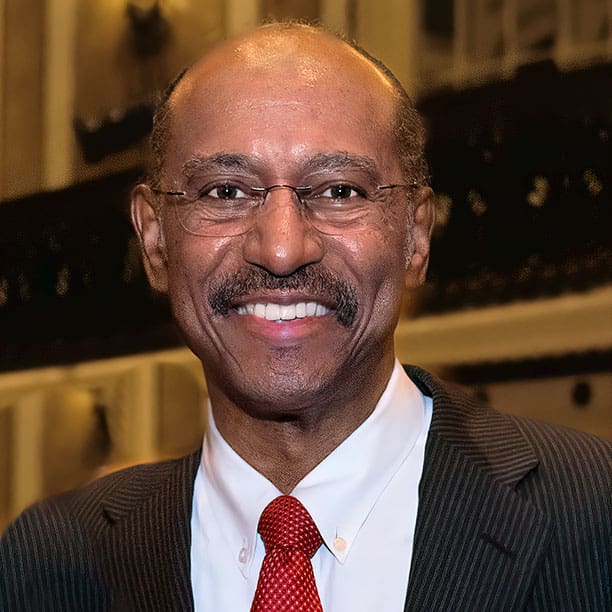
1997: Melvin McCray produces Looking Back: Reflections of Black Princeton Alumni, a video documentary on the history of African American students at Princeton for the Unversity’s 250th anniversary.
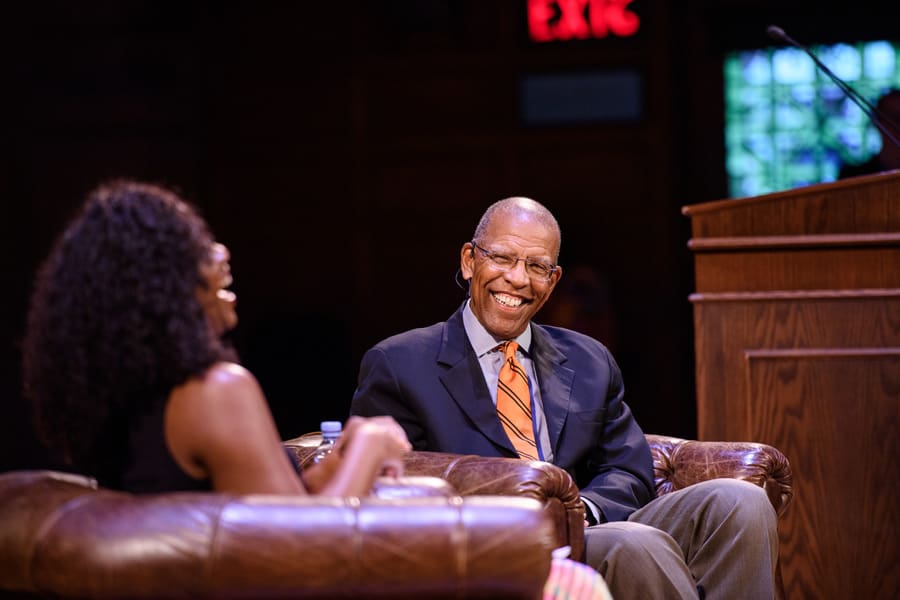
1997: Brent L. Henry ’69 becomes president of the Alumni Association and chair of the Alumni Council. Alongside Robert Joseph Rivers ’53, Henry became one of the first Black members of the Board of Trustees in 1969. He was also a featured presenter at the 2019 “Thrive” conference.
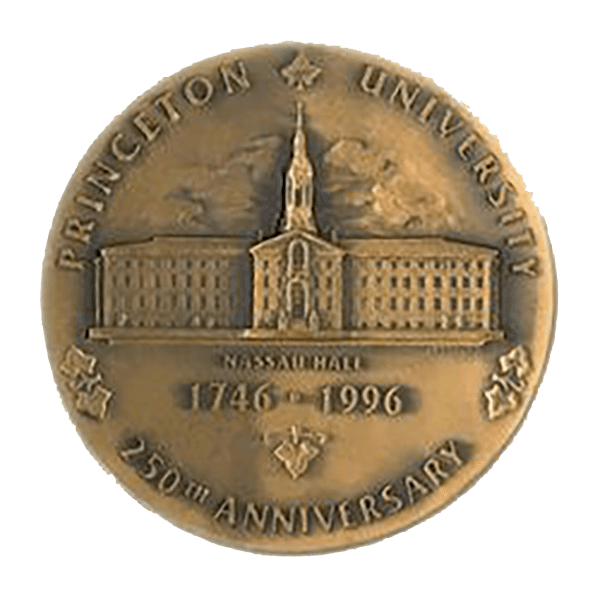
1996: At Princeton’s 250th anniversary celebration, a plaque is installed on the front of campus to memorialize Princeton’s gratitude to its alumni “for their devotion to the University and its mission of education, scholarship, and service.”

1995: Princeton Women’s Network (PWN) affinity group is formed.
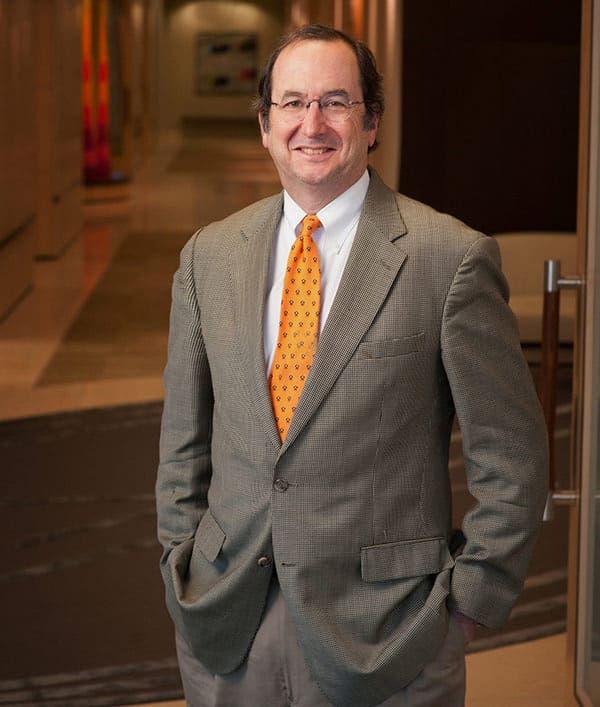
1995: Luther T. Munford ’71 becomes president of the Alumni Association and chair of the Alumni Council. Munford served for a term as president of the American Academy of Appellate Lawyers. His legal career also included clerkships for Judge Paul Roney on the U.S. Court of Appeals for the Fifth Circuit and Justice Harry Blackmun on the U.S. Supreme Court. He is also a former chairman of The Daily Princetonian.
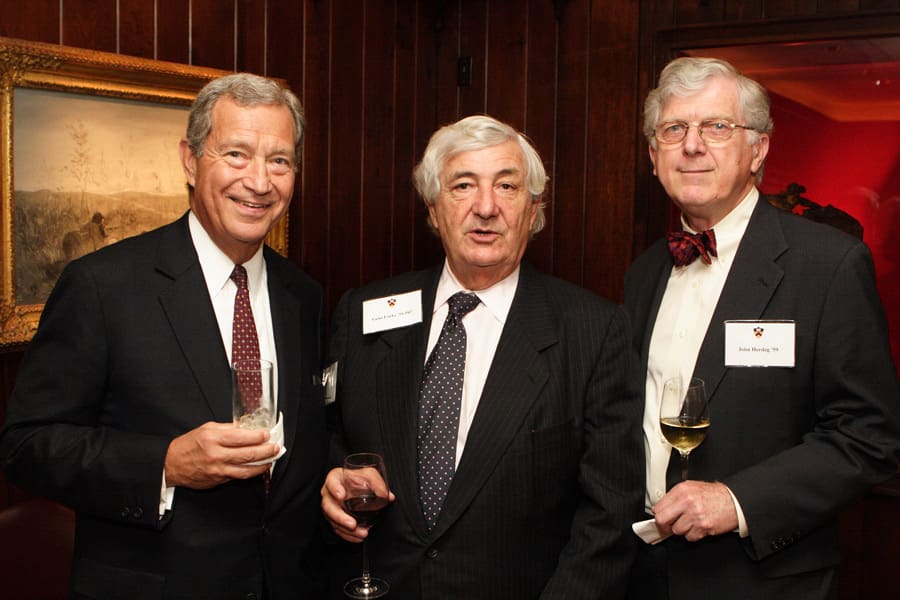
1993: Elihu Inselbuch ’59 becomes president of the Alumni Association and chair of the Alumni Council. As an undergrad, Inselbuch fenced with the Ivy League championship team and was music director of the Triangle Club. He had a successful career in law and was also an accomplished musician.
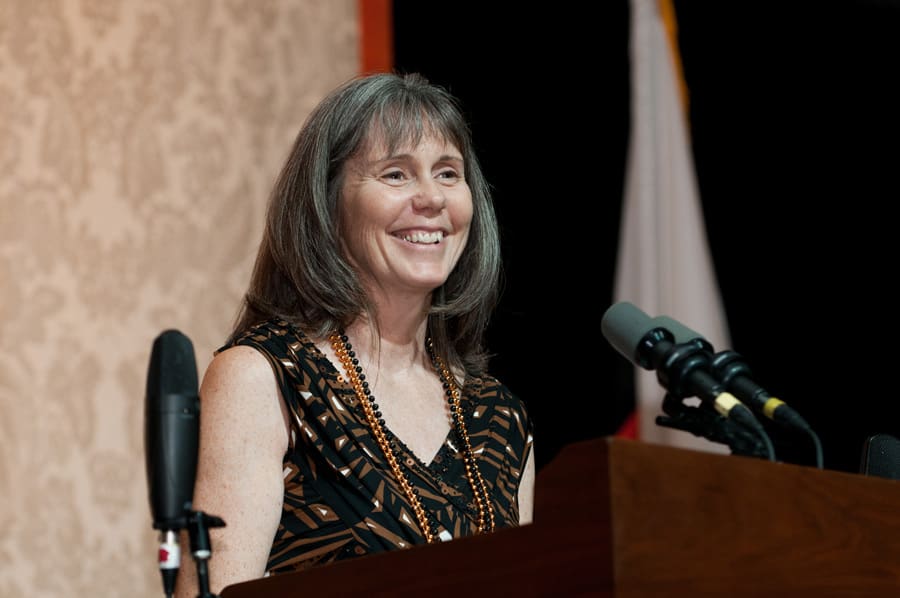
1991: Dorothy L. Bedford ’78 becomes president of the Alumni Association and chair of the Alumni Council, and is the first woman to serve in these roles. Later in the decade, she left a successful career in banking to work at Princeton as executive director of the University’s bisesquicentennial celebration.
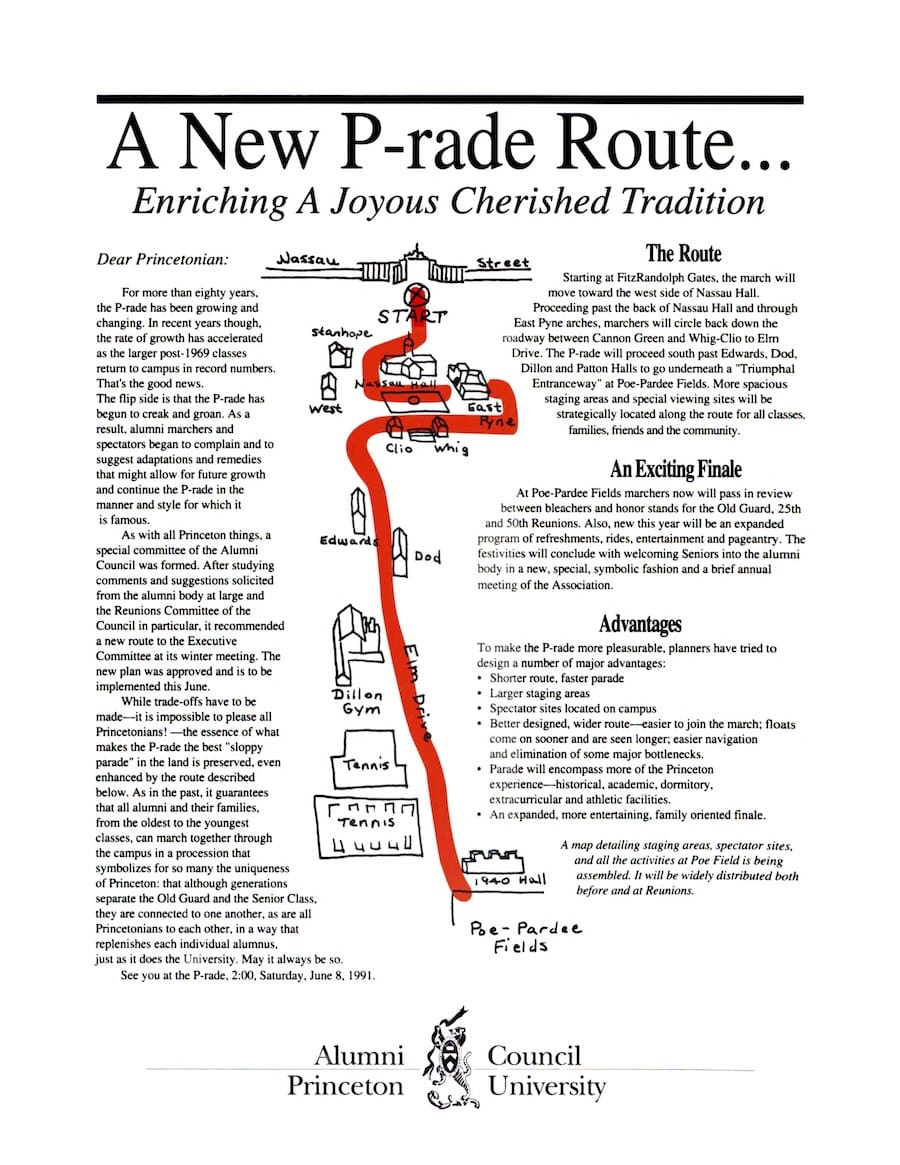
1991: The Alumni Council alters the P-rade route to bring it entirely on campus. The final portion would henceforth run south down Elm Drive and end at Poe Field. This replaced the traditional off-campus portion running east to the baseball field via Prospect Avenue.